What to Stack with Resveratrol: Synergies & Conflicts
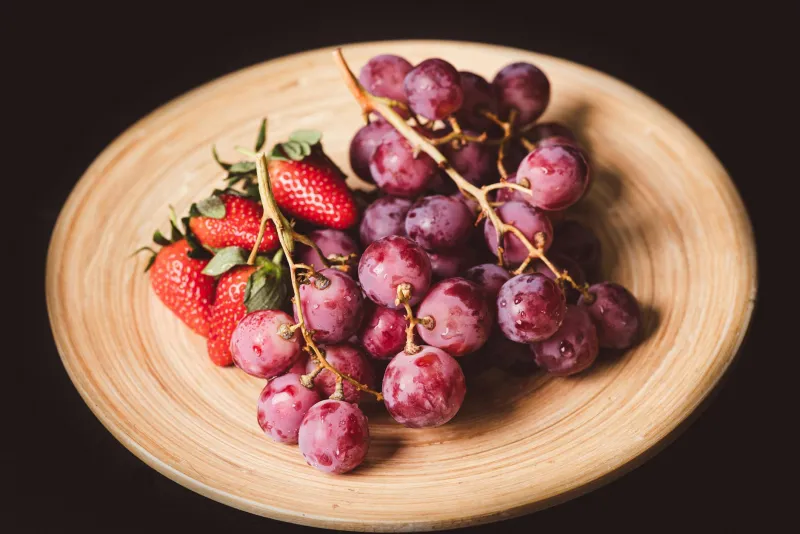
Resveratrol stacking has become a staple strategy for those interested in longevity, cardiovascular health, and antioxidant support. This plant polyphenol, found naturally in grapes and berries, activates SIRT1 (a NAD+-dependent deacetylase) and influences multiple cellular pathways. Because resveratrol has notoriously low oral bioavailability, strategic stacking can both amplify its effects and improve how the body actually absorbs it.
Evidence-Based Synergies
Resveratrol and Quercetin
Quercetin and resveratrol both belong to the polyphenol family and activate overlapping longevity pathways. A cell study showed that the two compounds together produced additive inhibition of NF-kB signalling compared with either alone (Manna et al., 2000). From a practical standpoint, quercetin also inhibits the sulfotransferase enzymes that rapidly conjugate and inactivate resveratrol in the gut wall, effectively increasing resveratrol's bioavailability. Products such as  MST Quercetin Bromelain€26.90 In stock 60caps and OstroVit Quercetin 90caps can be paired with a resveratrol supplement as part of a polyphenol stack.
Resveratrol and Piperine
Piperine, the active compound in black pepper, is a well-characterised inhibitor of Phase II metabolic enzymes. Co-administration of piperine with resveratrol has been shown to substantially increase resveratrol plasma concentrations in human subjects (Johnson et al., 2011). Many resveratrol formulations now include piperine for this reason; if yours does not, consider adding a small piperine-containing source at the same meal.
Resveratrol and Healthy Fats
Resveratrol is fat-soluble. Taking it alongside a meal that contains healthy fats — olive oil, fish oil, avocado — meaningfully improves its intestinal absorption. If you take omega-3 fish oil, such as OstroVit Omega 3 Ultra 90caps, combining it with your resveratrol dose at the same meal is a simple, evidence-informed strategy.
Resveratrol and NMN or NR
Resveratrol activates SIRT1, but SIRT1 requires NAD+ as a co-substrate. NMN and NR (nicotinamide mononucleotide and nicotinamide riboside) are NAD+ precursors. The theoretical basis for stacking them is that supplying NAD+ substrate alongside SIRT1 activator should produce a more complete effect than either approach alone. This combination is popular in longevity-focused stacks, though large human RCTs examining the combination specifically are still limited.
Antagonistic Combinations
Resveratrol and Anticoagulants
Resveratrol has mild anti-platelet activity. If you take anticoagulant or antiplatelet medications (aspirin, warfarin, or similar), consult your doctor before adding high-dose resveratrol supplements. This is a safety note, not a reason to avoid it for healthy individuals.
Resveratrol and Cytochrome P450 Substrates
At high doses, resveratrol inhibits several CYP enzymes involved in drug metabolism. This is most relevant for people on prescription medications — not for supplement stacking alone — but worth being aware of.
Timing Within a Stack
Take resveratrol with the fattiest meal of the day. Quercetin can be taken at the same time. Piperine, if taken separately, goes at the same meal. NAD+ precursors such as NMN are typically taken in the morning on an empty stomach, which is a different window — that is fine, as the mechanisms are complementary rather than requiring simultaneous dosing.
Sample Stacks by Goal
| Goal | Morning | With Largest Meal | Optional Add-on |
|---|---|---|---|
| Longevity / SIRT1 | NMN or NR | Resveratrol + Quercetin + Omega-3 | Piperine |
| Cardiovascular antioxidant | — | Resveratrol + Omega-3 | Quercetin |
| General polyphenol | — | Resveratrol + Quercetin | Vitamin C |
What to Avoid
- Do not take resveratrol on an empty stomach with water alone; bioavailability will be poor.
- Avoid combining with anticoagulant drugs without medical supervision.
- Do not assume more is better; human research is largely conducted with doses in the range of 150 to 500 mg. Very high experimental doses used in some animal studies do not translate to supplement guidance.
- Standard resveratrol supplements available at maxfit.ee — including NOW Natural Resveratrol 200mg 60 Veg. Capsules and OstroVit Resveratrol VEGE 60 vcaps — are within these studied ranges.
FAQ
Should I take trans-resveratrol or standard resveratrol?
Trans-resveratrol is the biologically active isomer. Most quality supplements standardise to trans-resveratrol content. Check the label for this specification when comparing products.
Can resveratrol be taken with coffee?
Coffee does not significantly impair resveratrol absorption. The main factor is fat content at the same meal, not caffeine. That said, very large amounts of polyphenols from coffee may theoretically compete at absorption sites; moderate coffee consumption alongside resveratrol is not a concern in practice.
How long should I take resveratrol before evaluating its effect?
Most intervention studies run for 4 to 12 weeks. For cardiovascular and metabolic markers, a 12-week consistent trial is a reasonable evaluation window.
References
Manna, S. K., Mukhopadhyay, A., & Aggarwal, B. B. (2000). Resveratrol suppresses TNF-induced activation of nuclear transcription factors NF-kappa B, activator protein-1, and apoptosis: potential role of reactive oxygen intermediates and lipid peroxidation. Journal of Immunology, 164(12), 6509-6519. https://pubmed.ncbi.nlm.nih.gov/10843709/
Johnson, J. J., Nihal, M., Siddiqui, I. A., Scarlett, C. O., Bailey, H. H., Mukhtar, H., & Ahmad, N. (2011). Enhancing the bioavailability of resveratrol by combining it with piperine. Molecular Nutrition & Food Research, 55(8), 1169-1176. https://doi.org/10.1002/mnfr.201100117
Baur, J. A., Pearson, K. J., Price, N. L., Jamieson, H. A., Lerin, C., Kalra, A., Prabhu, V. V., Allard, J. S., Lopez-Lluch, G., Lewis, K., Pistell, P. J., Poosala, S., Becker, K. G., Boss, O., Gwinn, D., Wang, M., Ramaswamy, S., Fishbein, K. W., Spencer, R. G., Lakatta, E. G., Le Couteur, D., Shaw, R. J., Navas, P., Puigserver, P., Ingram, D. K., de Cabo, R., & Sinclair, D. A. (2006). Resveratrol improves health and survival of mice on a high-calorie diet. Nature, 444(7117), 337-342. https://pubmed.ncbi.nlm.nih.gov/17086191/



