
Rest Periods Between Sets: The Science of Optimal Recovery
One nuanced, often overlooked variable in training is the rest period between sets. Should it be short (60–90 seconds) to maintain the pump and metabolic stress, or long (3–5 minutes) to fully recover for the next set? The answer depends on your goal.
Strength Training vs Hypertrophy: Different Requirements
Strength training (1–5 reps, high load): Long rest (3–5 minutes) is necessary. Phosphocreatine (PCr) fully replenishes in approximately 3–5 minutes. Allowing this process to complete means near-maximum force output on the next set. Short rest with strength training means reduced load and less neuromuscular recruitment (Kraemer & Ratamess, 2004).
Hypertrophy training (6–15 reps): Research suggests that 1–2 minutes vs 3 minutes of rest for hypertrophy produces similar results — provided total work volume is matched. However, Schoenfeld et al. (2016) found that longer rest intervals (3 minutes) actually produce better hypertrophy too, because they allow higher total training load.
Metabolic training / pump work (15–30 reps): Short rest (30–60 seconds) maximises lactic acid accumulation and metabolic stress. Useful for muscle pump, but not optimal for strength or mass training.
Evidence-Based Rest Period Recommendations
| Goal | Rep Range | Optimal Rest |
|---|---|---|
| Maximum strength | 1–5 | 3–5 minutes |
| Hypertrophy | 6–12 | 2–3 minutes |
| Metabolic stress/pump | 13–30 | 45–90 seconds |
| General fitness | Mixed | 1–2 minutes |
A meta-analysis by Schoenfeld et al. (2016) demonstrated that longer rest periods (3 minutes) produce greater strength gains, with the difference for hypertrophy being smaller but still present.
Why Short Rest Is Popular
Many trainees use short rest because it feels "more intense." But this usually means using a lower load, which reduces total training volume. With matched total volume — just manipulating rest — longer pauses are more beneficial for most training goals.
Supplements That Support Set-to-Set Recovery
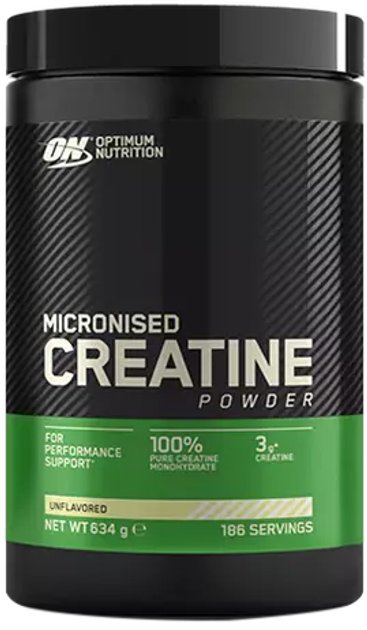 Optimum Nutrition Micronised Creatine€36.90 In stock 247.5g Orange — creatine increases phosphocreatine resynthesis rate, meaning you recover faster between sets and can maintain greater force output on subsequent sets (Lanhers et al., 2017). DY HIT BCAA 10:1:1 400g Strawberry is a high-leucine BCAA formula that also supports intra-workout recovery. Both are available at maxfit.ee.
Practical Guidelines
- Time your rest — use a watch or app. Without timing, you will typically rest either too little or too long.
- Supersets — alternating between two different muscle groups (e.g. biceps and triceps) lets you reduce effective wait time without reducing recovery for either muscle.
- Adaptation period — when starting a new programme, 3-minute rest may feel excessively long. Start at 2 minutes and increase as needed.
Summary
Optimal rest period depends on the goal. Use 3–5 minutes for strength work, 2–3 minutes for hypertrophy, and 45–90 seconds for metabolic pump training. Time your rest periods — this is one of the cheapest and simplest ways to improve training effectiveness immediately.
FAQ
Is short rest better for fat burning?
Not significantly more than long rest in terms of calories burned. High-intensity interval training (HIIT) is more effective for fat loss than simply shortening rest periods in strength training.
Do supersets replace rest periods?
Partially. Supersets allow one muscle group to rest while the other works. They are efficient but are not the same as full recovery on high-load compound exercises.
Is rest period as important as sets and reps?
Yes. Rest period directly influences total training volume and recovery quality — two primary drivers of muscle growth. Ignoring it is similar to ignoring your rep count.
References
- Kraemer, W. J., & Ratamess, N. A. (2004). Fundamentals of resistance training. Medicine & Science in Sports & Exercise, 36(4), 674–688.
- Schoenfeld, B. J., Pope, Z. K., Benik, F. M., Hester, G. M., Sellers, J., Nooner, J. L., & Krieger, J. W. (2016). Longer interset rest periods enhance muscle strength and hypertrophy in resistance-trained men. Journal of Strength and Conditioning Research, 30(7), 1805–1812.
- Lanhers, C., Pereira, B., Naughton, G., Trousselard, M., Lesage, F. X., & Dutheil, F. (2017). Creatine supplementation and lower limb strength performance. European Journal of Sport Science, 17(4), 492–503.
- Grgic, J., Lazinica, B., Mikulic, P., Krieger, J. W., & Schoenfeld, B. J. (2017). The effects of short versus long inter-set rest intervals in resistance training on measures of muscle hypertrophy. European Journal of Sport Science, 17(8), 983–993.
- Willardson, J. M. (2006). A brief review: Factors affecting the length of the rest interval between resistance exercise sets. Journal of Strength and Conditioning Research, 20(4), 978–984.
Nutrition and Recovery in the Training Context
Training results depend directly on nutrition. The body requires sufficient protein (1.6-2.2 g/kg body weight) to repair and build muscle, carbohydrates for energy, and healthy fats for hormone production. Without these three macronutrients in adequate supply, training is like building without materials.
Sleep is equally important — 7-9 hours of quality sleep is when growth hormone is released and muscles actually recover and grow. Research has repeatedly shown that sleep deprivation reduces muscle protein synthesis and increases cortisol levels, both of which slow muscle growth.
Daily activity levels, stress management, and overall lifestyle all influence how rapidly the body responds to training stimuli. A successful athlete does not just build their training — they build the entire lifestyle environment that supports development and long-term progress.
Building and Sustaining Training Habits
Long-term progress is directly linked to training consistency and habit formation. Progress recorded in a training log builds motivation over time. Each session adds to confidence in your own capabilities, which supports the next session. This positive feedback loop is the foundation of sustained success.
Establish a fixed training time that does not depend on mood or energy levels. The best lifters do not wait for inspiration — they show up and execute the plan. Results follow from consistency.
Carrying an active lifestyle beyond the gym supports the anabolic environment necessary for growth. Sufficient hydration, varied nutrition, and stress management are as important as the training programme itself. Resources like maxfit.ee exist to support a holistic approach to health and performance improvement.
Next Steps: Optimising Your Training Programme
Once you have grasped the fundamentals, it is time to build a personalised training plan. Develop your knowledge by testing different methods in a controlled way — change only one variable at a time to understand what drives the best results.
A positive approach to progress matters as much as technical perfection. Making mistakes is part of the learning process. Every less-than-perfect training session is a data point, not a failure.
MaxFit is dedicated to providing Estonian athletes with accurate information and quality products. Whether you are looking for more information on creatine, protein, BCAAs, or other supplements, maxfit.ee offers trusted resources alongside a curated product range.