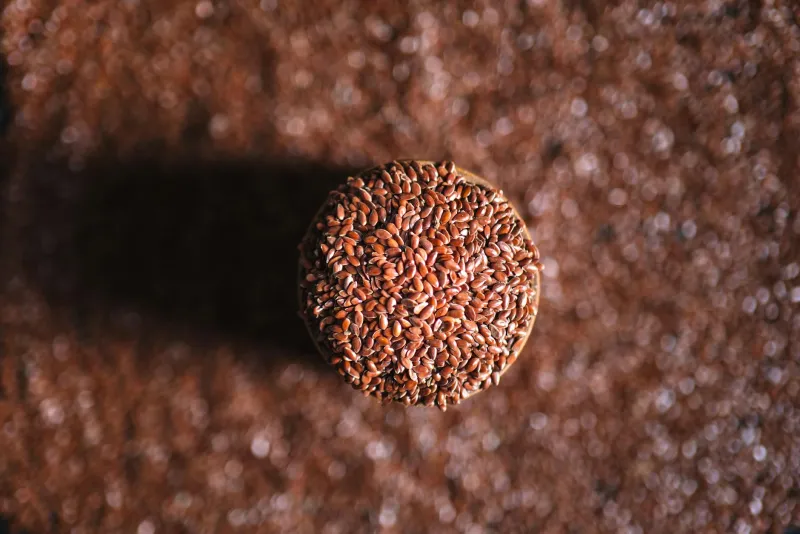
What Is Psyllium and Why Does Form Matter?
Psyllium is a soluble dietary fibre derived from the husks of Plantago ovata seeds. It forms a gel-like substance when mixed with water, which slows digestion, supports regular bowel movements, and may help maintain healthy blood glucose and cholesterol levels. Psyllium is one of the most studied dietary fibre sources. The form in which you take it determines ease of use, fibre concentration, and whether it fits your daily routine.
Forms Compared
Psyllium Husk Powder
Ground psyllium husk is the most concentrated and commonly used form. Mixed with water or juice, it creates a viscous gel. This form is used in the majority of clinical studies on psyllium. ICONFIT Superfoods Organic Psyllium Husk Powder 150g and NOW Psyllium Husk 500mg 200 veg caps are examples of well-regarded psyllium products available at maxfit.ee. The powder form is the most cost-effective per gram of fibre.
Psyllium Capsules
Capsules offer a convenient, taste-free way to take psyllium without mixing. The trade-off is that each capsule holds a limited amount, so achieving higher fibre intakes requires several capsules and adequate water intake. Capsule forms suit those who find the texture of mixed powder unpleasant.
Psyllium Flakes or Whole Husks
Coarser flakes or whole husks are less processed than fine powder. They absorb water more slowly, resulting in a slightly different texture. Flakes are sometimes added to baked goods or cereals. Fibre content per gram is comparable to husk powder.
Bioavailability and Fibre Yield
Psyllium's key characteristic is the soluble fibre content, particularly beta-glucan-type polysaccharides that form viscous gels. A well-controlled meta-analysis found that psyllium supplementation was associated with meaningful reductions in fasting blood glucose and postprandial glucose in individuals with type 2 diabetes when taken consistently (Ziai et al., 2005). The gel-forming capacity of fine husk powder is generally equal to or higher than coarser flake forms per gram.
Cost Per Effective Dose
Psyllium husk powder offers the lowest cost per gram of fibre. Capsule forms are more expensive per equivalent fibre dose because of packaging and the capsule shell. For daily fibre supplementation, powder is typically the most economical option.
| Form | Fibre per gram | Cost per dose | Convenience |
|---|---|---|---|
| Husk powder | High | Lowest | Needs mixing |
| Capsules | High (per capsule small) | Moderate | Most convenient |
| Flakes/whole husk | High | Low-moderate | Versatile in food |
Which Form for Which Goal?
For daily digestive support and blood glucose management, husk powder taken with a large glass of water is the most evidence-based approach. The key is adequate hydration — psyllium must be consumed with sufficient fluid to be safe and effective. Capsules suit travel or when mixing is inconvenient. Flakes work well for adding to oatmeal or baked goods to increase fibre.
What to Look for on the Label
- Look for psyllium husk (not seed, which has less fibre content).
- Organic certifications are available and may matter to some users.
- Check that the product lists grams of dietary fibre per serving.
- Always follow with a full glass of water regardless of form.
- Psyllium supplements are available at maxfit.ee.
FAQ
How much psyllium should I take daily?
Studies use varying amounts depending on the outcome measured. For digestive regularity and cholesterol management, doses used in research range widely. Start with a smaller amount to assess tolerance, then increase as needed. Always consult a label for the recommended serving.
Can psyllium help with weight management?
Because psyllium forms a gel in the stomach and slows gastric emptying, it is associated with increased feelings of fullness. A controlled trial found that psyllium before meals was associated with reduced hunger ratings compared with placebo (Turnbull & Thomas, 1995). It is not a weight-loss supplement on its own but can be a useful component of a fibre-adequate diet.
Is there a difference between psyllium husk and psyllium seed?
Yes. The husk (outer covering) has a much higher soluble fibre concentration than the seed itself. Most research and most products use husk. Verify that your product specifies husk rather than seed or whole plant.
References
Ziai, S. A., Larijani, B., Akhoondzadeh, S., Fakhrzadeh, H., Dastpak, A., Bandarian, F., Rezai, A., Badi, H. N., & Emami, T. (2005). Psyllium decreased serum glucose and glycosylated hemoglobin significantly in diabetic outpatients. Journal of Ethnopharmacology, 102(2), 202-207. https://pubmed.ncbi.nlm.nih.gov/16154305/
Turnbull, W. H., & Thomas, H. G. (1995). The effect of a Plantago ovata seed containing preparation on appetite variables, nutrient and energy intake. International Journal of Obesity and Related Metabolic Disorders, 19(5), 338-342. https://pubmed.ncbi.nlm.nih.gov/7647826/
Anderson, J. W., Allgood, L. D., Lawrence, A., Altringer, L. A., Jerdack, G. R., Hengehold, D. A., & Morel, J. G. (2000). Cholesterol-lowering effects of psyllium intake adjunctive to diet therapy in men and women with hypercholesterolemia. American Journal of Clinical Nutrition, 71(2), 472-479. https://pubmed.ncbi.nlm.nih.gov/10837282/



