
How to Maximize Potassium Absorption
Potassium is an essential electrolyte that regulates fluid balance, muscle contraction, nerve signalling, and blood pressure. Most people get potassium primarily from food, but athletes losing electrolytes through sweat and individuals with certain dietary patterns may need to think more carefully about potassium absorption — both from food and from supplements. Understanding what limits bioavailability and what helps it makes practical supplementation and food choices more targeted.
What Limits Potassium Absorption
Sodium-Potassium Competition
High sodium intake increases renal potassium excretion. A diet very high in salt — typical of processed-food-heavy eating patterns — causes the kidneys to excrete more potassium, effectively lowering the net retention from any given intake. Reducing sodium is thus one indirect way to improve potassium status without changing potassium intake at all.
Kidney Function
The kidneys are the primary regulators of potassium balance. Excess potassium is excreted by the kidneys; in individuals with impaired kidney function, excess potassium can accumulate dangerously (hyperkalaemia). For healthy individuals, the kidneys efficiently retain potassium when intake is low and excrete it when intake is high. High dietary fibre can modestly reduce potassium absorption in the gut by binding it before absorption, though this effect is minor in practical terms.
Form of Potassium in Supplements
Not all potassium supplement forms are identical in absorption. Potassium citrate and potassium chloride are both well absorbed, but potassium citrate has the additional benefit of alkalising the urine, which may support kidney stone prevention in at-risk individuals. A bioavailability study by Sakhaee et al. (2005) found potassium citrate effective at raising urinary potassium and pH, supporting its clinical use. Potassium chloride is common and effective but does not carry the alkalinising benefit.
Cofactors That Help
Magnesium
Magnesium is directly involved in potassium transport at the cellular level. Magnesium deficiency impairs the sodium-potassium ATPase pump, reducing potassium retention inside cells. Patients resistant to potassium repletion often have concurrent magnesium deficiency (Huang & Kucharski, 2007). For athletes concerned about electrolyte balance, ensuring adequate magnesium intake is as important as potassium itself.
Adequate Hydration
Potassium is an intracellular cation dissolved in body water. Severe dehydration concentrates all electrolytes in a smaller fluid volume; rehydration restores normal distribution. For athletes, rehydration alongside potassium replacement during and after prolonged exercise is more effective than supplementing potassium in isolation.
Form and Timing Effects
Food-Based vs Supplement Potassium
Food is the preferred source for most people. Whole foods that are rich in potassium — bananas, sweet potatoes, leafy greens, avocados, beans — also supply fibre, other minerals, and antioxidants. Potassium from whole foods is well absorbed and distributed throughout the day as meals are consumed.
Supplemental potassium (such as potassium citrate capsules) is typically dosed more conservatively than food sources, partly because supplement regulations limit individual tablet doses to avoid acute potassium overload in sensitive individuals. Taking potassium supplements spread across the day with food is the standard approach.
Timing Around Exercise
Potassium is lost in sweat during prolonged exercise. Replenishing potassium within the post-exercise window alongside carbohydrates and fluid supports muscle recovery and glycogen resynthesis. There is no need for precise timing around short workouts; the priority is ensuring daily adequacy.
Food Pairings for Better Potassium Status
- Fruit and vegetables naturally deliver potassium in bioavailable form — the combination of potassium, fibre, and water supports overall electrolyte balance.
- Legumes and beans are high in potassium and protein; including them in meals improves potassium intake without relying on supplements.
- Dairy products contain meaningful potassium alongside calcium — a useful dual-electrolyte food.
- Avoiding very-high-sodium processed foods preserves potassium retained by the kidneys without increasing supplemental intake.
Practical Tips for Optimal Potassium Absorption
- Prioritise food sources — fruits, vegetables, and legumes provide potassium in a form the body handles well.
- Reduce sodium intake to preserve potassium through renal retention.
- Ensure adequate magnesium to support cellular potassium retention.
- Choose potassium citrate if supplementing, for both bioavailability and potential urinary pH benefits.
- Spread supplement doses across meals rather than taking a large dose at once.
- Rehydrate thoroughly after exercise to restore proper electrolyte distribution.
Products such as SELF Potassium Magnesium 120 vegan caps, OstroVit Iodine Potassium iodide 200mcg 120tabs, and 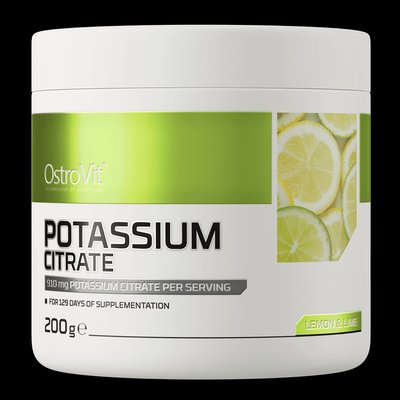 OstroVit Potassium Citrate€9.90 In stock 200g are available at maxfit.ee. For broader electrolyte support during exercise, see our electrolytes and sports drinks category.
FAQ
How much potassium do athletes need?
Individual needs vary based on sweat rate, exercise duration, and diet. The general adequate intake guidance for adults is around 3,500 mg per day from all sources. Athletes engaging in prolonged or high-intensity training in warm conditions may lose meaningful amounts in sweat and benefit from consciously including potassium-rich foods in recovery meals.
Can you take too much potassium from supplements?
For healthy individuals with normal kidney function, excess potassium from food is efficiently excreted. Supplemental potassium at high doses is a different matter — acute ingestion of large doses can raise serum potassium to dangerous levels (hyperkalaemia), causing cardiac arrhythmias. This is why supplement forms are dosed conservatively. Never exceed the package directions, and consult a doctor before supplementing if you have kidney disease or take ACE inhibitors or ARBs.
Is potassium citrate better than potassium chloride?
Both are well absorbed. Potassium citrate offers the additional benefit of urinary alkalinisation, which may be useful for individuals prone to uric acid or calcium oxalate kidney stones. For most athletes, the difference in electrolyte replenishment is minor.
References
Sakhaee, K., Maalouf, N. M., Abrams, S. A., & Pak, C. Y. (2005). Effects of potassium alkali and calcium supplementation on apatite supersaturation in urine. Kidney International, 68(5), 2286-2290.
Huang, C. L., & Kucharski, L. (2007). Potassium homeostasis. In: R. J. Alpern & S. C. Hebert (Eds.), Seldin and Giebisch's The Kidney, Academic Press. [Note: the key mechanism ref is: Huang, C. L., & Kuo, E. (2007). Mechanism of hypokalemia in magnesium deficiency. Journal of the American Society of Nephrology, 18(10), 2649-2652.]
Krajcovicova-Kudlackova, M., Babinska, K., & Valachovicova, M. (2005). Health benefits and risks of plant proteins. Bratislava Medical Journal, 106(6-7), 231-234.



