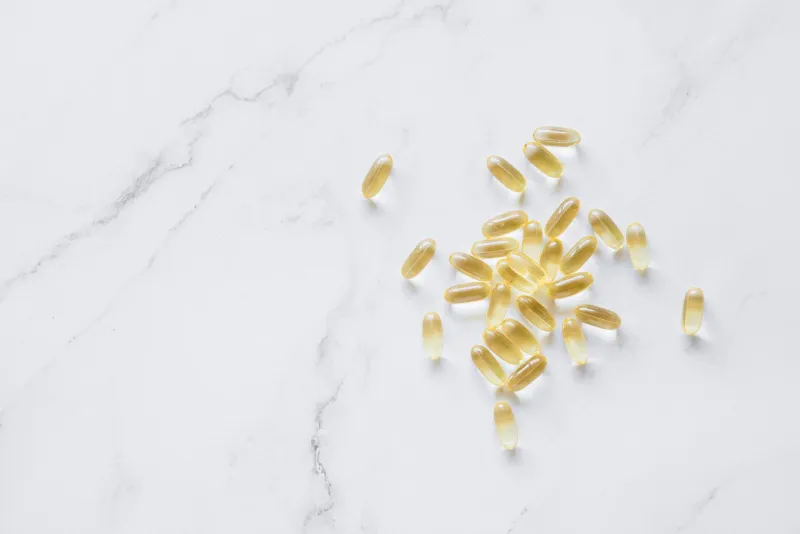
Why Does Omega-3 Quality Vary So Much?
Omega-3 fatty acids EPA (eicosapentaenoic acid) and DHA (docosahexaenoic acid) are the most evidence-backed fatty acids for heart health, brain function, eye health, and anti-inflammatory protection (Calder, 2013). Yet the market is full of products that look identical on the label but differ enormously in actual content and quality.
The Main Mistake: '1000 mg Fish Oil' ≠ 1000 mg EPA+DHA
The most common omega-3 buying error: looking at capsule size (e.g. 1000 mg) rather than EPA+DHA content.
| Product Type | Capsule Size | EPA | DHA | Total EPA+DHA |
|---|---|---|---|---|
| Low concentration | 1000 mg | 180 mg | 120 mg | 300 mg |
| Good concentration | 1000 mg | 400 mg | 300 mg | 700 mg |
| High concentration | 1000 mg | 500 mg | 375 mg | 875 mg+ |
EFSA recommends 250 mg EPA+DHA per day for cardiovascular health (EFSA, 2012). Athletes and those targeting anti-inflammatory effects may need 2,000–4,000 mg EPA+DHA daily.
Triglycerides vs Ethyl Esters: A Key Difference
Omega-3 is sold in two chemical forms:
| Form | Bioavailability | Notes |
|---|---|---|
| Triglyceride (TG) | Highest (~73% better) | Natural form in fish |
| Re-esterified triglyceride (rTG) | Highest | Concentrated and natural |
| Ethyl ester (EE) | Lower (~73% less) | Cheaper, more common |
| Lysophosphatidylcholine (krill) | Very high | Pricier, smaller capsule |
Ethyl esters are created during processing — the fish's natural triglyceride form is converted to concentrate it. Triglyceride-form products absorb 73% better when taken with a fat-containing meal compared to ethyl esters (Dyerberg et al., 2010).
Top Omega-3 Products at maxfit.ee
OstroVit Omega 3 Ultra 90 caps delivers high-concentration omega-3 with an excellent EPA+DHA ratio — one of the most popular sports nutrition omega-3 options. MST Omega 3 Selected 60 Softgels features a carefully selected fatty acid profile.
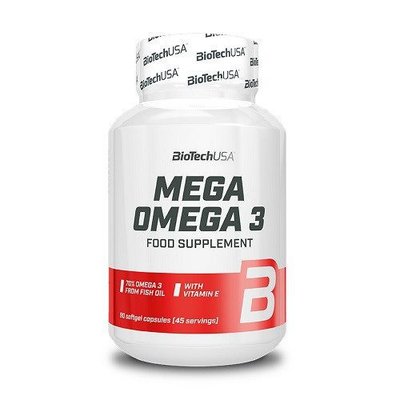 BIOTECHUSA Mega Omega 3€19.90 In stock 90softgels packs generous EPA+DHA in each softgel. ICONFIT Omega-3 60 Capsules is a well-formulated Estonian brand option.
 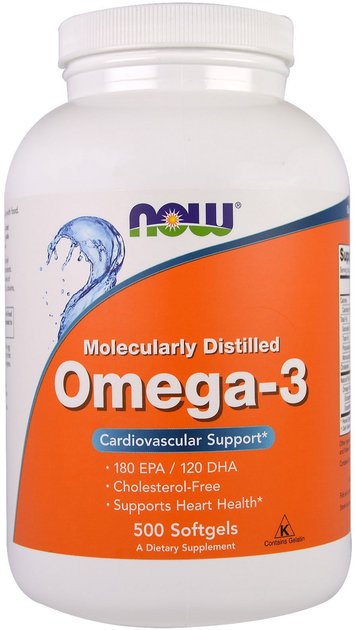 NOW Omega 3 1000mg 500 Soft Gels€44.90 In stock is a high-volume choice for economical daily use.
Oxidation: The Industry's Dirty Secret
Omega-3 fatty acids oxidise (go rancid) easily when exposed to light, heat, and air. Oxidised fish oil:
- Delivers fewer health benefits
- Contains harmful aldehydes
- Smells unpleasant (fishy smell from capsules)
To check oxidation, look for a TOTOX (Total Oxidation) value on the label — below 26 is a good standard (GOED, 2019). Or bite a capsule open: quality fish oil smells mildly marine, not rancid.
Heavy Metals and Contaminants: What to Look For
Fish can contain mercury, lead, cadmium, and PCBs. A quality manufacturer:
- Uses molecular distillation to remove contaminants
- Provides third-party laboratory certificates
- Sources from small fish low in the food chain (anchovies, sardines, herring)
Large fish (tuna, swordfish) accumulate more heavy metals — avoid fish oil from unclear sources.
EPA vs DHA: Which Fatty Acid Matters More?
| Fatty Acid | Primary Function | Better For |
|---|---|---|
| EPA | Anti-inflammatory, heart, mood | Inflammation, depression |
| DHA | Brain, eyes, cell membranes | Brain health, pregnancy |
Most people need both. A 2:1 EPA:DHA ratio is standard for general health. For pregnant women, DHA is more critical for foetal brain development.
How to Read an Omega-3 Label: A Five-Step Check
- Total EPA+DHA per serving (not capsule size)
- Form: triglyceride (TG/rTG) > ethyl ester (EE)
- Source: anchovies, sardines, herring — small fish are better
- Tested: third-party purity certificate (IFOS, IKOS, etc.)
- Storage: protected from light; refrigerate after opening
Browse the full omega-3 range at maxfit.ee.
FAQ
How many fish oil capsules should I take per day?
It depends on the product's concentration. Aim for 250–500 mg EPA+DHA per day for general health, up to 2,000–4,000 mg for athletic recovery and inflammation reduction. Read the label and calculate the required capsule count.
Is fish oil safe if it smells strong?
A strong fishy smell often indicates oxidation — meaning the product is old, poorly stored, or low quality. Good fish oil smells gently marine, not rancid.
Is plant-based omega-3 (ALA) as good as fish oil?
Not quite. ALA (from flaxseed, chia) converts to EPA and DHA at only 5–15% efficiency in the human body (Plourde & Cunnane, 2007). The vegan alternative is algae-derived DHA, which is the direct primary source.
References
- Calder, P.C. (2013). Omega-3 polyunsaturated fatty acids and inflammatory processes: nutrition or pharmacology? British Journal of Clinical Pharmacology, 75(3), 645–662.
- EFSA Panel on Dietetic Products. (2012). Scientific opinion on the tolerable upper intake level of EPA, DHA and DPA. EFSA Journal, 10(7), 2815.
- Dyerberg, J., Madsen, P., Møller, J.M., et al. (2010). Bioavailability of marine n-3 fatty acid formulations. Prostaglandins, Leukotrienes and Essential Fatty Acids, 83(3), 137–141.
- Global Organization for EPA and DHA (GOED). (2019). Voluntary Monograph for omega-3 fatty acids. Version 7.
- Plourde, M., & Cunnane, S.C. (2007). Extremely limited synthesis of long chain polyunsaturates in adults. Applied Physiology, Nutrition, and Metabolism, 32(4), 619–634.