
Is Long-Term Omega-3 Use Safe?
Omega-3 fatty acids — primarily EPA and DHA from fish oil, or ALA from plant sources — are among the most widely supplemented nutrients in the world. For people living in northern countries like Estonia, where fatty fish consumption varies widely, year-round omega-3 supplementation is a practical strategy. But is long-term omega-3 use actually safe? The research base is substantial, and the answer is reassuringly positive for most people.
What Long-Term Studies Show
A major randomised controlled trial that tracked participants over several years found that omega-3 supplementation was associated with a meaningful reduction in cardiovascular events, particularly myocardial infarction (Bhatt et al., 2019). A separate meta-analysis of randomised trials found that omega-3 supplementation reduced the risk of major adverse cardiovascular events (Hu et al., 2019). These are among the largest and most rigorous long-term datasets on omega-3 safety and efficacy.
Over years of supplementation, no serious accumulation toxicity has been observed in these trials. The side-effect profile at moderate doses is mild — occasional fishy aftertaste, minor gastrointestinal discomfort in some users, and a mild blood-thinning effect at higher doses.
Upper Safe Limits Over Time
For healthy adults, intakes of combined EPA+DHA up to about 3 grams per day are considered safe for long-term use by regulatory and scientific bodies. At doses above this threshold, the anticoagulant effect of omega-3 becomes more clinically relevant, particularly for people on blood-thinning medications. This means the blood-thinning concern is mainly relevant at pharmaceutical-range doses, not at the typical supplement dose of 1–2 grams EPA+DHA per day.
Do You Need to Cycle Omega-3?
No. Unlike stimulants or herbs that work through receptor desensitisation or adrenal pathways, omega-3 fatty acids are structural components of cell membranes and precursors to anti-inflammatory eicosanoids. They are a nutrient that the body needs continuously. Year-round use is rational and supported by the long-term trial data reviewed above.
Monitoring
For most people supplementing at typical doses, no formal monitoring is required. If you are on anticoagulant medication (such as warfarin), inform your doctor before starting omega-3 supplementation, as there may be an additive blood-thinning effect requiring INR monitoring.
If you consume very high total omega-3 from both diet and supplementation, periodic LDL-cholesterol checks are sensible — at very high doses, some users see minor LDL increases, though this is not universally observed and is generally outweighed by the cardiovascular benefits.
Honest Verdict
Long-term omega-3 use at typical supplement doses is safe, well-researched, and beneficial for cardiovascular health. It requires no cycling and minimal monitoring for healthy adults. Products available at maxfit.ee for sustained use include OstroVit Omega 3 Ultra 90caps, MST Omega 3 Selected 60 softgels, 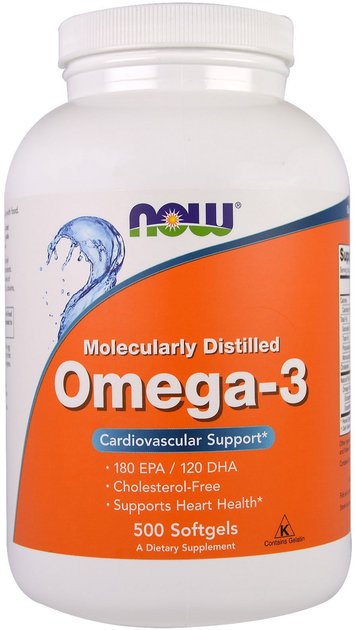 NOW Omega 3 1000mg 500 Soft Gels€44.90 In stock, and DY OMEGA-3 Softgel. For those who want extra micronutrient support, OstroVit Omega 3 + ADEK 90caps combines omega-3 with fat-soluble vitamins.
Explore the full oomega-3 category at maxfit.ee.
FAQ
Can I take omega-3 every day indefinitely?
Yes. Omega-3 fatty acids are structural nutrients the body uses continuously. Daily year-round use is safe and is the approach used in all major long-term clinical trials.
Does omega-3 thin the blood?
At typical supplement doses (around 1 gram EPA+DHA per day), any anticoagulant effect is very mild. At higher doses, it becomes more relevant. Discuss with your doctor if you are on blood-thinning medications.
Plant-based omega-3 (ALA) — is it a good alternative to fish oil?
ALA from flaxseed or algae is converted to EPA and DHA in the body, but this conversion rate is limited and variable. For equivalent EPA/DHA levels, direct EPA+DHA supplementation (from fish oil or algae-based capsules) is more reliable.
References
Bhatt, D. L., Steg, P. G., Miller, M., Brinton, E. A., Jacobson, T. A., Ketchum, S. B., Doyle, R. T., Juliano, R. A., Jiao, L., Granowitz, C., Tardif, J. C., & Ballantyne, C. M. (2019). Cardiovascular risk reduction with icosapentaenoic acid for hypertriglyceridemia. New England Journal of Medicine, 380(1), 11–22. https://pubmed.ncbi.nlm.nih.gov/30415628/
Hu, Y., Hu, F. B., & Manson, J. E. (2019). Marine omega-3 supplementation and cardiovascular disease: an updated meta-analysis of 13 randomized controlled trials involving 127 477 participants. Journal of the American Heart Association, 8(19), e013543. https://pubmed.ncbi.nlm.nih.gov/31567003/



