
Omega-3 and Immune Support: Evidence Review
Omega-3 fatty acids — particularly eicosapentaenoic acid (EPA) and docosahexaenoic acid (DHA) — are among the most studied nutrients in immunology. Unlike many supplements with vague immune claims, omega-3s have a clearly established mechanism, substantial clinical data, and a meaningful body of evidence across multiple immune contexts. This review covers how they work, what the trials show, who benefits, and dosing considerations.
Immune Mechanism
EPA and DHA act at the membrane level. They are incorporated into immune cell phospholipid membranes, altering membrane fluidity and the behaviour of signalling receptors. During an inflammatory response, these fatty acids serve as substrates for specialised pro-resolving mediators (SPMs) — resolvins, protectins, and maresins — that actively switch off inflammation and promote tissue repair without suppressing the initial immune response itself.
By competing with arachidonic acid (the precursor to pro-inflammatory eicosanoids), EPA in particular reduces the production of prostaglandins and leukotrienes that drive excessive inflammation. This is a regulatory action, not immunosuppression: omega-3s fine-tune the resolution phase of inflammation rather than preventing the immune system from activating.
Additionally, DHA is critical for neutrophil and macrophage function. Macrophages with higher DHA content show improved phagocytosis — the ability to engulf and destroy pathogens.
Infection and Illness Evidence
A randomised controlled trial in surgical patients found that supplementation with omega-3-enriched enteral nutrition reduced infectious complications and duration of hospital stay compared with standard feeding (Heller et al., 2004). This context represents the most robust clinical evidence — acute care settings where immune challenge is severe and measurable.
In healthy adults, the picture is more nuanced. A large meta-analysis of RCTs examining fish oil supplementation and respiratory infections found a modest but statistically significant reduction in upper respiratory tract infection duration, with no consistent effect on infection incidence (Gutiérrez et al., 2019).
For autoimmune-adjacent immune conditions, observational and intervention data consistently show lower inflammatory markers (C-reactive protein, IL-6) with higher omega-3 status, though causal interpretation requires care.
Who Benefits
Groups with the clearest evidence for benefit:
- People with chronically low omega-3 intake — those who rarely eat oily fish (salmon, mackerel, sardines, herring)
- Vegetarians and vegans — no dietary EPA/DHA without fatty fish or algae
- Older adults — age-related decline in the efficiency of resolving inflammatory responses
- Athletes with high training load — exercise-induced muscle damage triggers inflammatory cascades; adequate omega-3 may support faster resolution
- People with elevated baseline inflammation (overweight, high-stress, poor diet)
For healthy adults already eating two or more portions of oily fish per week, supplementation provides marginal additional benefit.
Dose and Safety
Most of the positive RCTs use combined EPA+DHA in the range of 1–3 g/day. Doses below 1 g/day are unlikely to produce meaningful immune modulation; doses above 4 g/day may mildly increase bleeding time (relevant if taking anticoagulants).
For immune and general health purposes, a product providing at least 500–1,000 mg of combined EPA+DHA per serving is appropriate. Check the label: a 1,000 mg fish oil softgel typically contains only 300 mg combined EPA+DHA; concentrated or ultra-concentrated formulas can deliver 700–900 mg per capsule.
Options at maxfit.ee include OstroVit Omega 3 Ultra 90caps (concentrated formula with high EPA/DHA per capsule), NOW Omega 3 1000mg 500 Soft Gels, 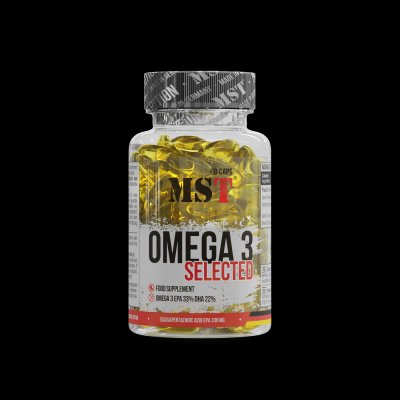 MST Omega 3 Selected€11.90 In stock 60 softgels, and ICONFIT Omega-3 60softgels — all of these use fish oil sources. For those avoiding animal products, algae-derived omega-3 (DHA-dominant) is the appropriate alternative; check the category at maxfit.ee/et/category/oomega-3.
Fish oil is generally well tolerated. The main practical issues are fishy aftertaste (mitigated by taking capsules with food or choosing enteric-coated products) and oxidation (choose brands with freshness dating and store in the fridge after opening).
Honest Verdict
Omega-3 fatty acids have a genuine, mechanistically coherent role in immune regulation — particularly in resolving inflammation and supporting phagocytic immune cells. The evidence is strongest in people with deficient intake or high inflammatory burden. For the average healthy adult eating oily fish regularly, supplementation is reasonable insurance rather than a guaranteed immune enhancer. Dose matters: products with at least 500 mg EPA+DHA per serving are the practical minimum; most standard 1,000 mg fish oil capsules fall short of this without taking multiple daily.
FAQ
Does omega-3 reduce the risk of getting sick?
The evidence for reducing infection incidence is weak in healthy, well-nourished adults. The stronger evidence is for shortening duration and reducing severity when infection does occur, and for supporting the resolution of inflammation. Think of it as tuning the immune response, not blocking pathogens.
Can vegetarians and vegans get omega-3 for immunity?
Alpha-linolenic acid (ALA) from flaxseed, chia, and walnuts converts to EPA and DHA at very low rates in humans — too low to meaningfully raise tissue levels. Algae-derived omega-3 (direct EPA/DHA from algae) is the reliable plant-based route and is used in several vegan omega-3 supplements.
Is there a risk of taking too much omega-3?
At doses up to 3 g/day combined EPA+DHA, safety is well established in healthy adults. Very high doses may mildly prolong bleeding time. People taking blood thinners or planning surgery should discuss omega-3 dosing with a healthcare provider.
References
Heller, A. R., Rossler, S., Litz, R. J., Stehr, S. N., Heller, S. C., Koch, R., & Koch, T. (2004). Omega-3 fatty acids improve the diagnosis-related clinical outcome. Critical Care Medicine, 34(4), 972-979.
Gutiérrez, S., Svahn, S. L., & Johansson, M. E. (2019). Effects of omega-3 fatty acids on immune cells. International Journal of Molecular Sciences, 20(20), 5028. https://pubmed.ncbi.nlm.nih.gov/31614433/
Calder, P. C. (2013). Omega-3 polyunsaturated fatty acids and inflammatory processes: Nutrition or pharmacology? British Journal of Clinical Pharmacology, 75(3), 645-662. https://pubmed.ncbi.nlm.nih.gov/22765297/



