
EPA vs. DHA: Which Matters More?
Omega-3 fatty acids EPA (eicosapentaenoic acid) and DHA (docosahexaenoic acid) are both essential for health, but their primary roles differ:
- EPA is the main anti-inflammatory component — it blocks the conversion of arachidonic acid into pro-inflammatory eicosanoids
- DHA is the structural foundation of the brain and retina — it makes up up to 40% of the polyunsaturated fatty acids in the cerebral cortex
- Both support cardiovascular health through different mechanisms (Calder, 2018)
In practice, you rarely need to choose between them — a quality fish oil product contains both.
Omega-3 Dosage Recommendations
General health (international guidelines)
- WHO/FAO recommendation: 250–500 mg EPA+DHA per day
- European Society of Cardiology (ESC): 1,000 mg per day for cardiovascular support
Inflammation reduction and athletic recovery
- Effective dose: 2–4 g EPA+DHA per day
- Studies show this amount significantly reduces delayed-onset muscle soreness after intense training (Smith et al., 2011)
Brain health and cognition
- DHA emphasis: at least 500–1,000 mg DHA per day
- Especially important for pregnant women, breastfeeding mothers, and older adults
Lowering triglycerides
- Clinical dose: 2–4 g EPA+DHA per day under medical supervision
- This is the most potent natural intervention for elevated triglycerides (Skulas-Ray et al., 2019)
Product Recommendations from maxfit.ee
OstroVit Omega 3 Ultra 90 caps provides a high EPA+DHA concentration per capsule — ideal for those who want an effective therapeutic dose without swallowing many capsules. NOW Omega 3 1000mg 500 Soft Gels is a budget-friendly long-term option for daily baseline supplementation. 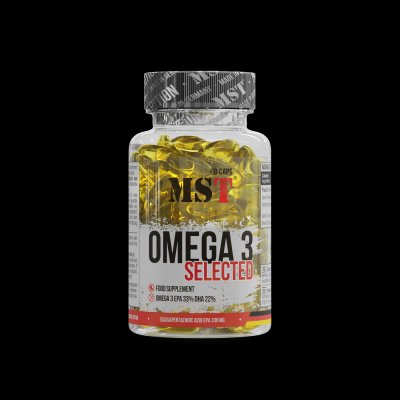 MST Omega 3 Selected€11.90 In stock 60 Softgels uses a selected high-concentrate fish oil with antioxidants to minimise oxidation.
All are available in the omega-3 supplement category at maxfit.ee.
Fish vs. Supplements: Which Is Better?
Eating fatty fish
- Mackerel, herring, salmon, and sardines are the richest dietary sources of EPA and DHA
- Two servings of fatty fish per week provides approximately 500 mg EPA+DHA per day
- Herring is an affordable and accessible option widely available across Estonia
Omega-3 supplements
- Greater dose precision and control
- Essential for those who do not eat fish (vegans, allergies)
- Choose products certified with molecular distillation — this guarantees heavy metal removal
Omega-3 Quality Markers
| Attribute | What to Look For |
|---|---|
| EPA+DHA per capsule | At least 500 mg combined |
| Oxidation (TOTOX) | Below 26 |
| Certification | IFOS, Friend of the Sea, MSC |
| Form | Triglyceride (TG) form absorbs ~70% better than ethyl ester (EE) |
Omega-3 and Vitamin D Together
Fish oil and vitamin D are a naturally complementary pair — particularly in Estonia, where sunlight deficiency makes vitamin D insufficiency common. OstroVit Omega 3 + ADEK 90caps is a convenient all-in-one solution combining omega-3 fatty acids with vitamins A, D, E, and K.
EPA:DHA Ratio: When Does It Matter?
Most fish oils naturally contain EPA and DHA in roughly a 3:2 ratio — the natural proportion found in sardine or mackerel oil. Some targeted formulations favour a higher EPA ratio for depression and systemic inflammation, while DHA-dominant formulas are prioritised for cognitive health and neural development.
For general health and athletic performance, standard fish oil with a balanced EPA:DHA ratio is entirely sufficient. Specialised ratios become relevant only for specific clinical contexts (e.g., mood disorders, paediatric cognitive support).
How to Verify Fish Oil Quality
Fish oil oxidises readily, particularly with poor storage. Oxidised fish oil is not dangerous, but it is ineffective and produces the unpleasant fishy aftertaste that discourages consistent use. Quality control steps:
- Store in the refrigerator after opening
- Check the TOTOX value on the product spec — below 26 is good quality
- Mark the opening date on the bottle — most fish oils should be consumed within 3 months of opening
- Trust your nose — good fish oil smells mildly oceanic, not of spoiled fish
Products available at maxfit.ee meet EU food safety requirements, which set minimum quality thresholds for supplements sold across Estonia and the rest of the European Union.
Omega-3 for Women: Specific Considerations
Women have distinct omega-3 needs across different life stages. During pregnancy, DHA is critical for foetal brain and visual system development — the recommended intake doubles to 500 mg DHA per day. Postpartum, omega-3 supplementation supports mood stability and helps counter postpartum blues. During menopause, omega-3's anti-inflammatory properties become especially relevant for cardiovascular risk management.
FAQ
Is high-dose omega-3 safe?
Up to 5 g of EPA+DHA per day is considered safe for healthy adults (EFSA, 2012). Those taking blood-thinning medications should consult a physician, as high omega-3 intake may affect clotting.
When is the best time to take fish oil?
With food — particularly with a fat-containing meal, which can improve omega-3 absorption by up to 50% (Garaiova et al., 2007). Breakfast containing healthy fats (eggs, nuts) is ideal.
Is there a vegan alternative to fish oil?
Yes — algae oil contains DHA (and some formulations include EPA as well) and is the preferred choice for vegans. Flaxseed oil contains ALA, but the body converts it to EPA and DHA very inefficiently (less than 5%).
References
- Calder, P. C. (2018). Very long-chain n-3 fatty acids and human health: Fact, fiction and the future. Proceedings of the Nutrition Society, 77(1), 52–72.
- Smith, G. I., Atherton, P., Reeds, D. N., Mohammed, B. S., Rankin, D., Rennie, M. J., & Mittendorfer, B. (2011). Omega-3 polyunsaturated fatty acids augment the muscle protein anabolic response to hyperinsulinaemia-hyperaminoacidaemia. Clinical Science, 121(6), 267–278.
- Skulas-Ray, A. C., Wilson, P. W. F., Harris, W. S., Brinton, E. A., Kris-Etherton, P. M., Richter, C. K., ... & Ballantyne, C. M. (2019). Omega-3 fatty acids for the management of hypertriglyceridemia. Circulation, 140(12), e673–e691.
- European Food Safety Authority. (2012). Scientific opinion on the tolerable upper intake level of EPA, DHA, and DPA. EFSA Journal, 10(7), 2815.