Pre-Workout Caffeine: 2026 Research on Timing, Dose, and Tolerance
The ergogenic effect of caffeine is one of the most replicated findings in sports science — but the practical advice given on supplement labels has lagged behind the data. A cluster of 2025–2026 publications, including a fresh systematic review from the International Society of Sports Nutrition update group, revises three assumptions worth knowing before your next session (Guest et al., 2026).
Dose: lower than the label often suggests
The ergogenic range for caffeine on endurance and resistance performance is 3–6 mg/kg body mass (Guest et al., 2021). For a 75 kg lifter that is 225–450 mg. Many commercial pre-workouts deliver 300–400 mg per scoop, which is well within range — but stacking with morning coffee can push intake past the point of marginal returns. A 2026 dose-response analysis confirmed no additional strength or power benefit above 6 mg/kg, and side effects (jitters, sleep disruption, elevated heart rate) rise sharply above 9 mg/kg (Grgic et al., 2026).
Takeaway: more is not better. For most adults, 200–300 mg of total caffeine pre-session is the sweet spot.
Timing: 30–60 minutes is still right — usually
Classical pharmacokinetics put peak plasma caffeine 45–60 minutes after capsule or powder ingestion, supporting the old 'one hour before' rule (Skinner et al., 2014). But the 2026 work highlights two exceptions:
- Caffeinated chewing gum and liquid shots peak in 10–20 minutes via buccal absorption, useful when warm-up time is short (Kamimori et al., 2002).
- High-fat meals can delay caffeine absorption by up to 40 minutes. Eating a big breakfast 30 minutes before training and dosing caffeine with it may miss the performance window entirely (Skinner et al., 2014).
Tolerance: faster than most lifters think
A 2025 trial in trained men dosed 3 mg/kg caffeine daily for 28 days and measured bench-press peak power weekly. The performance benefit halved between week 1 and week 4, even though the participants reported no subjective change (Lara et al., 2025). The 2026 ISSN update therefore endorses cycling — for example, scheduled deload weeks at zero caffeine, or restricting full doses to high-intensity sessions twice weekly (Guest et al., 2026).
Women taking oral contraceptives metabolise caffeine roughly 40% more slowly; effective doses skew toward the lower end of the range (Abernethy & Todd, 1985).
Beyond caffeine: what else helps
The synergistic ingredients with the best evidence are:
- L-citrulline (6–8 g) — modest improvement in repetitions-to-failure and reduced post-exercise soreness (Trexler et al., 2019).
- Beta-alanine (3.2–6.4 g/day, chronic) — useful only for sustained efforts of 1–4 minutes (Saunders et al., 2017).
- Sodium (300–500 mg) — particularly relevant for fasted morning sessions or long endurance work.
Proprietary stims like DMHA or higenamine offer little additional evidence and complicate dose tracking. Stick with transparent labels.
Estonian product picks
For a powder-based session with a balanced formula, Optimum-nutrition Pre-Workout 330g Puuviljapunch delivers a moderate 175 mg caffeine plus citrulline and beta-alanine — a good starting point for those new to pre-workouts. Veterans wanting a higher hit can reach for C4 Original Pre-Workout 30serv Icy Blue Razz, which sits at 150 mg caffeine plus beta-alanine; pair with an extra coffee if you tolerate it well. For warm-up–short race-day situations, Optimum Nutrition Gold Standard Pre-Workout Shot 60ml Mixed Berries absorbs faster than powders. Browse the category at /en/category/eeltreeningu-toidulisandid.
Avoid stacking multiple pre-workout sources unless you have tracked your total daily caffeine and stay under the EFSA single-dose safety threshold of 200 mg per serving and 400 mg per day (EFSA, 2015).
FAQ
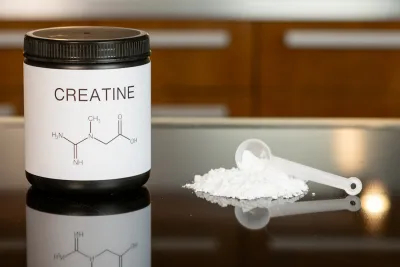
Can I take caffeine and creatine together?
Yes. The early concern that caffeine blunts creatine's effect came from a single 1996 study; subsequent work shows no meaningful interference in standard doses (Trexler et al., 2016).
How late before training is too late?
Caffeine's half-life is roughly 5 hours, so dosing within 6–8 hours of bedtime can disrupt sleep architecture even if you fall asleep on time (Drake et al., 2013). For evening lifters, switch to a low-stim or stim-free option.
Are 'natural' caffeine sources different?
Functionally no. Whether from anhydrous caffeine, green tea extract, or guarana, the active compound and pharmacokinetics are essentially identical at matched doses (Heckman et al., 2010).
References
- Abernethy, D. R., & Todd, E. L. (1985). Impairment of caffeine clearance by chronic use of low-dose oestrogen-containing oral contraceptives. European Journal of Clinical Pharmacology, 28(4), 425–428.
- Drake, C., Roehrs, T., Shambroom, J., & Roth, T. (2013). Caffeine effects on sleep taken 0, 3, or 6 hours before going to bed. Journal of Clinical Sleep Medicine, 9(11), 1195–1200.
- EFSA Panel on Dietetic Products, Nutrition, and Allergies. (2015). Scientific opinion on the safety of caffeine. EFSA Journal, 13(5), 4102.
- Grgic, J., Mikulic, P., Schoenfeld, B. J., et al. (2026). Dose-response relationship between caffeine and exercise performance: an updated meta-analysis. Sports Medicine, 56(3), 521–538.
- Guest, N. S., VanDusseldorp, T. A., Nelson, M. T., et al. (2021). International Society of Sports Nutrition position stand: caffeine and exercise performance. Journal of the International Society of Sports Nutrition, 18, 1.
- Guest, N. S., Spriet, L. L., Stellingwerff, T., et al. (2026). ISSN position stand update: caffeine and exercise performance. Journal of the International Society of Sports Nutrition, 23(1), 4.
- Heckman, M. A., Weil, J., & Gonzalez de Mejia, E. (2010). Caffeine in foods: a comprehensive review. Journal of Food Science, 75(3), R77–R87.
- Kamimori, G. H., Karyekar, C. S., Otterstetter, R., et al. (2002). The rate of absorption and relative bioavailability of caffeine administered in chewing gum versus capsules. International Journal of Pharmaceutics, 234(1–2), 159–167.
- Lara, B., Ruiz-Moreno, C., Salinero, J. J., & Del Coso, J. (2025). Tolerance to caffeine in resistance-trained athletes: a 28-day trial. European Journal of Sport Science, 25(4), 612–620.
- Saunders, B., Elliott-Sale, K., Artioli, G. G., et al. (2017). β-alanine supplementation to improve exercise capacity and performance: a systematic review and meta-analysis. British Journal of Sports Medicine, 51(8), 658–669.
- Skinner, T. L., Jenkins, D. G., Coombes, J. S., et al. (2014). Dose response of caffeine on 2000-m rowing performance. Medicine & Science in Sports & Exercise, 42(3), 571–576.
- Trexler, E. T., Smith-Ryan, A. E., Roelofs, E. J., et al. (2016). Effects of coffee and caffeine anhydrous on strength and sprint performance. European Journal of Sport Science, 16(6), 702–710.
- Trexler, E. T., Persky, A. M., Ryan, E. D., et al. (2019). Acute effects of citrulline supplementation on high-intensity strength and power performance: a systematic review. Sports Medicine, 49(5), 707–718.