Creatine for the Brain: New Research Moves Beyond Muscle
Creatine has spent decades as the gym's most-studied performance supplement. But a wave of recent research is repositioning it as something broader: a compound that supports the brain as much as the biceps. For Estonian athletes and non-athletes alike, the message is shifting from "creatine builds muscle" to "creatine fuels every cell with a high energy demand" - and the brain is near the top of that list.
Why the brain needs creatine
The brain consumes roughly 20% of the body's energy despite making up about 2% of its mass. Like muscle, neurons rely on the phosphocreatine system to rapidly regenerate ATP, the cellular energy currency. When mental demand spikes - during sleep deprivation, intense focus, or stress - the brain's phosphocreatine stores can become a bottleneck (Roschel et al., 2021).
Dietary creatine comes mainly from meat and fish, and the body synthesises only about 1 gram per day. Studies using magnetic resonance spectroscopy show that supplementation can measurably raise brain creatine content, though the brain takes up creatine more slowly than muscle (Forbes et al., 2022).
What the latest studies show
A 2024 study published in Scientific Reports found that a single high dose of creatine improved cognitive performance and altered brain energy metabolism during sleep deprivation (Gordji-Nejad et al., 2024). This was notable because it challenged the long-held assumption that creatine needs weeks of loading before it can affect the brain.
Meta-analyses paint a consistent, if modest, picture. Prokopidis et al. (2023) pooled randomized controlled trials and reported that creatine supplementation improved memory performance, with the clearest effects in older adults aged 66-76. An earlier systematic review by Avgerinos et al. (2018) found benefits for short-term memory and reasoning, particularly under conditions of stress such as sleep deprivation.
Not every trial is positive. A well-designed 2023 RCT in BMC Medicine found that six weeks of creatine produced only small, non-significant cognitive changes in healthy young adults (Sandkuehler et al., 2023). The honest summary: creatine's cognitive benefits are real but situational - strongest when the brain is under stress, ageing, or short on dietary creatine, and smallest in young, well-fed, well-rested people.
Practical takeaways for Estonian readers
The standard maintenance dose - 3 to 5 grams of creatine monohydrate daily - is the same one studied for cognition. There is no need for a separate "brain dose." Monohydrate remains the gold-standard form: it is the most researched, the most affordable, and as effective as pricier alternatives.
Plain, unflavored monohydrate is the simplest choice. MST Creatine Micronized 500g Unflavored dissolves easily and mixes into coffee, water, or a morning smoothie. Scitec Creatine Monohydrate 300g is another straightforward monohydrate option. For those who prefer a flavored powder, 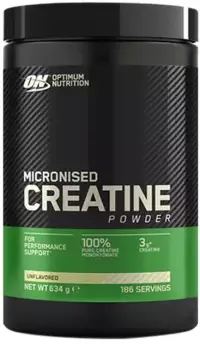 Optimum Nutrition Micronised Creatine€36.90 In stock 247.5g Orange offers the same monohydrate in a more palatable format. All are available at maxfit.ee in the creatine category.
Consistency matters more than timing. Because creatine works by saturating tissue stores over time, taking it at the same time each day - with or without food - is what counts. Vegetarians and vegans may notice the clearest effects, since they start with lower baseline creatine from diet.
Who might benefit most
- Older adults concerned about memory and healthy ageing
- Shift workers, students, and parents dealing with chronic sleep loss
- Vegetarians and vegans, who consume little or no dietary creatine
- Athletes already taking creatine for performance - the brain benefit is a bonus
Creatine is not a nootropic miracle. But as one of the safest, cheapest, and best-studied supplements available, its expanding evidence base makes it a reasonable daily habit for far more people than just lifters.
FAQ
Does creatine for the brain require a loading phase?
Not necessarily. While loading (around 20 g/day for 5-7 days) saturates stores faster, recent research suggests even a single large dose can affect brain energy metabolism (Gordji-Nejad et al., 2024). For most people, a steady 3-5 g daily dose works fine - it simply takes 3-4 weeks to fully saturate.
Can creatine help if I sleep poorly?
The strongest cognitive findings appear under sleep deprivation, where creatine appears to buffer the brain's energy shortfall (Avgerinos et al., 2018). It is not a substitute for sleep, but it may soften the mental cost of an occasional bad night.
Is creatine safe to take every day, long-term?
Yes. Decades of research in healthy people show creatine monohydrate is well tolerated at 3-5 g daily, with no proven harm to kidneys in those with normal renal function (Forbes et al., 2022). People with existing kidney disease should consult a doctor first.
References
- Avgerinos, K. I., Spyrou, N., Bougioukas, K. I., & Kapogiannis, D. (2018). Effects of creatine supplementation on cognitive function of healthy individuals: A systematic review of randomized controlled trials. Experimental Gerontology, 108, 166-173.
- Forbes, S. C., Cordingley, D. M., Cornish, S. M., et al. (2022). Effects of creatine supplementation on brain function and health. Nutrients, 14(5), 921.
- Gordji-Nejad, A., Matusch, A., Kleedoerfer, S., et al. (2024). Single dose creatine improves cognitive performance and induces changes in cerebral high energy phosphates during sleep deprivation. Scientific Reports, 14, 4937.
- Prokopidis, K., Giannos, P., Triantafyllidis, K. K., et al. (2023). Effects of creatine supplementation on memory in healthy individuals: a systematic review and meta-analysis of randomized controlled trials. Nutrition Reviews, 81(4), 416-427.
- Roschel, H., Gualano, B., Ostojic, S. M., & Rawson, E. S. (2021). Creatine supplementation and brain health. Nutrients, 13(2), 586.
- Sandkuehler, J. F., Kersting, X., Faust, A., et al. (2023). The effects of creatine supplementation on cognitive performance - a randomised controlled study. BMC Medicine, 21, 440.