


The Short Answer: Form Is the Third Question, Not the First
Choosing a NAC form is a very popular question, but in order of importance it comes third. First is the dose, second is consistency, and only third is whether the compound arrives as powder or as a capsule. All three formats break down in the stomach, absorb in the small intestine and end up in the same place. The real differences are taste, cost per gram, and how accurately you actually measure your dose.
If you want the one-sentence version: capsules if you want certainty that you will not skip it, powder if you are taking NAC long term and want a cheaper gram. The rest of this article explains why, and what each option really costs on an Estonian shelf.
What NAC Actually Does in the Body
N-acetylcysteine is an acetylated form of cysteine. Cysteine is the rate-limiting amino acid for glutathione synthesis — the raw material whose scarcity puts a brake on the whole production line. The point of NAC is not to be a powerful antioxidant itself, but to supply the material from which your body makes its own. A stable-isotope labelled study showed that NAC raises glutathione indirectly, through cysteine availability, rather than acting as a direct radical scavenger (Zhou et al., 2015).
That distinction matters in practice. It means NAC is not something you take once when the need arises. It works when cysteine supply is persistently tight: on a low-protein diet, during a long block of high training load, or when day-to-day recovery is already stretched (Šalamon et al., 2019).
What raises glutathione demand? Mainly four things: hard and long training, sleep debt, alcohol, and chronically low protein intake. If none of those apply to your life right now, the effect you can expect from NAC is small, and it is worth saying that to yourself honestly before the jar goes into the basket. If several of them apply at once, cysteine supply is probably where the bottleneck really is.
Powder, Capsule, Tablet: What Actually Differs
Powder dissolves quickly, the dose is freely adjustable, and the cost per gram is the lowest. The downsides are smell and taste, and the fact that 600 mg is far too small an amount to judge with a spoon by eye.
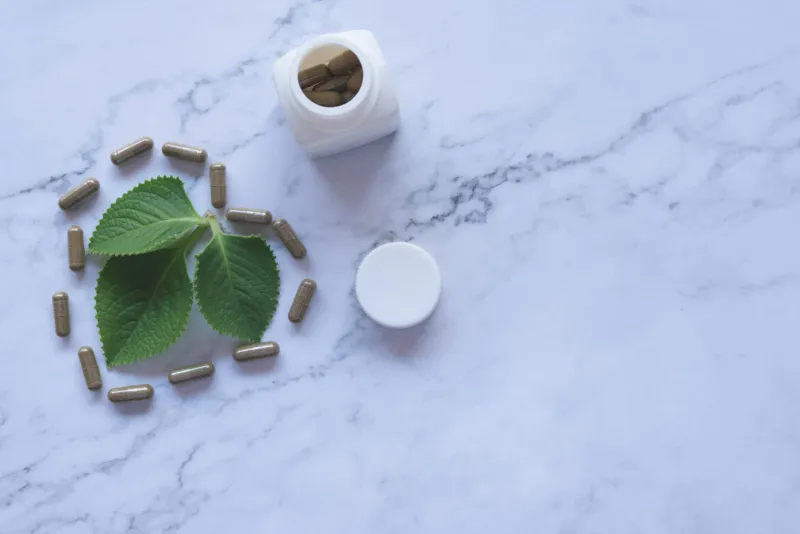
Capsules are the most convenient and odour-free option; the dose is fixed and therefore reliable. The shell breaks down in the stomach within minutes, and that delay is of no consequence at supplement doses.
Tablets are compressed, break down more slowly, and usually contain more excipients: binders, glidants, fillers. At a large dose a tablet is physically bigger and harder for some people to swallow.
Here is the practical arithmetic no label does for you: if you are aiming at 1200 mg a day, that is two capsules at 600 mg, eight tablets at 150 mg, or half a gram of powder twice. Same dose, three very different daily experiences. It is that calculation, not a bioavailability percentage, that decides for most people which form is still in use three months later.
None of these is meaningfully more bioavailable than another. The difference is behavioural. The format you actually use for three months straight always beats the format that is theoretically better and sits untouched in a cupboard.
Bioavailability: Why Oral NAC Loses a Lot and Why That Is Not a Problem
The oral bioavailability of NAC is low — reviews give a typical range of roughly 4–10%, because much of the compound is metabolised in the gut and liver before it ever reaches systemic circulation (Tenório et al., 2021). That number looks alarming, but it misleads.
The reason is that the target of NAC is not the blood, it is the liver — specifically glutathione synthesis in liver cells. First-pass metabolism here is not purely loss; it is partly the very place where the compound does its job. So there is no point hunting for a form that raises the bioavailability percentage. No powder, capsule or tablet on any shelf changes that order of magnitude.
What this means in practice: choose your dose from the amounts used in research, not from promises about superior absorption. In sports research NAC doses have mostly fallen in the range of roughly 600–1800 mg per day, and gastrointestinal complaints became more frequent at the higher end (Rhodes & Braakhuis, 2017).
Taste and Smell: The Real Weakness of Powder
This is the part reviews skip and the part powder buyers stumble over. NAC smells of sulphur. An open jar makes itself known to an entire kitchen cupboard, and the mixed drink tastes like an old egg. For some people this is a non-issue; others abandon the jar in week two.
If you go with powder, three things rescue the situation: mix it with something acidic (orange or grapefruit juice masks sulphur best), drink it immediately rather than letting it stand, and store the jar away from the rest of the cupboard. OstroVit NAC 200g supreme pure is a typical bulk powder designed for mixing.
The second problem with powder is burping. Taken on an empty stomach, NAC leaves some people with a sulphurous aftertaste that lasts for hours. A small amount of food in the stomach usually solves it, and if it does not, that is one more argument for a capsule.
If the first attempt already triggers revulsion, do not argue with yourself. A capsule costs more per gram, but the supplement you do not take is the one that costs the most in the end. VitalHarmony NAC 90caps is the simplest solution to that problem.
Forms Compared
| Form | Cost per gram | Dose accuracy | Taste and smell | Who it suits |
|---|---|---|---|---|
| Powder | Lowest | Needs a scale | Clearly sulphurous | Long-term use, cost-conscious |
| Capsule | Middle | Fixed, precise | None | Most people, travel |
| Tablet | Middle | Fixed, splittable | Almost none | Those who prefer to halve a dose |
| Combination formula | Highest | NAC amount often small | None | One jar instead of several |
Cost per Gram: The Maths at Estonian Shelf Prices
At the time of writing, OstroVit NAC 200g supreme pure costs 13.90 €. That works out at roughly 0.07 € per gram. At 600 mg a day it is about 0.04 € per day, and the tub lasts more than three hundred days. No capsule format comes anywhere near that price.
VitalHarmony NAC 90caps costs 8.90 €. If the label states 600 mg per capsule, one capsule a day gives you three months at roughly 0.10 € per day. The gap versus powder is two- to threefold — but what you are buying is the absence of smell, the absence of measuring, and a bottle that fits in a bag.
One honest warning about powder: 600 mg is not an amount you can estimate with a teaspoon. If you buy bulk powder, buy a kitchen scale accurate to 0.01 g as well. Without it your dose is a guess and the saving becomes an illusion. This is the single most common mistake first-time NAC powder buyers make in Estonia.
Combination Formulas vs Pure NAC
OstroVit Liver Aid 90caps is an example of a combination formula, where NAC sits alongside other liver-supportive ingredients in one capsule. The strength of such products is convenience: one jar, one capsule, fewer reminders.
The weakness is dose. In a combination formula the NAC content per capsule is usually lower than in a standalone product, because everything else has to fit in the capsule too. If you want to reach the amounts used in research you have to take more of the combination product, and then the dose of everything else rises with it.
On a combination label, look for the one thing that gives the problem away: a proprietary blend, or a blend total without a separate number for each ingredient. In that case there is no way to know whether a capsule holds fifty or three hundred milligrams of NAC, and comparing prices becomes meaningless. An honest product states each ingredient amount on its own.
A practical rule: a combination formula is good when your goal is broad and soft. Pure NAC is better when you know which dose you are aiming for. The full range sits in the NAC category, and related support products in the vitamin complexes category.
Food and Whey: Cysteine Without a Jar
Before you buy NAC, look at your protein. Whey is one of the most cysteine-rich protein sources on the table, and its cysteine feeds the same glutathione synthesis pathway. If your daily protein intake is already thin, raising protein will probably do more than adding a jar of NAC beside it.
In practice that means MST Protein Best Whey + Enzymes 510g Küpsised ja kreem at 25.90 € covers protein, cysteine and the recovery side at once, while NAC covers only one narrow slice of that. The protein range is in the proteins category.
Whey is not the only place. Egg white, curd cheese, chicken, fish and pulses all supply cysteine, and in an Estonian kitchen the easiest increase is usually curd cheese or one more egg at breakfast. Sulphur-rich vegetables — garlic, onion, cabbage and broccoli — feed the same sulphur economy by another route. It is not an exciting piece of advice, but it is cheaper than any jar on a shelf.
This does not make NAC redundant. It makes the order matter: protein first, NAC second. Someone who buys NAC while eating 60 g of protein a day is fixing the wrong thing.
Label Checks and Storage
Five things to check before buying:
- Milligrams per capsule or per scoop, not per serving. A serving may mean three capsules.
- Whether the NAC amount is stated separately or hidden inside a blend total. If only the blend total is listed, you do not know your dose.
- Excipients. Tablets usually have more of them than capsules; powder has the fewest.
- Package size versus your actual intention. 200 g of powder is roughly a year's supply; if you are trying it for the first time, a smaller capsule pack is more sensible.
- Expiry date and how well the container seals. NAC oxidises with air and moisture.
Storage is a real issue here, not a formality. NAC powder is hygroscopic and pulls in moisture: at the humidity of an Estonian autumn kitchen, a loosely closed jar turns lumpy within a couple of weeks. Keep the lid tight, leave the desiccant sachet inside, and store the jar in a dry cupboard rather than above the hob or the kettle.
Who Should Skip NAC
- With asthma or bronchial hypersensitivity: airway-related reactions have been described, and this is a conversation for your doctor rather than a self-experiment.
- For people on nitrates (nitroglycerin): the interaction is known and can amplify headache and a drop in blood pressure.
- For people on blood thinners: discuss the dose with your doctor.
- During pregnancy and breastfeeding: there is no adequate basis for recommending a supplement dose.
- For anyone chasing maximal training adaptation: here there is a genuine trade-off. Thiol-based antioxidant supplementation attenuated the inflammatory response after heavy eccentric exercise and altered adaptive signalling in muscle (Michailidis et al., 2013). If your goal is hypertrophy and adaptation, a sustained high antioxidant dose around training may not work in your favour.
- For anyone expecting a cleanse: no jar replaces the work your liver already does. In Estonia food supplements fall under Terviseamet supervision and may not be presented as treating or preventing disease.
One note specific to the Estonian context: acetylcysteine also exists here as a registered pharmacy medicine, with a completely different purpose and dosing instruction. The same active-ingredient name on a pharmacy shelf in Tallinn or Tartu therefore does not mean the same product. The medicine and the supplement are not interchangeable products, and they should not be confused or stacked on top of each other.
How to Choose by Goal
Long-term daily use where price matters: powder, with a scale, in the morning with juice. The cheapest way to hold a steady dose over time.
A first trial or a travelling lifestyle: capsules. Fixed dose, no measuring, no smell, and if it does not suit you, you are out less than ten euros.
Broad liver support without going into detail: a combination formula, knowing that the NAC dose is smaller.
An intense training block: here timing matters more than form. See NAC dosage, NAC timing and NAC stacking. During a period of intensified training, adding NAC improved some performance measures in research (Slattery et al., 2014) — but that is a short-term load-tolerance tool, not a long-term adaptation tool.
If you are unsure, run an eight-week test. Pick one form, hold one dose, change nothing else at the same time, and write down three things: sleep, how you feel in the morning, and digestion. If none of them moves in eight weeks and your training load has been ordinary, you have your answer, and the money goes further on protein or sleep from there. Most supplements do not fail on dose; they fail because nobody ever decided what exactly was being measured.
FAQ
Does powder absorb better than capsules?
Not measurably. The capsule shell breaks down within minutes and the path from there is identical. A difference only appears once you need four or five capsules to reach your dose — at that point powder is simply more practical.
Why does NAC smell so bad?
The molecule carries a sulphur-containing thiol group and that is what produces the characteristic smell. The smell is not a sign of spoilage. Spoiled powder is recognised instead by clumping and a change in colour.
Can NAC be mixed into a protein shake?
Yes, and it is one of the better ways to hide the taste. Avoid strongly alkaline drinks, since they accelerate oxidation, and drink the mixture right after mixing it.
Should a tablet be split if the dose is too big?
If the tablet has a score line, yes, that is what it is for. There is no point opening capsules — the taste of the contents makes it an experience nobody repeats.
How long does a jar last?
200 g of powder at a 600 mg daily dose lasts more than three hundred days, which for most people is longer than their actual intention. A smaller capsule pack is the more honest purchase for a first attempt.
Can NAC be taken with vitamin C and zinc?
Yes, there is no direct conflict and these are common companions in the same morning set. What matters more is the overall picture: several antioxidant supplements at once around training is not automatically a better plan.
References
Michailidis, Y., Karagounis, L. G., Terzis, G., Jamurtas, A. Z., Spengos, K., Tsoukas, D., ... & Fatouros, I. G. (2013). Thiol-based antioxidant supplementation alters human skeletal muscle signaling and attenuates its inflammatory response and recovery after intense eccentric exercise. American Journal of Clinical Nutrition, 98(1), 233–245. https://pubmed.ncbi.nlm.nih.gov/23719546/
Rhodes, K., & Braakhuis, A. (2017). Performance and side effects of supplementation with N-acetylcysteine: a systematic review and meta-analysis. Sports Medicine, 47(8), 1619–1636. https://pubmed.ncbi.nlm.nih.gov/28102488/
Šalamon, Š., Kramar, B., Marolt, T. P., Poljšak, B., & Milisav, I. (2019). Medical and dietary uses of N-acetylcysteine. Antioxidants, 8(5), 111.
Slattery, K. M., Dascombe, B., Wallace, L. K., Bentley, D. J., & Coutts, A. J. (2014). Effect of N-acetylcysteine on cycling performance after intensified training. Medicine and Science in Sports and Exercise, 46(6), 1114–1123. https://pubmed.ncbi.nlm.nih.gov/24576857/
Tenório, M. C. D. S., Graciliano, N. G., Moura, F. A., Oliveira, A. C. M., & Goulart, M. O. F. (2021). N-acetylcysteine (NAC): impacts on human health. Antioxidants, 10(6), 967. https://pubmed.ncbi.nlm.nih.gov/34208683/
Zhou, J., Coles, L. D., Kartha, R. V., Nixon, J. P., Terpstra, M., Butterick, T. A., ... & Cloyd, J. C. (2015). Intravenous administration of stable-labeled N-acetylcysteine demonstrates an indirect mechanism for boosting glutathione and improving redox status. Journal of Pharmaceutical Sciences, 104(8), 2619–2626. https://pubmed.ncbi.nlm.nih.gov/26052837/


