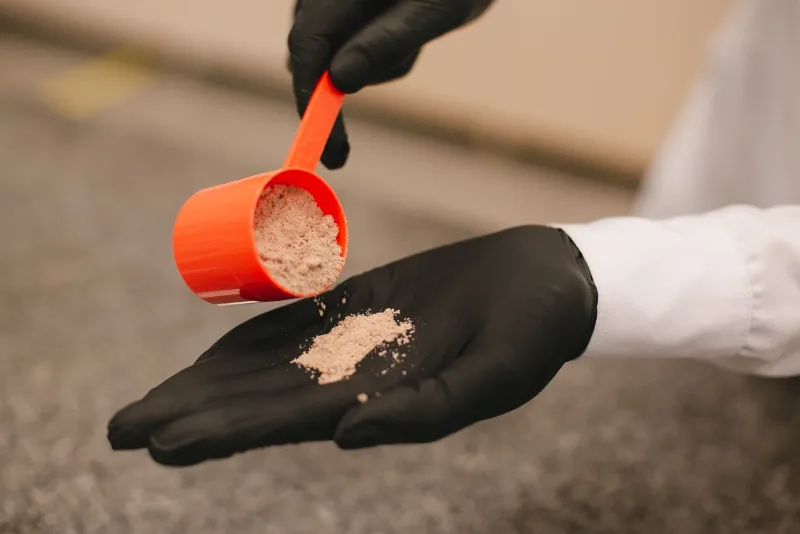
How to Maximize L-Leucine Absorption
L-leucine is more than just one of the three branched-chain amino acids. It is the primary anabolic signal in skeletal muscle — the amino acid that activates the mTORC1 pathway and triggers muscle protein synthesis (MPS). If you are taking leucine or leucine-rich supplements, understanding how to optimise its absorption can meaningfully influence results.
What Limits L-Leucine Absorption
Leucine absorption from the small intestine is mediated by specific amino acid transporters. When multiple amino acids compete for the same transporter simultaneously — as happens with large mixed-protein meals — absorption kinetics slow. This is not a problem in normal dietary contexts, but it matters for targeted supplementation timing.
Gastric emptying rate also affects how quickly leucine reaches the intestinal wall. Large high-fat meals delay gastric emptying and consequently delay leucine appearance in circulation. This is one reason post-workout leucine hits differently when taken in a small liquid form versus embedded in a large solid meal.
Cofactors That Help
Insulin facilitates amino acid uptake into muscle cells by stimulating amino acid transporters independently. Leucine itself triggers a modest insulin response, but co-ingesting leucine with carbohydrates amplifies the insulinogenic signal and may accelerate amino acid clearance from plasma into muscle. A study examining the co-ingestion of protein and carbohydrate after exercise found that insulin area-under-the-curve correlated with enhanced amino acid uptake (Staples et al., 2011). This suggests that adding even a small amount of carbohydrate to a leucine-containing shake may support faster uptake.
Vitamin D adequacy is also relevant. Vitamin D receptors are expressed in muscle tissue, and deficiency is associated with impaired muscle protein synthesis signalling. Ensuring adequate vitamin D status creates a more receptive environment for leucine's anabolic signal.
Form and Timing Effects
Free-form L-leucine in powder or capsule reaches peak plasma concentrations faster than leucine embedded in whole protein. However, peak plasma levels are not the only factor — the duration of elevated leucine above the "leucine threshold" for MPS activation also matters. A single large dose can spike and fall quickly, while leucine from a slower protein source (such as casein) may sustain the signal longer.
For most practical purposes, the ideal window for leucine intake is around resistance training. Research consistently shows that the post-exercise period is characterised by heightened muscle sensitivity to amino acids (Churchward-Venne et al., 2012). This does not mean a rigid 30-minute window, but consuming leucine-rich protein within a couple of hours of training is a reasonable target.
NOW L-Lysine 1000mg 100tabs (from the lusiin category) and BCAA products at maxfit.ee such as OstroVit BCAA Instant 400g include leucine alongside its branched-chain partners. For the l-leutsiin category, browse the l-leutsiin section at maxfit.ee.
Food Pairings
Leucine-rich whole foods include whey protein, eggs, fish, and legumes for plant-based eaters. Pairing leucine supplementation with a carbohydrate source (fruit, rice, oats) capitalises on the insulin synergy. Avoiding very high-fat co-ingestion in the immediate peri-workout window keeps gastric emptying brisk.
Practical Tips
| Situation | Recommendation |
|---|---|
| Post-workout | Leucine-rich protein + small carb source, liquid form preferred |
| Morning fast broken | Add leucine to first meal to restart MPS |
| Older adults | Higher leucine per meal may be needed to overcome "anabolic resistance" |
| Plant-based diet | Supplement free-form leucine alongside plant protein to hit effective threshold |
FAQ
How much leucine per meal is needed to stimulate MPS?
Based on controlled studies, roughly 2-3 grams of leucine per meal appears sufficient to maximally stimulate MPS in young adults; older adults may require more due to anabolic resistance (Churchward-Venne et al., 2012). Exact values depend on body mass and training status.
Should I take leucine on rest days?
Yes. MPS does not only occur after workouts — maintaining adequate daily leucine intake supports ongoing muscle maintenance and repair.
Does leucine work without exercise?
Leucine can stimulate MPS acutely even without resistance exercise, but the magnitude is smaller. The greatest benefit occurs when combined with a training stimulus.
References
Staples, A. W., Burd, N. A., West, D. W., Currie, K. D., Atherton, P. J., Moore, D. R., Rennie, M. J., Macdonald, M. J., Baker, S. K., & Phillips, S. M. (2011). Carbohydrate does not augment exercise-induced protein accretion versus protein alone. Medicine & Science in Sports & Exercise, 43(7), 1154–1161.
Churchward-Venne, T. A., Burd, N. A., Mitchell, C. J., West, D. W., Philp, A., Marcotte, G. R., Baker, S. K., Baar, K., & Phillips, S. M. (2012). Supplementation of a suboptimal protein dose with leucine or essential amino acids: effects on myofibrillar protein synthesis at rest and following resistance exercise in men. Journal of Physiology, 590(11), 2751–2765. https://pubmed.ncbi.nlm.nih.gov/22451437/
Antonio, J., & Street, C. (1999). Glutamine: a potentially useful supplement for athletes. Canadian Journal of Applied Physiology, 24(1), 1–14. https://pubmed.ncbi.nlm.nih.gov/9916176/



