A jump rope HIIT workout, honestly explained
Can 20 minutes of skipping really "torch" calories? Mostly yes — but for an honest reason, not a magical one. Jump rope is simply a high-intensity activity: a steady skipping pace sits at roughly 11–12 METs on the standard activity reference table (Ainsworth et al., 2011), which is in the same vigorous range as a hard run. Pack that intensity into short, sharp intervals and you get a genuinely demanding 20-minute session — no gimmick required.
There is one classic study worth knowing. Decades ago, 10 minutes a day of rope skipping improved cardiovascular efficiency about as much as 30 minutes a day of jogging (Baker, 1968). That roughly 3-to-1 time efficiency is the real appeal: jump rope packs a lot of conditioning into very little time.
What do you want to get out of HIIT jump rope sessions?
Browse the rangeThe 20-minute routine
Keep it simple. After a few minutes of easy skipping and arm circles to warm up, alternate hard and easy blocks.
| Block | Effort | Time |
|---|---|---|
| Warm-up | Easy bounce skip | 3 min |
| Interval 1 | Fast skip | 30 sec |
| Recovery | Slow skip or march | 30 sec |
| Repeat intervals | × 12 rounds | 12 min |
| Cool-down | Easy skip + stretch | 2 min |
That is roughly 30 seconds hard, 30 seconds easy, twelve times. Beginners can start at 15 seconds hard / 45 seconds easy and build up. The goal is to be breathing hard during the work blocks, then partly recover before the next one — that contrast is what makes it HIIT.
What the science actually says
Does HIIT beat steady cardio for fat loss?
For pure fat loss, interval training and steady-state cardio cut body fat by a similar amount — interval training just does it in less time. One meta-analysis found high-intensity interval work achieved comparable fat-mass reductions to continuous training in roughly 40% less training time (Wewege et al., 2017). So the headline benefit of a jump rope HIIT workout is efficiency, not some unique fat-burning power.
What about the "afterburn"?
The excess post-exercise oxygen consumption — the "afterburn" — is real but modest. Meaningful afterburn generally needs longer or supramaximal efforts, and its contribution to total weight loss is small (LaForgia, Withers & Gore, 2006). Most of the calories you burn skipping happen during the session, not for hours afterward, so do not over-rely on afterburn marketing.
How fit can skipping make you?
Very fit, very efficiently. Interval training reliably raises VO2max — a core measure of aerobic fitness — and tends to produce larger improvements than steady continuous training for the same goal (Milanović, Sporiš & Weston, 2015). Jump rope is one of the most accessible ways to hit those high intensities.
Common mistakes that wear you out fast
Most beginners burn out not because skipping is too hard, but because of fixable technique errors:
- Jumping too high. A centimetre off the floor is enough. Big jumps waste energy and pound your joints.
- Swinging from the shoulders. The rope should turn from your wrists, not your whole arms. Loose wrists let you skip far longer.
- Going too fast too soon. Speed comes after rhythm. Find a steady cadence first, then add intensity in the intervals.
- A poorly sized rope. Stand on the middle of the rope; the handles should reach roughly to your armpits. Too long or too short ruins your timing.
Variations to keep it interesting
Once the basic bounce feels automatic, you can spice up the work blocks without changing the structure:
| Variation | What it adds |
|---|---|
| Basic bounce | The foundation; master this first |
| Alternating feet | Lower impact, jog-like rhythm |
| High knees | More leg and core demand |
| Side-to-side | Light lateral movement and balance |
Rotate one variation into each interval round to keep the session fresh. The structure stays the same — hard block, easy block — so you keep the HIIT stimulus while fighting boredom, which is the real enemy of any routine you want to repeat.
Recovery and soreness
If you are new to skipping, your shins and calves may feel sore (DOMS) in the first weeks. That is normal and not a reason to quit — just start with less volume and let your body adapt. According to a review of recovery techniques, massage is among the most effective ways to reduce post-exercise soreness and perceived fatigue, with cold-water immersion and compression garments also helping (Dupuy et al., 2018). In practice that means warming up first, easy stretching after, and enough sleep. The most important factor is gradual progression: add volume too quickly and you pay it back in soreness. A few light recovery days each week keep you consistent, and consistency — not one heroic session — is what builds jump-rope fitness.
Practical takeaways
- Mind the surface and shoes. Skip on a forgiving surface and keep jumps low — a centimetre off the floor is plenty.
- Fuel the hard sessions. Caffeine around 3–6 mg/kg can improve performance in high-intensity exercise (Guest et al., 2021). A pre-workout such as C4 Original Pre-Workout 30serv Icy Blue Razz or Optimum-nutrition Pre-Workout 330g Puuviljapunch is a convenient way to dose it. Browse pre-workouts at maxfit.ee.
- Support strength and power. Creatine monohydrate at 3–5 g/day is the most evidence-backed legal aid for high-intensity efforts (Kreider et al., 2017).
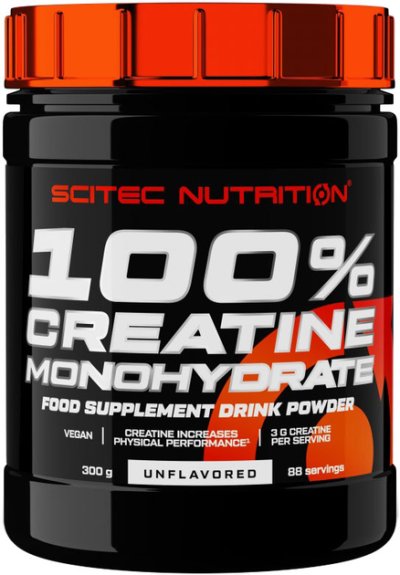 Scitec Creatine Monohydrate€27.20 In stock 300g is a simple option from creatine.
 - Hit your protein. Around 1.6 g/kg/day maximises training adaptations (Morton et al., 2018); a scoop of OstroVit 100% Whey Protein 700g Biscuit Dream from protein powders helps you get there.
MaxFit is Estonia's sports nutrition store, and you can find all of these at maxfit.ee.
References
Ainsworth BE, Haskell WL, Herrmann SD, et al. (2011). 2011 Compendium of Physical Activities. Medicine & Science in Sports & Exercise, 43(8), 1575–1581. https://pubmed.ncbi.nlm.nih.gov/21681120/
Baker JA. (1968). Comparison of rope skipping and jogging as methods of improving cardiovascular efficiency of college men. Research Quarterly, 39(2), 240–243. https://pubmed.ncbi.nlm.nih.gov/5240102/
Wewege M, van den Berg R, Ward RE, Keech A. (2017). The effects of high-intensity interval training vs. moderate-intensity continuous training on body composition in overweight and obese adults: a systematic review and meta-analysis. Obesity Reviews, 18(6), 635–646. https://pubmed.ncbi.nlm.nih.gov/28401638/
LaForgia J, Withers RT, Gore CJ. (2006). Effects of exercise intensity and duration on the excess post-exercise oxygen consumption. Journal of Sports Sciences, 24(12), 1247–1264. https://pubmed.ncbi.nlm.nih.gov/17101527/
Milanović Z, Sporiš G, Weston M. (2015). Effectiveness of High-Intensity Interval Training and continuous endurance training for VO2max improvements. Sports Medicine, 45(10), 1469–1481. https://doi.org/10.1007/s40279-015-0365-0
Guest NS, VanDusseldorp TA, Nelson MT, et al. (2021). International Society of Sports Nutrition position stand: caffeine and exercise performance. Journal of the International Society of Sports Nutrition, 18(1), 1. https://pubmed.ncbi.nlm.nih.gov/33388079/
Morton RW, Murphy KT, McKellar SR, et al. (2018). A systematic review, meta-analysis and meta-regression of the effect of protein supplementation on resistance training-induced gains in muscle mass and strength. British Journal of Sports Medicine, 52(6), 376–384. https://pubmed.ncbi.nlm.nih.gov/28698222/
Dupuy O, Douzi W, Theurot D, Bosquet L, Dugué B. (2018). An evidence-based approach for choosing post-exercise recovery techniques to reduce markers of muscle damage, soreness, fatigue, and inflammation: a systematic review with meta-analysis. Frontiers in Physiology, 9, 403. https://pubmed.ncbi.nlm.nih.gov/29755363/
FAQ
Is a jump rope HIIT workout good for beginners?
Yes, if you scale it. Start with shorter work intervals (15 seconds hard, 45 seconds easy), keep your jumps low, and build up the number of rounds as your coordination and conditioning improve.
How many calories does jumping rope burn?
It depends on your body weight and pace, but skipping sits in the vigorous range — roughly 11–12 METs at a steady pace (Ainsworth et al., 2011) — which is comparable to a hard run. A 20-minute interval session is a substantial calorie burn for the time invested.
Is jump rope better than running?
Neither is universally "better," but skipping is more time-efficient: 10 minutes a day improved cardiovascular efficiency about as much as 30 minutes of jogging in one classic study (Baker, 1968). Running offers more total volume; jump rope offers conditioning in less time and space.