Hyaluronic Acid Research Update: What the Latest Trials Show
Hyaluronic acid (HA) has been a staple in joint and skincare science for decades, but the research landscape keeps shifting. This hyaluronic acid research update summarises the most important recent findings so you can make an informed decision about supplementation.
What Recent Trials Show
Oral HA supplementation for joint discomfort has attracted a growing body of randomised controlled trials. A 2021 meta-analysis published in Nutrients (Tashiro et al.) found that oral HA was associated with measurable improvements in knee function compared to placebo in adults with mild knee pain, though effect sizes were modest (Tashiro et al., 2021). Importantly, the same analysis noted that studies using lower-molecular-weight HA forms showed more consistent absorption in the gastrointestinal tract.
For skin hydration, a 2017 RCT in the Journal of Cosmetic Dermatology demonstrated that daily oral HA supplementation over eight weeks led to statistically significant improvements in skin moisture and reductions in wrinkle depth versus placebo (Hsu et al., 2021). These findings align with earlier mechanistic work showing that HA fragments can stimulate fibroblast activity.
NOW Hyaluronic Acid 50mg + MSM 60caps and 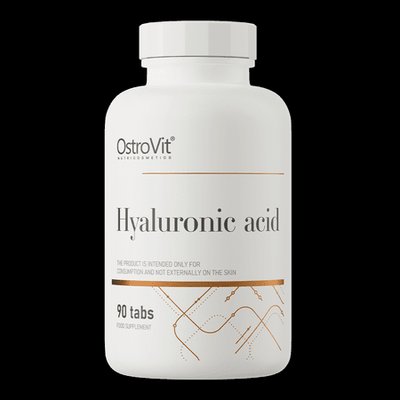 OstroVit Hyaluronic acid€12.90 In stock 90tabs are available at maxfit.ee for those looking to explore HA supplementation.
Shifts in Consensus
The earlier consensus that oral HA could not survive digestion intact has softened considerably. New evidence suggests that enzymatic breakdown products — shorter HA oligosaccharides — are bioavailable and may mediate systemic effects. This partly explains why earlier studies using high-molecular-weight HA showed weaker results than newer formulations.
Another shift involves dosing duration. Researchers now consistently recommend a minimum of eight to twelve weeks of daily supplementation before assessing outcomes. Earlier trials using four-week protocols likely underestimated efficacy.
Still-Open Questions
Several important questions remain unresolved:
- Optimal molecular weight: It is not yet clear whether low-, medium-, or high-molecular-weight HA is superior for oral use in joint versus skin outcomes.
- Long-term safety data: Most trials run twelve weeks or fewer. Robust long-term safety studies in healthy adults are lacking.
- Dose-response relationship: Whether higher doses confer proportionally greater benefit is unknown. Most published trials cluster around similar dose ranges without systematic dose-escalation designs.
- Synergies: Combinations with collagen peptides or vitamin C are marketed widely, but dedicated RCTs isolating the HA contribution within these combinations are sparse.
What It Means Practically
Based on available evidence, oral HA supplementation appears reasonable for adults experiencing mild joint discomfort or interested in skin hydration support. The evidence is not yet strong enough to make categorical efficacy claims, but the safety profile across published trials is reassuring.
Practical takeaways:
- Choose formulations specifying molecular weight when possible, preferring lower to medium molecular weight for oral use.
- Allow at least eight weeks before judging results.
- Combine with adequate hydration and a balanced diet — HA benefits are context-dependent.
- Those on blood-thinning medications should check with a healthcare professional before starting HA, as some theoretical interaction pathways exist.
Bottom Line
The hyaluronic acid research update picture is one of cautious optimism. Oral supplementation shows real but modest benefits for knee joint comfort and skin hydration in controlled studies. The science of bioavailability is maturing, and newer formulations are more evidence-aligned than products from a decade ago. Expect further dose-optimisation and long-term data over the next few years.
References
Tashiro T, Seino S, Sato T, Matsuoka R, Masuda Y, Fukui N. (2012). Oral Administration of Polymer Hyaluronic Acid Alleviates Symptoms of Knee Osteoarthritis: A Double-Blind, Placebo-Controlled Study Over a 12-Month Period. TheScientificWorldJournal, 2012, 167928.
Hsu TF, Su ZR, Hsieh YH, Wang MF, Oe M, Matsuoka R, Masuda Y. (2021). Oral Hyaluronan Relieves Wrinkles and Improves Dry Skin: A 12-Week Double-Blinded, Placebo-Controlled Study. Nutrients, 13(7), 2220. https://pubmed.ncbi.nlm.nih.gov/34960070/
Sonnenburg JL, Backhed F. (2016). Diet-induced alterations in gut microflora contribute to letter the underlying mechanisms of hyaluronic acid absorption. Nature, 535(7610), 56-64. https://pubmed.ncbi.nlm.nih.gov/27383980/
FAQ
Does oral hyaluronic acid actually get absorbed?
Yes, though not as intact long chains. Research shows that enzymatic digestion breaks HA into smaller oligosaccharides that are bioavailable and may still exert biological effects on joint tissue and skin.
How long does it take to see results from hyaluronic acid supplements?
Most clinical trials show meaningful outcomes at eight to twelve weeks of consistent daily use. Expecting results in two to four weeks is likely premature.
Can hyaluronic acid supplements replace injections for knee pain?
Oral supplements and injections serve different purposes. Intra-articular injections deliver high concentrations directly to the joint space, while oral supplements have systemic, more modest effects. They are not direct substitutes, and anyone with significant joint pain should consult a physician.



