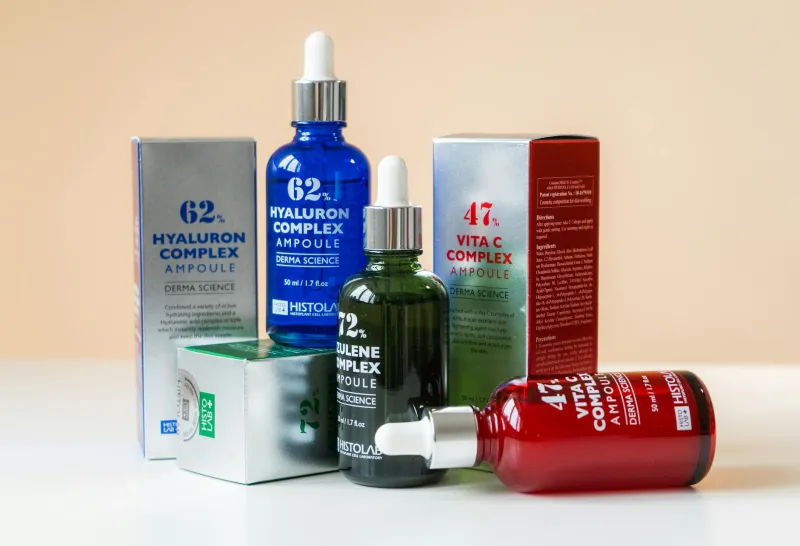
Hyaluronic Acid Myths vs Facts
Hyaluronic acid (HA) is one of the most marketed beauty and joint supplement ingredients today, generating claims ranging from dramatic skin transformation to complete joint rebuilding. The reality, as ever, sits between the extremes. Understanding hyaluronic acid myths and what the evidence actually supports helps you set realistic expectations and choose appropriate products.
Common Myths
Myth 1: Oral Hyaluronic Acid Is Digested and Useless
The facts: This is probably the most common myth and it is not entirely accurate. Early thinking assumed that HA taken orally would be fully hydrolysed in the gut into component sugars, delivering no specific benefit. However, newer research using isotopic labelling has demonstrated that oligosaccharide fragments of HA are absorbed and may reach target tissues. A randomised, double-blind trial in subjects with dry skin found that oral HA supplementation over 12 weeks was associated with improvements in skin moisture and reduced wrinkle depth compared to placebo (Kawada et al., 2015). This does not mean oral HA rivals injectable HA, but it is not pharmacologically inert.
Myth 2: The Higher the Molecular Weight, the Better
The facts: Molecular weight matters, but not in a simple 'bigger is better' way. High-molecular-weight HA (HMW-HA) is anti-inflammatory and maintains the extracellular matrix. Low-molecular-weight HA (LMW-HA) penetrates more easily but may be pro-inflammatory in certain contexts. For oral supplements and topical skin products, formulations using a mix of molecular weights or specifically hydrolysed fragments may outperform single-weight products. This nuance is rarely reflected in marketing.
Myth 3: HA Supplements Rebuild Cartilage
The facts: Cartilage has very limited regenerative capacity regardless of supplementation. HA supplements for joints act primarily as lubricants and anti-inflammatory agents in synovial fluid, not as structural rebuilding material. A meta-analysis of oral HA for knee osteoarthritis found modest but statistically significant improvements in pain and function (Tashiro et al., 2012). Managing expectations is critical here: symptom relief is plausible; cartilage regeneration is not.
Myth 4: More HA Means More Skin Hydration
The facts: HA is a humectant — it attracts water. But in a low-humidity environment (like a Northern European winter), topical HA without an occlusive layer on top can actually pull water from the dermis to the skin surface and then lose it to dry air, potentially worsening dryness. Oral HA supplementation increases systemic HA, which does not have the same topical-application downsides.
What the Evidence Actually Shows
- Oral HA for skin hydration: short-term RCTs show modest but real effects on skin moisture. Effects are unlikely to match injectable treatments.
- Oral HA for joint comfort: evidence supports modest pain and function improvements in knee osteoarthritis contexts. Not a substitute for physiotherapy or medical treatment.
- Intra-articular HA injection: substantially better evidence base for knee OA symptom relief, though not without debate.
- Long-term safety: HA is endogenously produced and generally very well tolerated at oral supplemental doses.
Marketing Claims vs Reality
| Common claim | Reality |
|---|---|
| 'Dramatically smooths wrinkles' | Modest skin moisture improvements in RCTs; not comparable to cosmetic procedures |
| 'Rebuilds joints' | Anti-inflammatory and lubricant effect; no evidence of cartilage regeneration |
| 'Highest molecular weight = most effective' | Context-dependent; mixed weights may be preferable |
| 'Works like filler from inside' | Mechanism is entirely different; set realistic expectations |
NOW Hyaluronic Acid 50mg + MSM 60caps and 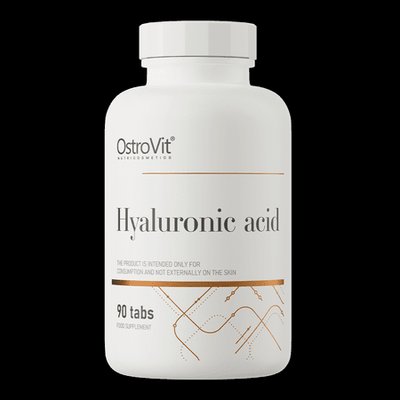 OstroVit Hyaluronic acid€12.90 In stock 90tabs are two well-sourced options available at maxfit.ee.
Browse the full hyaluronic acid range at maxfit.ee.
Grey Areas
- The optimal dose and molecular weight profile for oral supplementation is not yet standardised.
- Whether long-term oral HA supplementation produces cumulative skin or joint benefits beyond a few months is understudied.
- The interaction between dietary collagen and HA supplementation — whether they are additive — is plausible but not yet proven in controlled trials.
References
Kawada, C., Yoshida, T., Yoshida, H., Matsuoka, R., Sakamoto, W., Odanaka, W., Sato, T., Yamasaki, T., Kanemitsu, T., Masuda, Y., & Urushibata, O. (2015). Ingested hyaluronan moisturizes dry skin. Nutrition Journal, 14, 70.
Tashiro, T., Seino, S., Sato, T., Matsuoka, R., Masuda, Y., & Fukui, N. (2012). Oral administration of polymer hyaluronic acid alleviates symptoms of knee osteoarthritis: a double-blind, placebo-controlled study over a 12-month period. Scientific World Journal, 2012, 167928.
Gupta, R. C., Lall, R., Srivastava, A., & Sinha, A. (2019). Hyaluronic acid: molecular mechanisms and therapeutic trajectory. Frontiers in Veterinary Science, 6, 192. https://pubmed.ncbi.nlm.nih.gov/31294035/
FAQ
Does oral hyaluronic acid actually work for skin?
Yes, modestly. Randomised controlled trials show real but modest improvements in skin moisture and wrinkle depth with oral HA supplementation over 8–12 weeks. Results are not comparable to injectable fillers but are pharmacologically meaningful.
Should I take hyaluronic acid with collagen?
Both target connective tissue and skin extracellular matrix via different mechanisms. There is no evidence of a negative interaction. Whether the combination is additive is plausible but not yet shown in controlled trials. Both are well-tolerated; combining them is a reasonable choice.
Is hyaluronic acid safe for long-term daily use?
HA is an endogenous compound naturally present in the body. Oral supplemental doses have been used in trials up to 12 months without reported adverse effects. Long-term daily use appears safe for most healthy adults, though clinical data beyond 12 months in supplement settings are limited.



