
Is Long-Term Hyaluronic Acid Use Safe?
Hyaluronic acid long-term supplementation has become a popular topic as oral forms of this glycosaminoglycan gain mainstream acceptance. Naturally present in the skin, joints, and connective tissue, hyaluronic acid attracts and retains water, contributing to tissue lubrication and skin hydration. With a growing body of clinical evidence supporting oral supplementation, the question of sustained use — whether it is safe, whether tolerance develops, and what to monitor — deserves a clear answer.
What Long-Term Studies Show
Oral hyaluronic acid has been evaluated primarily for two outcomes: joint comfort and skin hydration. Clinical trials have generally used supplementation periods of one to three months, but some studies have extended to six months without identifying safety concerns.
A randomised, placebo-controlled trial in subjects with knee osteoarthritis found that oral hyaluronic acid supplementation for six months was associated with improved pain scores and physical function, with no clinically significant adverse events (Kalman et al., 2008). A separate randomised trial in healthy women examined oral supplementation for eight weeks and observed improvements in skin hydration and elasticity (Oe et al., 2017). Neither trial raised safety flags at the doses studied.
Products like NOW Hyaluronic Acid 50mg + MSM 60caps and 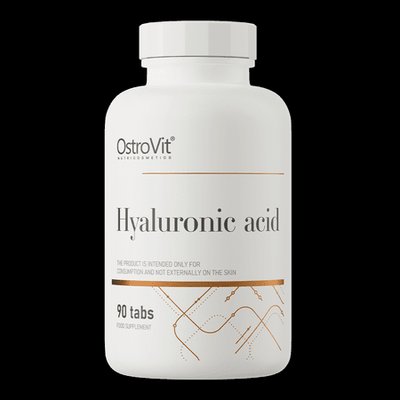 OstroVit Hyaluronic acid€12.90 In stock 90tabs — available in the hyaluronic acid category at maxfit.ee — deliver doses in the range examined in these trials.
Upper Safe Limits Over Time
Hyaluronic acid does not have a formally established tolerable upper intake level in the way vitamins and minerals do. No toxicity threshold has been defined for oral supplementation in healthy adults. Hyaluronic acid is a naturally occurring molecule in the body, and oral supplementation — even at doses above typical supplement amounts — has not been associated with cumulative toxicity in the available evidence.
The practical consideration is not toxicity but effect: excessively high doses do not necessarily produce proportionally greater benefit. Joint and skin studies typically use modest daily amounts, and more is not consistently better in this context.
Do You Need to Cycle?
There is no established evidence base for cycling hyaluronic acid supplementation. Hyaluronic acid is not a pharmacological agent that induces tolerance or receptor downregulation. Its effects are largely structural — it contributes to the water-binding capacity of the extracellular matrix — and these effects are expected to persist as long as supplementation continues.
Some people choose to pause supplementation during warmer months when joint symptoms are typically less pronounced, then resume in autumn and winter. This is a personal preference rather than a medically indicated cycling protocol.
Monitoring
For healthy adults, no specific monitoring is required during oral hyaluronic acid supplementation. Adverse events in clinical trials have been rare and mild, typically limited to transient gastrointestinal complaints (nausea, fullness) in a small proportion of participants.
One consideration worth noting: hyaluronic acid plays a biological role in cancer cell migration and tissue remodelling. While no human evidence links oral supplementation to cancer risk, some oncologists advise patients with active cancer or a recent cancer history to discuss any hyaluronic acid supplementation with their medical team. This is a prudent precaution, not an established risk.
Honest Verdict
The available clinical evidence supports the safety of long-term oral hyaluronic acid supplementation for healthy adults. Trials running up to six months at typical supplemental doses have not identified meaningful adverse effects, and no toxicity threshold has been established. For the two primary applications — joint comfort and skin hydration — effects appear to be maintained with continuous use and may diminish after stopping.
Hyaluronic acid fits well as a long-term daily supplement rather than an acute or cycling product. If you have underlying health conditions, particularly related to connective tissue, inflammation, or cancer history, a brief discussion with your physician before starting is sensible.
The hyaluronic acid category at MaxFit offers several well-studied formats for oral supplementation.
FAQ
How long does it take for oral hyaluronic acid to show results?
Most clinical trials observing improvements in skin hydration or joint comfort report changes at four to eight weeks. Individual response varies, and consistent daily use is required to see and maintain effects.
Can I combine hyaluronic acid with collagen and vitamin C?
Yes, and this is a rational combination. Collagen provides structural amino acids for cartilage and skin; vitamin C is required for collagen synthesis; hyaluronic acid contributes water retention and joint lubrication. All three operate through complementary mechanisms.
Is injectable hyaluronic acid safer than oral supplementation?
Injectable hyaluronic acid (used in dermatology and orthopaedics) and oral supplementation are very different in terms of mechanism and risk profile. Injectables are medical procedures with their own risk/benefit discussion. Oral supplementation at food-grade doses has a distinct and much more benign safety profile.
References
Kalman, D. S., Heimer, M., Valdeon, A., Schwartz, H., & Sheldon, E. (2008). Effect of a natural extract of chicken combs with a high content of hyaluronic acid (Hyal-Joint) on pain relief and quality of life in subjects with knee osteoarthritis: a pilot randomized double-blind placebo-controlled trial. Nutrition Journal, 7, 3. https://pubmed.ncbi.nlm.nih.gov/18426577/
Oe, M., Sakai, S., Yoshida, H., Okado, N., Kaneda, H., Masuda, Y., & Urushibata, O. (2017). Oral hyaluronan relieves wrinkles: a double-blinded, placebo-controlled study over a 12-week period. Clinical, Cosmetic and Investigational Dermatology, 10, 267-273. https://pubmed.ncbi.nlm.nih.gov/28761365/
Ueno, M., Murota, H., Takagishi, K., Igawa, K., & Murota, H. (2013). Ingested hyaluronan supports the synthesis of skin and joint hyaluronan. Food & Nutrition Research, 57, 20630.



