Why Hyaluronic Acid Matters After 50
Hyaluronic acid (HA) is a naturally occurring glycosaminoglycan found in connective tissue, skin, and synovial fluid. It is a powerful hydrophilic molecule that retains water and lubricates joints. From the mid-twenties onwards, endogenous HA production declines steadily, and the effects become noticeable after 50: drier skin, reduced joint cushioning, and slower tissue recovery. This makes hyaluronic acid for seniors one of the more evidence-backed supplementation topics in the connective-tissue space.
Age-Related Need
The body's HA stores are continuously turned over, with a half-life in blood of only minutes and in connective tissue of one to three weeks. As synthesis rates fall with age, the reserves available in skin and joints shrink. Skin hydration is among the most studied consequences: a well-controlled randomised trial found that oral low-molecular-weight HA improved skin moisture content and reduced wrinkle depth after twelve weeks of supplementation (Kawada et al., 2015).
In joints, articular cartilage and synovial fluid both depend on HA for lubrication and nutrient diffusion. A decline in joint HA concentration with age is associated with early-stage osteoarthritis symptoms — stiffness after rest and mild joint discomfort.
Absorption Changes With Age
For many years it was assumed that orally ingested high-molecular-weight HA was too large to be absorbed intact. Research has since shown that low-molecular-weight HA fragments can cross the intestinal epithelium and are measurable in plasma. Oligomeric HA (below 10 kDa) stimulates HA synthesis in fibroblasts and has been shown to accumulate in skin tissue in animal studies.
Gastrointestinal changes in older adults — reduced motility, altered microbiome composition — do not appear to substantially impair HA absorption, partly because bacterial enzymatic degradation in the gut generates bioactive fragments regardless of the form ingested. Overall bioavailability from oral HA supplements is low in absolute terms but functionally significant in randomised trials.
Dose and Safety
Oral HA supplements have been studied across a range of daily doses. Trials showing meaningful outcomes in skin and joint endpoints have used doses of roughly 80–200 mg daily. Products such as NOW Hyaluronic Acid 50mg + MSM 60caps and 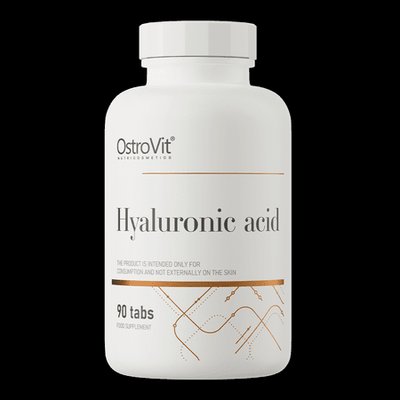 OstroVit Hyaluronic acid€12.90 In stock 90tabs — available at maxfit.ee — provide convenient daily options. Combination products that include collagen alongside HA, such as BIOTECHUSA Hyaluronic & Collagen 30 kapslit from the kollageen range, are also popular for a broader connective-tissue approach.
No serious adverse effects have been reported in human supplementation trials using oral HA at standard doses. HA is not known to be toxic at supplement-range doses, and it is Generally Recognised as Safe (GRAS) in food applications.
Interactions With Medication
Oral HA supplements have a low interaction profile. Two areas are worth noting for older adults:
- Anticoagulants (warfarin, apixaban) — HA is structurally related to heparin; while no interaction has been established for oral low-dose HA, discuss with a physician if on blood thinners.
- Intra-articular HA injections (separate from supplements) — if receiving these from a rheumatologist, there is no evidence that concurrent oral supplementation causes harm, but the two routes target different mechanisms.
When to Supplement
Hyaluronic acid supplementation is most relevant for:
- Adults over 50 experiencing early joint stiffness or reduced skin hydration
- People who are physically active but noticing longer joint recovery times
- Individuals combining HA with collagen and vitamin C for a comprehensive connective-tissue stack
For general maintenance, oral HA can be used year-round. Pairing HA supplementation with adequate hydration and a diet rich in vitamin C (needed for collagen cross-linking) enhances the structural support matrix that HA occupies.
FAQ
Does oral hyaluronic acid actually reach joints and skin?
Evidence from human and animal studies suggests that low-molecular-weight HA fragments are absorbed and can be found in peripheral tissues including skin and synovium. A randomised controlled trial showed measurable improvements in knee joint comfort in adults with mild knee discomfort after eight weeks of oral HA supplementation (Tashiro et al., 2012).
Is hyaluronic acid safe for long-term use after 50?
Currently available evidence supports the safety of oral HA supplements at standard doses for periods studied in clinical trials (up to twelve months). Long-term safety beyond this window has not been systematically evaluated, but no biologically plausible harm mechanism exists for oral low-molecular-weight HA at supplement doses.
Should I combine hyaluronic acid with collagen after 50?
The two molecules are functionally complementary. Collagen provides structural tensile strength to connective tissue, while HA provides hydration and lubrication. Several products combine them. The combination is widely used and considered safe, though head-to-head trials comparing individual versus combined supplementation are limited.
References
Kawada, C., Yoshida, T., Yoshida, H., Matsuoka, R., Sakamoto, W., Odanaka, W., Sato, T., Yamasaki, T., Kanemitsu, T., Masuda, Y., & Urushibata, O. (2015). Ingested hyaluronan moisturizes dry skin. Nutrition Journal, 14, 70.
Tashiro, T., Seino, S., Sato, T., Matsuoka, R., Masuda, Y., & Fukui, N. (2012). Oral administration of polymer hyaluronic acid alleviates symptoms of knee osteoarthritis. Nutrition Journal, 11, 70.
Balogh, L., Polyak, A., Mathe, D., Kiraly, R., Thuroczy, J., Terez, M., Janoki, G., Ting, Y., Bucci, L. R., & Schauss, A. G. (2008). Absorption, uptake and tissue affinity of high-molecular-weight hyaluronan after oral feeding in rats. Journal of Agricultural and Food Chemistry, 56(22), 10582-10593. https://pubmed.ncbi.nlm.nih.gov/18959406/



