
Hyaluronic Acid for Beginners: A Complete Guide
Hyaluronic acid (HA) is a naturally occurring polysaccharide found throughout the body — most abundantly in the skin, joints, and eyes. It is renowned for its capacity to retain water: a single gram of hyaluronic acid can hold up to a litre of water, making it central to skin hydration, joint lubrication, and connective tissue function. This guide covers everything a beginner needs to know about hyaluronic acid supplementation.
What Hyaluronic Acid Does
In the body, HA is continuously produced and broken down. With age, production naturally declines, which contributes to skin dehydration, loss of elasticity, and joint dryness. Supplementation aims to support these declining levels.
Skin Hydration and Appearance
A randomised, double-blind, placebo-controlled trial found that oral hyaluronic acid supplementation over 12 weeks improved skin moisture content and reduced the appearance of wrinkles compared to placebo in a group of women over age 22 (Kawada et al., 2014). The mechanism is not fully elucidated but appears to involve HA fragments stimulating endogenous HA synthesis in dermal cells.
Joint Comfort and Mobility
Hyaluronic acid is a major component of synovial fluid, which lubricates joints. A systematic review found that oral HA supplementation was associated with improved knee pain scores and functional outcomes in people with knee osteoarthritis, though effect sizes were moderate (Kalman et al., 2008). The benefit is most apparent in people with mild to moderate joint discomfort rather than severe structural damage.
Eye Moisture
HA is present in high concentrations in the vitreous humour of the eye. Oral supplementation may support tear production and comfort in people with dry eye conditions, though this application has less human clinical data than skin and joint uses.
How to Start
Most clinical trials studying oral HA have used doses ranging from around 80 mg to 200 mg per day. Lower-molecular-weight HA is generally considered to have better oral bioavailability, though the ideal form and molecular weight for oral supplements is still an area of investigation.
HA can be taken with or without food. There are no established drug interactions at typical oral doses. It is generally well tolerated, with gastrointestinal effects (mild bloating, nausea) being the most commonly reported side effects, and those being uncommon.
What to Expect and When
- Skin hydration: Changes in skin moisture can be measurable within four to eight weeks of consistent supplementation.
- Joint comfort: Effects on joint discomfort may take eight to twelve weeks of consistent use to be meaningful.
- Subjective appearance: Wrinkle reduction is subtle and statistically significant in trials but not dramatic — expectations should be managed accordingly.
Hyaluronic acid is not a quick-fix supplement. It works gradually and is most effective as part of a consistent long-term routine alongside adequate hydration and a varied diet.
Common Mistakes
Expecting Topical Results from an Oral Supplement
Topical HA products and oral HA supplements work through different mechanisms. Topical HA primarily forms a surface film that reduces water loss from the skin. Oral HA is absorbed and distributed systemically, with effects mediated through biological pathways rather than direct surface hydration. Neither is inherently superior — they complement each other.
Using Oral HA as a Substitute for Hydration
HA retains water in tissue but cannot substitute for adequate daily fluid intake. If you are chronically dehydrated, no amount of HA supplementation will produce optimal skin hydration. Drinking adequate water is foundational.
Expecting Instant Results
The trial duration for meaningful HA outcomes is typically two to three months. Starting a supplement and evaluating its effect after one week is not a valid assessment period.
Ignoring Complementary Nutrients
Collagen and HA are often co-supplemented because they both support connective tissue. Vitamin C is required for collagen synthesis. Taking HA without adequate vitamin C or alongside a collagen supplement may yield better results than HA alone for joint and skin goals.
Choosing a Product
When selecting an oral hyaluronic acid supplement:
- Molecular weight: Some products specify low-molecular-weight HA, which may have better gut absorption. Look for this on the label if available.
- Dose: Aim for the range studied in trials — products delivering less than 50 mg per serving may be underdosed.
- Combined formulations: HA is often combined with collagen, glucosamine, or vitamin C for joint health applications. These combinations are reasonable.
- Quality: Third-party testing certification is worth checking.
At maxfit.ee, available products include NOW Hyaluronic Acid 50mg + MSM 60caps and 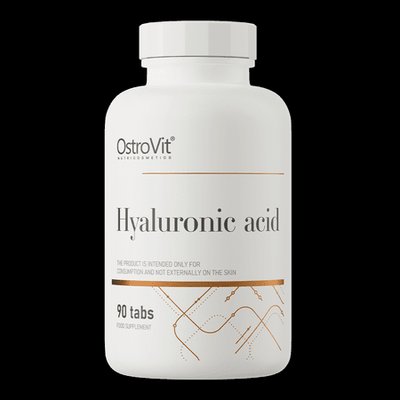 OstroVit Hyaluronic acid€12.90 In stock 90tabs. For combined joint support, the joint cartilage and ligaments category offers additional options including collagen-HA combinations. Browse the hyaluronic acid category for the full selection.
References
Kawada, C., Yoshida, T., Yoshida, H., Matsuoka, R., Sakamoto, W., Odanaka, W., et al. (2014). Ingested hyaluronan moisturizes dry skin. Nutrition Journal, 13(1), 70. https://pubmed.ncbi.nlm.nih.gov/25014997/
Kalman, D. S., Heimer, M., Valdeon, A., Schwartz, H., & Sheldon, E. (2008). Effect of a natural extract of chicken combs with a high content of hyaluronic acid (Hyal-Joint) on pain relief and quality of life in subjects with knee osteoarthritis: a pilot randomized double-blind placebo-controlled trial. Nutrition Journal, 7(1), 3. https://pubmed.ncbi.nlm.nih.gov/18426577/
FAQ
Is oral hyaluronic acid as effective as injections?
Intra-articular HA injections deliver HA directly to the joint, bypassing oral absorption and gut metabolism. They are a medical procedure used for moderate to severe osteoarthritis. Oral HA works systemically through different biological mechanisms and is more suited to maintenance and mild discomfort. They serve different purposes and are not directly comparable.
Can I take hyaluronic acid with collagen supplements?
Yes. Both support connective tissue and the combination is studied. Many joint health products combine them. There is no known interaction, and co-supplementation is common practice.
At what age should I start taking hyaluronic acid?
HA production begins to decline in the mid-20s. People noticing early signs of skin dryness or mild joint discomfort may consider starting supplementation from their late 20s or 30s. There is no clinical evidence establishing an optimal age to begin. Younger individuals without these concerns are unlikely to benefit meaningfully.



