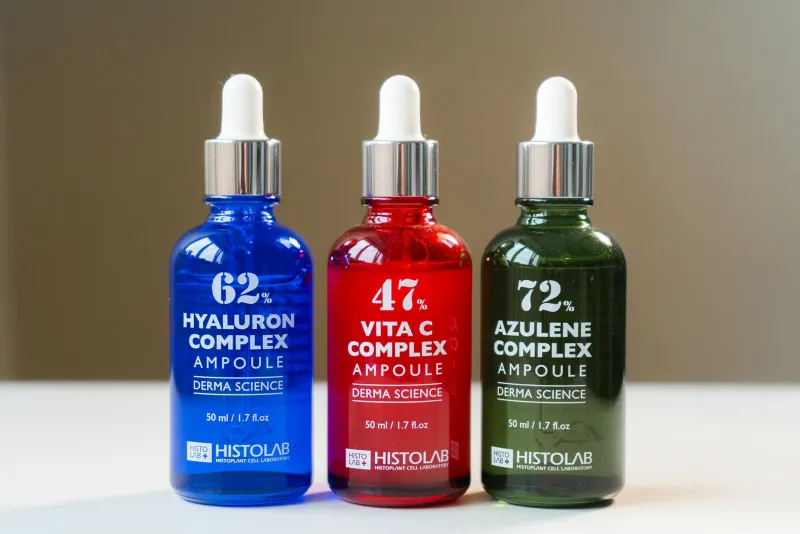
How to Maximize Hyaluronic Acid Absorption
Hyaluronic acid (HA) is a glycosaminoglycan naturally found in skin, synovial fluid, and connective tissue, where it holds water and cushions joints. As we age, endogenous HA production declines, driving interest in oral and topical supplementation. But a common question arises: does oral hyaluronic acid actually absorb, and how can you optimise its uptake? The science offers clearer answers than you might expect.
What Limits Absorption
The primary barrier to oral HA absorption is molecular size. High-molecular-weight HA (above roughly 1,000 kDa) is difficult for the intestinal mucosa to absorb intact. Research suggests that enzymatic degradation in the gut produces smaller oligosaccharides, which are then absorbed and may stimulate endogenous HA synthesis in skin fibroblasts (Kawada et al., 2015).
Additionally:
- Gastric acid can partially hydrolyse HA, which is not necessarily a disadvantage — smaller fragments may be more bioavailable.
- Gut transit speed: rapid transit may reduce contact time with absorptive surfaces.
- Gut microbiome composition: certain bacteria can ferment HA fragments, potentially reducing the amount reaching systemic circulation.
Cofactors That Help
Vitamin C is the most important cofactor for HA synthesis in the body. It is required for the hydroxylation of proline and lysine in collagen production, and collagen fibres provide the structural framework within which HA is embedded. Without adequate vitamin C, HA cannot be integrated effectively into tissue matrices.
Zinc and magnesium support the enzyme UDP-glucose dehydrogenase, which is involved in HA biosynthesis. While these minerals do not directly enhance intestinal absorption of supplemental HA, maintaining adequate levels creates a biochemical environment conducive to HA utilisation.
NOW Hyaluronic Acid 50mg + MSM 60caps and 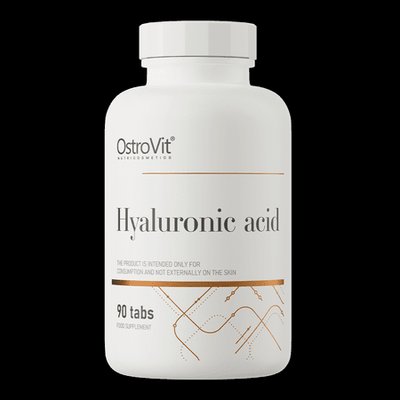 OstroVit Hyaluronic acid€12.90 In stock 90tabs are both available at maxfit.ee. Products combining HA with vitamin C or collagen leverage synergies that may enhance tissue-level benefits beyond HA alone.
Form and Timing Effects
Molecular weight is arguably the most important product variable. Low-molecular-weight HA (typically below 300 kDa) has been shown to reach the bloodstream more readily in human studies (Balogh et al., 2008). Hydrolysed or enzymatically treated HA supplements typically carry lower average molecular weights, which is worth checking on the label.
Liquid vs capsule: no strong evidence that one outperforms the other for HA specifically. Capsules are more convenient; liquids allow faster initial dissolution but likely equilibrate quickly in gastric conditions.
Timing: HA supplements are generally well tolerated with or without food. Taking them with a collagen supplement or vitamin C may enhance systemic effects by supporting the connective tissue matrix.
Food Pairings
Dietary sources of HA include bone broth and organ meats, though amounts vary and are hard to quantify precisely. Consuming HA supplements alongside meals rich in vitamin C (citrus, bell peppers, berries) provides cofactors that support endogenous HA production, not just supplemental HA.
Avoiding excessive sugar intake is also relevant: advanced glycation end-products (AGEs) formed from high blood sugar can degrade HA in tissue, counteracting supplementation efforts.
Practical Tips
- Choose low-molecular-weight HA where possible — check product labels for molecular weight or look for "hydrolysed" hyaluronic acid.
- Pair with vitamin C: either in a combined product or by ensuring adequate dietary intake from whole foods.
- Stay well hydrated: HA holds water — systemic hydration is a prerequisite for HA to function in tissue.
- Be patient: clinical studies on skin hydration and joint comfort outcomes typically run for eight to twelve weeks before significant effects are observed.
- Combine with collagen peptides for joint support: the two compounds work synergistically in cartilage and synovial fluid maintenance.
Browse the hyaluronic acid range at maxfit.ee for available products.
FAQ
Does oral hyaluronic acid actually reach the skin?
Research in humans suggests that orally administered HA, particularly lower-molecular-weight forms, can reach skin tissue and increase moisture content. A randomised controlled trial found statistically significant improvements in skin moisture and elasticity after twelve weeks of oral HA supplementation (Kawada et al., 2015). Effects are modest but measurable.
Is topical or oral hyaluronic acid better for joints?
Oral HA may be more relevant for joint health than topical application, since topically applied HA does not penetrate deep into synovial tissue. For skin, topical HA provides immediate surface hydration; oral HA may improve deeper dermal hydration over time through systemic distribution.
How much hyaluronic acid should I take daily?
Studies on skin and joint outcomes have used a range of doses; a commonly studied range is roughly 80–200 mg per day of low-molecular-weight HA. Product labels vary — always follow the manufacturer's recommended serving and consult a healthcare professional if you have specific joint conditions.
References
Kawada, C., Yoshida, T., Yoshida, H., Matsuoka, R., Sakamoto, W., Odanaka, W., Sato, T., Yamasaki, T., Kanemitsu, T., Masuda, Y., & Urushibata, O. (2015). Ingested hyaluronan moisturizes dry skin. Nutrition Journal, 14, 70.
Balogh, L., Polyak, A., Mathe, D., Kiraly, R., Thuroczy, J., Terez, M., Janoki, G., Ting, Y., Bucci, L. R., & Bhargava, A. S. (2008). Absorption, uptake and tissue affinity of high-molecular-weight hyaluronan after oral feeding in rats. Journal of Agricultural and Food Chemistry, 56(22), 10582–10593. https://pubmed.ncbi.nlm.nih.gov/18959406/



