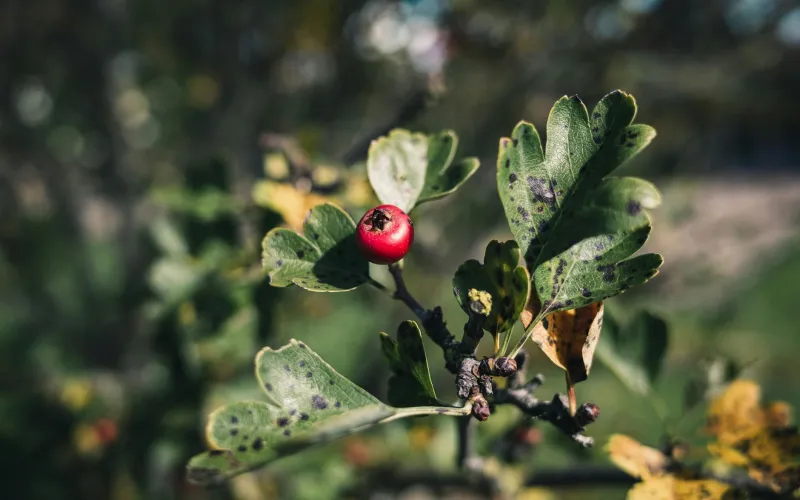
What is Hawthorn Berry?
Hawthorn (Crataegus) is a shrub or small tree in the rose family, widely found across Europe, North America, and Asia. Its small red berries, flowers, and leaves have been an important part of traditional European and Chinese herbal medicine for centuries.
In European herbal medicine, hawthorn has been used to support the heart and circulation since the Middle Ages. It is one of the few herbs recognized by the European Medicines Agency based on traditional use (Tassell et al., 2010).
The primary bioactive components of hawthorn berries are flavonoids (particularly hyperoside and vitexin), oligomeric proanthocyanidins (OPCs), and triterpenic acids. These compounds work together, and their synergistic action is considered important (Koch & Malek, 2011).
How it works
Hawthorn berry's action is multifaceted and involves several mechanisms. Research suggests that flavonoids and OPCs may support normal vascular tone and flexibility (Koch & Malek, 2011). Studies also point to antioxidant properties that may protect cardiovascular cells from oxidative stress (Tassell et al., 2010).
Traditional use and some research also suggest a calming effect that may support normal heart rhythm and general relaxation (Holubarsch et al., 2008).
Evidence and benefits
Currently there are no EU-approved specific health claims for hawthorn berry supplements. However, the European Medicines Agency has recognized hawthorn as a traditional herbal medicine, and research suggests several areas of interest:
- Cardiovascular support: Multiple studies, including a large randomized controlled trial (Holubarsch et al., 2008) and a Cochrane systematic review (Pittler et al., 2003), suggest that hawthorn extract may support normal cardiovascular function. This is the most extensively studied area.
- Antioxidant activity: Hawthorn's flavonoids and OPCs are potent antioxidants, with effects confirmed in laboratory studies (Tassell et al., 2010).
- Blood pressure support: A randomized controlled trial in patients with type 2 diabetes found that hawthorn extract may support normal blood pressure levels (Walker et al., 2002).
- Emotional balance: Traditional use points to a calming effect that may support normal heart rhythm during stress (Koch & Malek, 2011).
Important: hawthorn berries do not replace heart medications. People with heart conditions should always consult their doctor.
How to take
Common forms:
- Standardized extract capsules (most common)
- Dried berries as tea
- Liquid extract (tincture)
- Berry and leaf extract combined
Typical dosages:
- Standardized extract (1.8% vitexin-4'-rhamnoside or 18.75% OPCs): 160–900 mg per day
- Dried berries as tea: 1–2 tsp berries with hot water, steep 10–15 minutes
- Divided into 2–3 doses per day
A minimum of 8–12 weeks is recommended to evaluate effects, as hawthorn's benefits develop gradually (Pittler et al., 2003).
Who should consider it
- Individuals looking to support cardiovascular health naturally
- Older adults interested in heart support
- People seeking an antioxidant supplement
- Those who prefer a traditional European herbal medicine approach
- Individuals wanting to support normal blood pressure (alongside lifestyle changes)
Consult a healthcare professional before starting any new supplement. This is especially important for people taking heart medications (particularly digoxin, beta-blockers, calcium channel blockers).
Frequently asked questions
Is hawthorn berry safe? Hawthorn is generally considered well tolerated. Rarely occurring side effects include nausea and dizziness. However, interactions with heart medications are possible.
How long does it take to notice effects? Hawthorn's effects typically develop gradually. Most studies lasted 8–16 weeks (Pittler et al., 2003; Holubarsch et al., 2008). This is not a fast-acting supplement.
Can hawthorn be combined with CoQ10? Hawthorn and CoQ10 have both been studied in the cardiovascular health context and are often used together. Always consult your doctor, especially when taking medications.
Does hawthorn replace heart medications? No. Hawthorn is a food supplement and does not replace medications prescribed by a doctor. Never stop taking medications without consulting your doctor.
Which part of the hawthorn plant is most effective? Most studies use a combination of berries, leaves, and flowers. Standardized extracts are considered the most reliable.
References
- Pittler MH, Guo R, Ernst E. (2003). Hawthorn extract for treating chronic heart failure. Cochrane Database of Systematic Reviews, (1), CD005312.
- Holubarsch CJ, Colucci WS, Meinertz T, Gaus W, Tendera M. (2008). The efficacy and safety of Crataegus extract WS 1442 in patients with heart failure: the SPICE trial. European Journal of Heart Failure, 10(12), 1255-1263.
- Walker AF, Marakis G, Simpson E, Hope JL, Robinson PA, Hassanein M, Simpson HC. (2002). Hypotensive effects of hawthorn for patients with diabetes taking prescription drugs: a randomised controlled trial. British Journal of General Practice, 52(476), 200-208.
- Tassell MC, Kingston R, Gilroy D, Lehane M, Furey A. (2010). Hawthorn (Crataegus spp.) in the treatment of cardiovascular disease. Pharmacognosy Reviews, 4(7), 32-41.
- Koch E, Malek FA. (2011). Standardized extracts from hawthorn leaves and flowers in the treatment of cardiovascular disorders -- preclinical and clinical studies. Planta Medica, 77(11), 1159-1167.
See also:
Browse plant-based supplements at MaxFit →
Disclaimer
A food supplement is not a substitute for a varied and balanced diet and a healthy lifestyle.



