Electrolytes for older adults and exercise: what actually changes with age
The honest answer is yes, hydration deserves more attention as you get older — but "electrolytes" are a tool, not a cure-all. Two real, well-documented changes happen with age. First, the thirst signal blunts, so older adults often do not feel thirsty until they are already mildly dehydrated. Second, total body water drops, which leaves a smaller margin for error. Put those together and the case for being deliberate about fluids and electrolytes around exercise gets stronger after 60.
Electrolytes are simply minerals — sodium, potassium, magnesium, chloride — that carry the electrical charge your nerves and muscles run on. EFSA confirms that magnesium contributes to normal electrolyte balance, energy-yielding metabolism, neurotransmission and muscle contraction (EFSA NDA Panel, 2009). When you sweat, you lose water and these minerals together, and during exercise that loss is what an electrolyte drink is designed to replace.
Protecting muscle after 60 — which would you add first?
Browse the rangeHydration is non-negotiable over 60 — but keep it proportionate
For a short, gentle walk you mostly just need water. The case for added electrolytes grows when sessions are longer than about an hour, when it is hot, or when you sweat heavily. A simple, honest framework:
| Situation | What usually fits |
|---|---|
| Short walk, cool day | Plain water |
| 60+ min session or hot day | Water + electrolytes |
| Heavy, salty sweat | Electrolyte drink with sodium |
| Everyday hydration | Spread fluids across the day, don't wait for thirst |
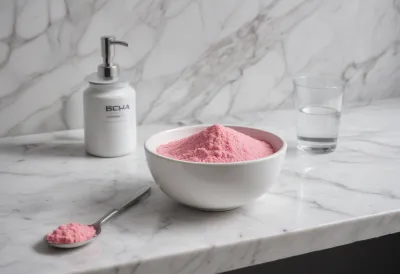
The point of electrolytes during longer or sweaty sessions is to maintain fluid balance and reduce the chance of cramps and dizziness — not to "boost" performance in a healthy, well-fed older adult on a light walk. A measured option like OstroVit Pure Electrolytes 270g – Electrolyte or OstroVit Electrolyte 90tabs lets you add minerals to water when the session genuinely warrants it.
What the science actually says about staying strong as you age
Hydration supports the workout, but the bigger longevity lever is the workout itself. Muscle-strengthening activity is tied to roughly 15% lower all-cause mortality, with most of the benefit at just 30–60 minutes a week (Momma et al., 2022). And to keep that muscle, older adults need more protein per meal than the young — about 0.40 g/kg per meal versus 0.24 g/kg, the reality of anabolic resistance (Moore et al., 2015). Optimal daily intake to protect muscle sits at or above 1.2 g/kg/day, well over the standard RDA (Phillips et al., 2016).
So the practical picture for an active older adult is: train for strength, eat enough protein — a tub such as ICONFIT Whey Protein 80 Strawberry 1kg makes the target easier — and hydrate with electrolytes when sessions are long, hot or sweaty. Browse electrolytes, protein and creatine at maxfit.ee.
Practical takeaways
- Don't wait to feel thirsty — the signal weakens with age. Sip across the day.
- Plain water covers short, easy sessions; add electrolytes for long, hot or sweaty ones.
- Keep protein at or above 1.2 g/kg/day and spread it across meals.
- Strength training is the real longevity lever; hydration supports it.
References
- EFSA Panel on Dietetic Products, Nutrition and Allergies (NDA). (2009). Scientific Opinion on the substantiation of health claims related to magnesium and electrolyte balance, energy-yielding metabolism, neurotransmission and muscle contraction. EFSA Journal, 7(9), 1216. https://doi.org/10.2903/j.efsa.2009.1247
- Momma, H., Kawakami, R., Honda, T., & Sawada, S. S. (2022). Muscle-strengthening activities are associated with a lower risk of all-cause mortality and major non-communicable diseases: a systematic review and meta-analysis of cohort studies. British Journal of Sports Medicine, 56(13), 755–763. https://pubmed.ncbi.nlm.nih.gov/35228201/
- Moore, D. R., Churchward-Venne, T. A., Witard, O., et al. (2015). Protein ingestion to stimulate myofibrillar protein synthesis requires greater relative protein intakes in healthy older versus younger men. Journals of Gerontology: Series A, 70(1), 57–62. https://pubmed.ncbi.nlm.nih.gov/25056502/
- Phillips, S. M., Chevalier, S., & Leidy, H. J. (2016). Protein "requirements" beyond the RDA: implications for optimizing health. Applied Physiology, Nutrition, and Metabolism, 41(5), 565–572. https://pubmed.ncbi.nlm.nih.gov/27337671/
FAQ
Do older adults need electrolytes for short walks?
Usually not — plain water is enough for a short, gentle walk. Electrolytes make more sense for sessions over about an hour, hot weather, or heavy sweating.
Why is dehydration more of a risk after 60?
The thirst signal blunts and total body water drops with age, so older adults can become mildly dehydrated before they feel it. Sipping fluids throughout the day, rather than waiting for thirst, helps.
What minerals do electrolyte drinks replace?
Mainly sodium, potassium and magnesium, with chloride. Magnesium in particular contributes to normal electrolyte balance and muscle contraction (EFSA, 2009).