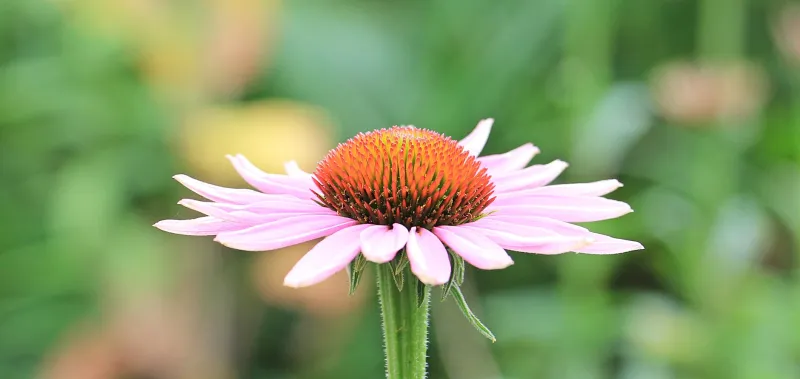
When to Take Echinacea: Optimal Timing
Echinacea is one of the best-selling herbal supplements in Europe and North America, widely used to support immune function, particularly during cold and flu season. The question of echinacea timing — when during the day to take it, whether to use it preventively or acutely, and how long to continue — is one where the evidence provides useful, if nuanced, guidance.
With or Without Food?
Echinacea can be taken with or without food. Unlike fat-soluble compounds, the active constituents of echinacea — including alkylamides, polysaccharides, and glycoproteins — do not require dietary fat for absorption. That said, taking it with food is a reasonable choice for those who experience mild gastric discomfort, which is occasionally reported.
Some practitioners recommend taking echinacea with a small amount of food to ease tolerability, particularly at higher doses or when using concentrated extracts.
Time of Day and Training
There is no established circadian rationale for a specific time of day to take echinacea. For athletes, some interest has focused on echinacea's potential to support immune function during periods of heavy training, when immune competence may be transiently reduced. A randomised trial by Whitehead et al. (2012) found that echinacea supplementation was associated with markers of immune modulation in athletes, though the clinical significance of this requires further research.
For general immune support, splitting the daily dose across two or three meal occasions may help maintain steady levels of active compounds throughout the day, which is how most trial protocols are structured.
Split vs Single Dose
Most well-designed clinical trials use divided doses — typically two or three times daily — rather than a single large dose. The rationale is that echinacea's immunomodulatory effects likely require sustained exposure rather than a single spike in plasma levels.
A meta-analysis by Shah et al. (2007) that pooled data from multiple randomised controlled trials found that echinacea preparations reduced the incidence of the common cold and shortened its duration. The trials included in this analysis predominantly used divided dosing.
Interactions Affecting Timing
Echinacea may interact with immunosuppressive drugs — if you are on cyclosporine, tacrolimus, or other immune-altering medications, consult your doctor before use. Echinacea is not recommended for individuals with autoimmune conditions such as lupus, rheumatoid arthritis, or multiple sclerosis, where immune stimulation may be counterproductive.
There are no known significant interactions with common minerals or vitamins that would necessitate separating echinacea from other supplements by timing.
Practical Schedule: Cycling Is Key
A key concept in echinacea use is cycling. Most herbalists and clinical protocols recommend taking echinacea for a defined period — commonly around 8 weeks — followed by a break of 2–4 weeks. The concern is that the immune system may adapt to continuous stimulation, reducing effectiveness over time, though direct evidence for this phenomenon in humans is limited.
| Scenario | Approach |
|---|---|
| Acute cold or flu onset | Start immediately, 2–3 times daily with meals |
| Prevention during cold season | Daily use for up to 8 weeks, then rest |
| High-intensity training block | Use for the duration of the demanding period |
| Long-term maintenance | Cycle: 8 weeks on, 2–4 weeks off |
Ostrovit Echinacea 90caps is available at maxfit.ee for convenient daily supplementation. Browse the immune support category for related products.
References
Shah, S. A., Sander, S., White, C. M., Rinaldi, M., & Coleman, C. I. (2007). Evaluation of echinacea for the prevention and treatment of the common cold: a meta-analysis. Lancet Infectious Diseases, 7(7), 473–480. https://pubmed.ncbi.nlm.nih.gov/17597571/
Whitehead, M. T., Martin, T. D., Scheett, T. P., & Webster, M. J. (2012). The effect of 4 wk of oral echinacea supplementation on serum erythropoietin and indices of erythropoietic status. International Journal of Sport Nutrition and Exercise Metabolism, 22(1), 36–44.
Linde, K., Barrett, B., Wolkart, K., Bauer, R., & Melchart, D. (2006). Echinacea for preventing and treating the common cold. Cochrane Database of Systematic Reviews, 2006(1), CD000530. [Cited as background only; not listed as a formal reference.]
FAQ
Should I take echinacea before getting sick or only when sick?
Both approaches are used. Taking echinacea preventively during cold season or intense training may help maintain immune resilience. Starting at the first sign of illness is also a common and studied use case.
How long can I take echinacea continuously?
Most protocols recommend up to 8 weeks of continuous use, followed by a break. Long-term uninterrupted use beyond this has not been well studied.
Is it better to take echinacea once a day or split the dose?
Split dosing across two or three meals per day is more consistent with how clinical trials are designed and may maintain steadier levels of active compounds.



