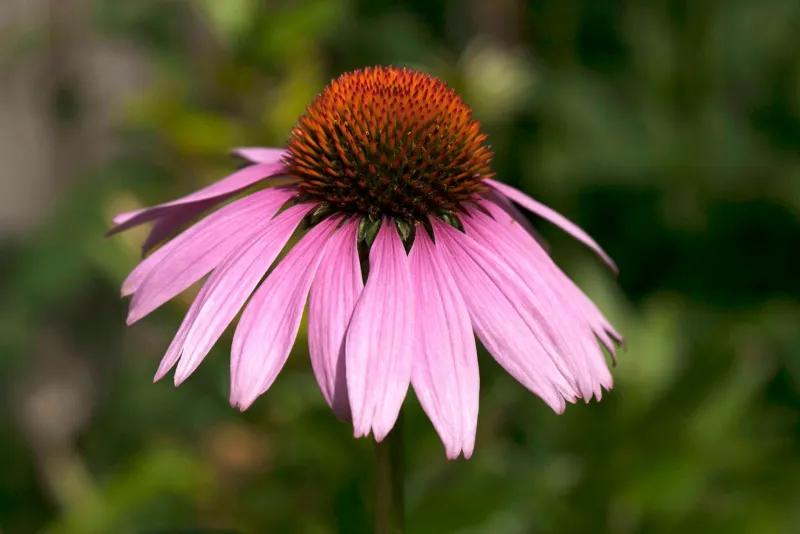
What to Stack with Echinacea: Synergies & Conflicts
Echinacea stacking is a common approach among people who want to build a more complete immune-support protocol. Echinacea — most studied as Echinacea purpurea and Echinacea pallida — is primarily used for its immunomodulatory properties, particularly around the onset of upper respiratory tract infections. Knowing which supplements amplify its benefits, which create conflicts, and how to time everything within a stack lets you get more from your supplement spending.
Evidence-Based Synergies
Echinacea + Vitamin C is the most intuitive pairing. Vitamin C supports white blood cell function and acts as an antioxidant in immune tissue. A meta-analysis of randomised trials found that echinacea preparations reduced the odds of developing a cold and shortened cold duration (Shah et al., 2007). Vitamin C supplementation has similarly shown modest effects on cold duration in meta-analyses (Hemila, 2017). While direct combination RCTs are limited, the mechanisms are additive rather than overlapping.
Echinacea + Zinc is another rational pairing. Zinc supports multiple aspects of immune function including the activity of natural killer cells and T-lymphocytes. Zinc and echinacea operate through distinct mechanisms, so combining them at reasonable doses covers more immune-pathway ground without known antagonism.
Ostrovit Echinacea 90caps — available in the echinacea category at MaxFit — is a clean single-herb product well-suited for building into an immune stack.
Antagonistic Combinations
Echinacea's immunomodulatory activity creates meaningful conflicts with specific drug and supplement categories:
- Immunosuppressants: If you are taking cyclosporine, tacrolimus, or other immunosuppressant medications (for organ transplant, autoimmune disease, etc.), echinacea's immune-stimulating properties could theoretically interfere. This is a physician conversation, not a supplement decision.
- Caffeine and stimulants: Echinacea may mildly inhibit cytochrome P450 enzymes (CYP3A4 and CYP1A2), which metabolise caffeine and some other stimulants. At supplemental doses this interaction is unlikely to be clinically significant, but heavy caffeine users may notice a slight prolongation of caffeine effects.
- Long-term continuous use + immune conditions: Echinacea is generally recommended for short-term acute use rather than indefinite daily use. For people with progressive systemic conditions or autoimmune disease, stimulating the immune system continuously is not advised without medical oversight.
Timing Within a Stack
Echinacea is primarily used in two patterns: (1) at the first sign of illness for a short course of one to two weeks, and (2) as a prevention measure during cold and flu season. For pattern 1, take it consistently throughout the day as directed on your product — most studies dosed two to three times per day. For pattern 2, some practitioners recommend cycles rather than continuous use (e.g., taking it for eight weeks then taking a two-week break), though this cycling practice has limited direct clinical evidence supporting it.
There are no strong timing requirements relative to meals, though taking it with food may reduce the mild gastrointestinal discomfort some people experience.
Sample Stacks by Goal
Acute cold prevention at illness onset: Echinacea + Vitamin C + Zinc. This is the most evidence-supported acute combination. Begin at first sign of illness and continue for up to ten days.
Seasonal immune foundation (winter): Echinacea + Vitamin D3 + Zinc. Vitamin D's role in immune regulation makes it a sensible addition during months of low sun exposure, when deficiency is more common.
Post-training immune support (athletes): Echinacea + antioxidant vitamin complex. Heavy training can transiently suppress immune function. Echinacea alongside C and E may blunt this immunosuppressive window, though the evidence base for this specific application is modest.
What to Avoid
- Pairing with other strongly immunostimulatory herbs simultaneously at high doses: Astragalus, andrographis, and echinacea each independently stimulate immune pathways. Stacking all three at high doses without medical guidance is not evidence-supported and carries theoretical risk of excessive immune activation.
- Using echinacea with autoimmune conditions without medical advice: If your immune system is already dysregulated, stimulating it further is not straightforwardly beneficial.
- Expecting antiviral drug-level effects: Echinacea may modestly shorten cold duration; it is not a substitute for antiviral therapy when that is clinically indicated.
FAQ
Can I take echinacea every day indefinitely?
Most clinical trials used echinacea for defined short periods. Long-term continuous use is not well-studied, and traditional use guidance typically recommends cycles with breaks. For healthy adults during peak season, short courses of one to two weeks at onset of symptoms are the best-supported approach.
Does echinacea interact with common supplements like magnesium or omega-3?
No meaningful pharmacokinetic or pharmacodynamic interactions are documented between echinacea and minerals like magnesium or omega-3 fatty acids. These combinations are generally considered safe.
Is one echinacea species better than another?
Echinacea purpurea is the most-studied species and has the strongest evidence base for immunomodulatory effects. Products based on aerial parts and roots of E. purpurea have been used in most positive clinical trials.
References
Shah, S. A., Sander, S., White, C. M., Rinaldi, M., & Coleman, C. I. (2007). Evaluation of echinacea for the prevention and treatment of the common cold: a meta-analysis. Lancet Infectious Diseases, 7(7), 473-480. https://pubmed.ncbi.nlm.nih.gov/17597571/
Hemila, H. (2017). Vitamin C and infections. Nutrients, 9(4), 339.
Sievers, E. L., & Cohen, J. L. (2010). Echinacea purpurea for upper respiratory infections: a meta-analysis of randomised controlled trials. Journal of Clinical Pharmacy and Therapeutics, 35(4), 381-394.



