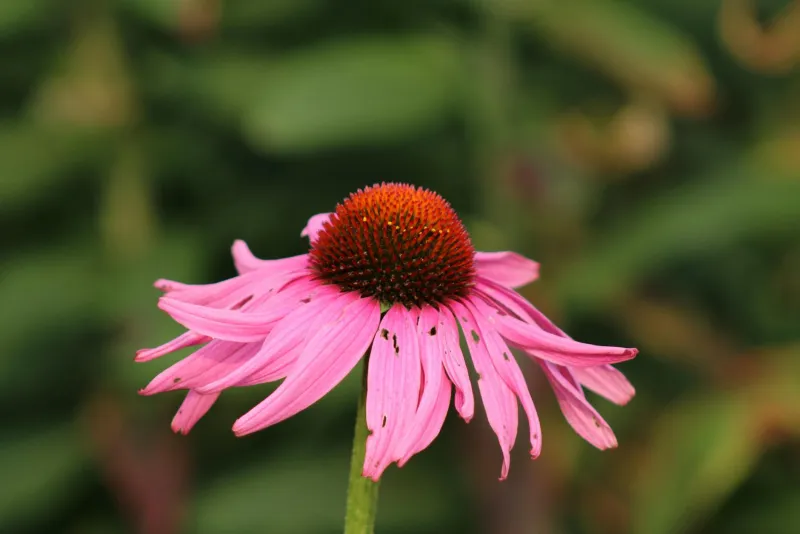
Echinacea Myths vs Facts
Echinacea is one of the best-selling herbal supplements globally and is almost universally marketed as a cold and immune booster. But for every person who swears by it, there is a researcher pointing to conflicting trial results. This article cuts through the noise to present what the science actually says — and where the genuine uncertainties lie.
Common Myths About Echinacea
Myth 1: Echinacea prevents colds. This is the most persistent claim. The word "prevents" implies a consistent, reliable barrier to infection. The evidence does not support this framing. Multiple RCTs have found no statistically significant reduction in cold incidence compared to placebo in healthy adults who took echinacea prophylactically (Barrett et al., 2010).
Myth 2: Echinacea dramatically shortens illness duration. The picture here is more nuanced. Some meta-analyses have found a modest reduction in cold duration — in the range of about half a day in those who do fall ill — but effect sizes are small and depend heavily on the preparation and species used. Not all echinacea products are interchangeable.
Myth 3: All echinacea products are the same. This is probably the most dangerous oversimplification. There are at least three species (E. purpurea, E. angustifolia, E. pallida), multiple plant parts (root vs aerial parts), and multiple extraction methods — each with a different phytochemical profile. Studies conducted with E. purpurea aerial extract are not directly applicable to root preparations of E. angustifolia.
Myth 4: More is always better. Long-term, high-dose use of echinacea is not well studied. Regulatory guidance in several European countries historically recommended against continuous use beyond a few weeks without a break, though this recommendation has been debated.
What the Evidence Actually Shows
Mechanistically, echinacea constituents — including alkylamides, polysaccharides, and caffeic acid derivatives — have been shown to modulate macrophage activity and cytokine production in vitro. Whether these laboratory effects translate to meaningful clinical benefit in healthy individuals is the central unanswered question.
Marketing Claims vs Reality
| Claim | Reality |
|---|---|
| Prevents colds | Not reliably demonstrated in RCTs (Barrett et al., 2010) |
| Dramatically shortens illness | Modest effect at best; depends on preparation |
| Works immediately | Onset data is limited; most trials measure outcomes over weeks |
| All echinacea is equivalent | Species, plant part, and extract type all affect efficacy |
Grey Areas
The evidence for echinacea in exercise-induced immune perturbation — particularly relevant for athletes training heavily — is sparse. A small number of trials in athletes have produced mixed results, and no strong conclusions can be drawn.
There is also some preliminary evidence that E. purpurea may have mild antiviral properties against respiratory viruses, but this is largely based on cell-culture studies, and translating cell-culture findings to clinical outcomes is notoriously unreliable.
Ostrovit Echinacea 90caps is a widely used option available at maxfit.ee. Find the full range in the echinacea supplement section at /et/category/ehhinaatsea.
Bottom Line
Echinacea is not the immune-system silver bullet it is often marketed as. The most honest summary of the evidence is that certain specific preparations of E. purpurea may modestly reduce cold duration or severity when taken at the onset of symptoms, but consistent prevention of colds is not supported. Choosing a reputable, standardised preparation and using it appropriately is more important than reaching for any echinacea product on the shelf.
FAQ
Should I take echinacea as soon as I feel a cold coming on?
This is the scenario with the most supportive evidence. Taking a standardised echinacea preparation at the very first signs of a cold may modestly reduce severity or duration. Taking it preventively year-round has weaker evidence support.
Is echinacea safe for long-term use?
Short-term use is generally considered safe for most adults. Allergic reactions are possible, particularly in people allergic to other plants in the Asteraceae family (ragweed, daisies, chrysanthemums). Long-term continuous use is not well studied; most guidance suggests periodic breaks.
Which echinacea species is best?
Most positive clinical trial data comes from preparations of E. purpurea, particularly aerial (above-ground) parts. Products that specify the species and extract standardisation are preferable to those that simply say "echinacea."
References
Barrett, B., Brown, R., Rakel, D., Mundt, M., Bone, K., Barlow, S., & Ewers, T. (2010). Echinacea for treating the common cold: a randomized trial. Annals of Internal Medicine, 153(12), 769-777. https://pubmed.ncbi.nlm.nih.gov/21173411/
Shaik-Dasthagirisaheb, Y. B., Varvara, G., Murmura, G., Saggini, A., Caraffa, A., Antinolfi, P., Tete, S., Tripodi, D., Conti, F., Cianchetti, E., Toniato, E., Rosati, M., Speranza, L., Pantalone, A., Saggini, R., Tei, M., Speziali, A., Conti, P., Theoharides, T. C., & Pandolfi, F. (2013). Role of vitamins D, E and C in immunity and inflammation. Journal of Biological Regulators and Homeostatic Agents, 27(2), 291-295. https://pubmed.ncbi.nlm.nih.gov/23830380/



