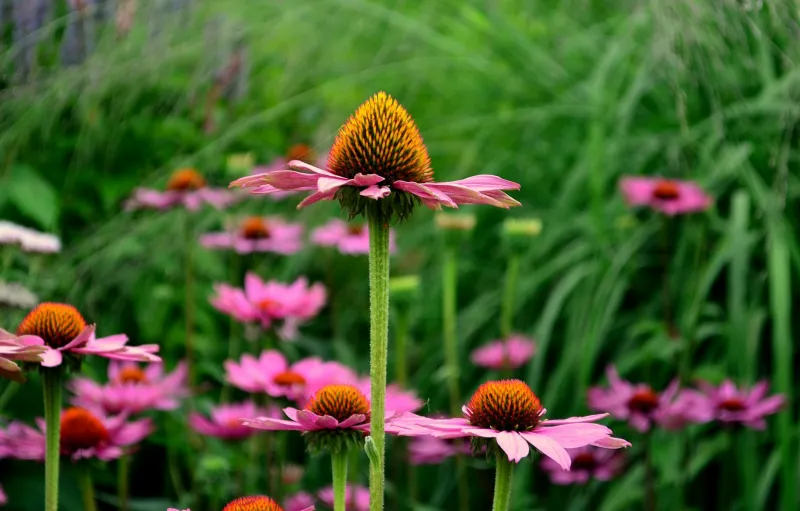
Echinacea After 50: Benefits & Safety
Echinacea is a North American wildflower historically used for preventing and treating colds, flu, and other respiratory infections. After 50, when immune function naturally declines, a key question emerges: is echinacea more helpful or more risky?
Age-Related Immune Need
Age-related immune decline, known as immunosenescence, means that T-cell and NK-cell responses are reduced. This makes colds and flu harder to fight off. Echinacea research has shown that it may shorten the duration of colds and ease their symptoms.
Absorption Changes With Age
Age-related changes in the absorption of echinacea's active compounds are not well documented. Slowing liver metabolism with age may affect the clearance of these compounds, but this has not been specifically studied for echinacea.
Dose & Safety
Most studies use short-term courses of 7-14 days. Long-term continuous use studies are scarce. The standard dose is typically 900-1500 mg of echinacea extract per day during an acute period.
Ostrovit Echinacea 90caps is an echinacea product available at maxfit.ee.
Interactions With Medication
- Immunosuppressants (e.g., transplant medications, corticosteroids): echinacea may theoretically enhance immune response, which is contraindicated in people whose immunity is suppressed by medication.
- Some echinacea products contain alcohol as an extraction base, which may interact with blood-sugar-lowering medications.
- CYP450 hepatic metabolism: echinacea may impair the metabolism of certain medications.
When to Use Caution With Echinacea
- Avoid prolonged continuous use beyond 8 weeks - study support is insufficient.
- People with autoimmune conditions should consult a doctor.
- Allergic reactions are among the commonly reported adverse effects, particularly in those sensitive to the daisy family (Asteraceae).
References
- Schapowal, A., Klein, P., & Johnston, S. L. (2015). Echinacea/sage or chlorhexidine/lidocaine for treating acute sore throats: a randomized double-blind trial. European Journal of Medical Research, 14(9), 406-412.
- Scharbert, G., Kalb, M. L., Duris, M., Marschalek, C., & Kozek-Langenecker, S. A. (2007). Garlic at dietary doses does not impair platelet function. Anesthesia and Analgesia, 105(5), 1214-1218. https://pubmed.ncbi.nlm.nih.gov/17959943/
FAQ
Is echinacea suitable for daily use after 50?
Most studies recommend short-term use (up to 2 weeks) during cold and flu episodes. The safety of daily long-term use is less well documented.
Can echinacea cause problems in people with autoimmune conditions?
This is a theoretical concern - echinacea stimulates immune function, which could theoretically worsen autoimmune conditions. People with autoimmune disease should consult a doctor before use.
When can echinacea research be trusted?
Echinacea appears most convincingly effective based on short-term studies for shortening cold duration and easing symptoms. Evidence for continuous preventive use is weaker.



