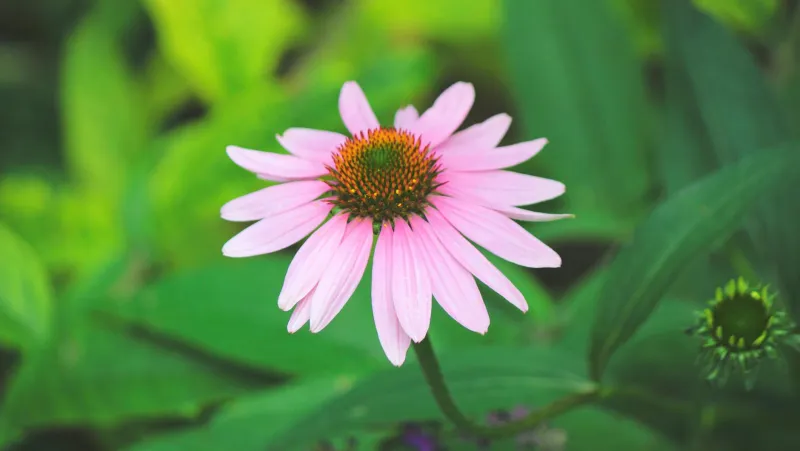
What Is Echinacea and Why Does Dosage Matter?
Echinacea is one of the most widely used herbal supplements in the world, primarily sought for immune support during cold and flu season. The genus includes several species — most commonly Echinacea purpurea, E. angustifolia, and E. pallida — each with somewhat different phytochemical profiles. Dosage matters because standardisation across products varies widely, and the evidence base is tied to specific preparations, doses, and durations.
Studied Effective Dose Ranges
Research on echinacea dosing has concentrated on a few key preparations. A Cochrane systematic review by Linde et al. (2006) evaluated sixteen randomised trials and found that certain echinacea preparations may reduce the incidence of the common cold and shorten its duration, with the most studied oral doses ranging from approximately 900 mg to 4,000 mg of dried herb equivalent per day. (Linde et al., 2006)
For E. purpurea liquid extract, doses of 2.5 mL two to three times daily are commonly used in clinical trials. For dried herb capsules, studies have used 300–500 mg of concentrated extract two to three times per day.
A randomised controlled trial by Shah et al. (2007) found that taking echinacea at the first sign of a cold was associated with a meaningfully shorter duration of illness compared with placebo, using doses equivalent to approximately 900 mg of dried root extract per day. (Shah et al., 2007)
Dose by Goal
| Goal | Studied Range | Notes |
|---|---|---|
| Preventing cold onset | 300–500 mg extract, 2–3x/day | Start at first exposure to illness |
| Reducing cold duration | 900 mg–2,000 mg/day (dried herb eq.) | Begin at first symptom |
| Maintenance immune support | Lower doses; evidence weaker | Short courses more studied |
Bodyweight is not a primary dosing variable in available research; standard doses appear applicable across a broad adult weight range.
Upper Limits and Safety
Echinacea has a good short-term safety record at typical therapeutic doses. There is no established European regulatory UL for echinacea, but most clinical guidelines recommend limiting continuous use to 8–10 weeks to avoid potential attenuation of immunostimulatory effects. People with autoimmune conditions, those on immunosuppressants, or those with known allergies to plants in the Asteraceae family should exercise caution and consult a healthcare provider.
Timing Relative to Dose
Most research uses divided daily doses — typically two or three times per day — rather than a single large dose. This is likely to maintain more consistent plasma levels of active alkylamides and polysaccharides. Taking echinacea with food does not appear to significantly alter efficacy but may reduce the chance of mild gastric irritation.
Practical Protocol
- At first sign of cold symptoms: take 300–500 mg of standardised E. purpurea extract three times daily.
- Continue for 7–10 days; do not exceed 10–12 weeks of continuous use.
- Take with meals to improve tolerability.
- After a course, take a 2–4 week break before restarting.
- For prevention during high-risk seasons, some practitioners use a lower daily dose for up to 8 weeks.
Ostrovit Echinacea 90caps is available at maxfit.ee for convenient standardised echinacea intake.
Choosing the Right Echinacea Product
The echinacea supplement market is complex because product quality varies enormously. Key factors to consider when choosing a product:
Species and plant part: E. purpurea aerial parts (flowers, leaves, stems) and root both have clinical evidence behind them. The root of E. angustifolia has a long traditional use history and some dedicated RCT support. Confirm the species and the part used on the label.
Standardisation: Look for products standardised to a specific active constituent — either alkylamides (from root) or polysaccharides (from aerial parts). Products not listing a standardisation may vary significantly in potency between batches.
Form: Liquid extracts and tinctures offer faster absorption but may be harder to dose precisely. Tablets and capsules with stated extract ratios (e.g., 8:1 extract, 300 mg per capsule) are easier to dose consistently.
What to avoid: very cheap products with no species listed, no standardisation data, and no certificate of analysis. Given that the therapeutic effect depends on specific phytochemical content, these products may contain insufficient active compounds.
Echinacea and Immune Mechanisms
Research has explored several potential mechanisms by which echinacea exerts its immune-modulating effects. Alkylamides from E. purpurea have been shown to interact with cannabinoid receptors (CB2) expressed on immune cells, potentially modulating cytokine release. Arabinogalactan polysaccharides stimulate macrophage activity and interferon production. These mechanisms help explain the herb's pattern of effect: it does not directly kill viruses but primes immune cell activity and modulates inflammatory signalling.
Understanding mechanism matters for expectation-setting: echinacea supports immune readiness and may reduce the severity and duration of upper respiratory tract infections. It is not an antibiotic equivalent and does not treat bacterial infections or severe illness.
FAQ
How quickly does echinacea work?
Trials suggest effects on cold duration emerge within the first few days of use when echinacea is started at the onset of symptoms. It is not a fast-acting rescue remedy but works by supporting immune readiness.
Can I take echinacea every day all year round?
Most evidence and traditional use recommendations advise against continuous year-round use. Short courses of 7–10 days at symptom onset, or up to 8 weeks for seasonal prevention, are better supported by current evidence.
Does echinacea species matter for dosage?
Yes. E. purpurea, E. angustifolia, and E. pallida differ in active compounds and available evidence. Most clinical trials use E. purpurea. Check the species and standardisation details on your supplement label.
References
Linde, K., Barrett, B., Wölkart, K., Bauer, R., & Melchart, D. (2006). Echinacea for preventing and treating the common cold. Cochrane Database of Systematic Reviews, (1), CD000530. https://pubmed.ncbi.nlm.nih.gov/16437427/
Shah, S. A., Sander, S., White, C. M., Rinaldi, M., & Coleman, C. I. (2007). Evaluation of echinacea for the prevention and treatment of the common cold: a meta-analysis. Lancet Infectious Diseases, 7(7), 473–480. https://pubmed.ncbi.nlm.nih.gov/17597571/



