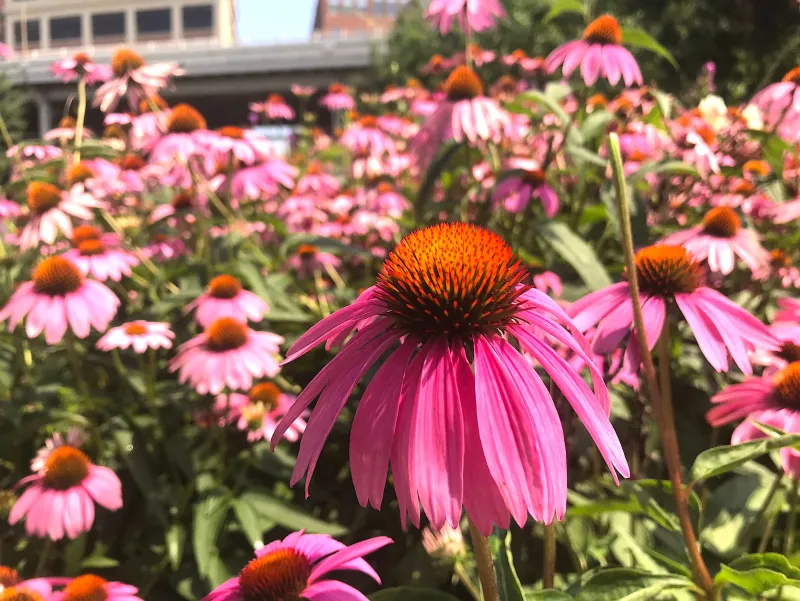
What Is Echinacea?
Echinacea is a genus of flowering plants in the daisy family, native to North America. Three species — Echinacea purpurea, E. angustifolia, and E. pallida — are used medicinally. Preparations vary widely: root extracts, aerial-part extracts, standardised to alkamides or polysaccharides. This variability across products is one reason echinacea research is sometimes difficult to summarise. Ostrovit Echinacea 90caps is available at maxfit.ee for those looking to support their immune system during colder months.
Primary Evidenced Benefits
Reducing Cold Duration
The strongest evidence for echinacea benefits concerns upper respiratory tract infections (URTIs), commonly called colds. A meta-analysis of randomised controlled trials found that echinacea preparations were associated with a statistically significant reduction in the duration of common cold symptoms (Shah et al., 2007). The pooled estimate suggested a reduction of approximately 1.4 days compared with placebo. Effect sizes varied considerably across individual trials, partly due to product heterogeneity.
Reducing Cold Incidence
Some trials have also examined whether regular echinacea use reduces the likelihood of catching a cold. A meta-analysis by Barrett (2003) found that echinacea was associated with a relative reduction in the incidence of URTIs, though the evidence was rated as moderate quality. The prevention signal was more consistent for liquid or standardised tablet preparations than for crude powdered plant products.
Secondary and Emerging Effects
Immune Cell Modulation
In vitro and animal studies show echinacea compounds, particularly alkamides, interact with cannabinoid receptors on immune cells and can stimulate macrophage activity and cytokine release. Whether these mechanisms translate meaningfully to clinically relevant outcomes in healthy humans at typical supplement doses remains uncertain.
Anti-Inflammatory and Antioxidant Properties
Echinacea extracts contain caffeic acid derivatives (including echinacoside and cichoric acid) with antioxidant activity. These compounds may contribute to the overall anti-inflammatory environment during infection, though their independent contribution to clinical outcomes is not established.
Where Evidence Is Weak
Echinacea is not established as a treatment for influenza, COVID-19, or other specific viral infections beyond common cold-associated rhinoviruses. Claims about echinacea preventing cancer, allergies, or chronic immune dysfunction are not supported by clinical evidence. Studies with single-species, standardised preparations tend to show more consistent effects than mixed-species or unpurified products.
Who Gains Most
- Adults who experience frequent URTIs, particularly during autumn and winter
- Athletes with heavy training loads, who may be more susceptible to infections around intense training periods
- People who prefer plant-based approaches alongside conventional preventive strategies (adequate sleep, nutrition, hygiene)
Echinacea is less well-studied in children, immunocompromised individuals, and those on immunosuppressive medications — these groups should consult a healthcare provider before use.
Realistic Expectations
If you already have a cold, echinacea may shorten its duration by roughly a day or so — a clinically modest but personally meaningful effect. It is not a cure and does not eliminate symptoms. For prevention, benefits appear most consistent with regular use (daily during exposure risk periods) using a standardised extract rather than sporadic use. Products such as Ostrovit Echinacea 90caps from the /et/category/ehhinaatsea, /en/category/ehhinaatsea, /ru/category/ehhinaatsea category are a practical option for the cold season.
FAQ
Should I take echinacea every day or only when I feel ill?
Trial data support both approaches, but they serve different purposes. For prevention, low continuous dosing during high-risk periods (e.g., autumn and winter) may reduce incidence. At the onset of symptoms, higher, short-course dosing may shorten duration. Do not take it continuously for more than eight consecutive weeks without a break.
Is echinacea safe for everyone?
Echinacea is well tolerated in most healthy adults. Rare allergic reactions are possible, particularly in people with known allergies to related plants (ragweed, chrysanthemums, marigolds). It should be avoided by people with autoimmune conditions (lupus, multiple sclerosis, rheumatoid arthritis) and those taking immunosuppressive drugs, as stimulating immune activity could theoretically worsen these conditions. Consult your healthcare provider.
Which echinacea species is most effective?
Most positive trials have used Echinacea purpurea aerial parts or root extracts. E. purpurea is the most studied species in modern RCTs. Preparations standardised to alkamide or polysaccharide content tend to produce more consistent results than crude whole-plant powders.
References
Shah, S. A., Sander, S., White, C. M., Rinaldi, M., & Coleman, C. I. (2007). Evaluation of echinacea for the prevention and treatment of the common cold: a meta-analysis. Lancet Infectious Diseases, 7(7), 473–480. https://pubmed.ncbi.nlm.nih.gov/17597571/
Barrett, B. (2003). Medicinal properties of Echinacea: a critical review. Phytomedicine, 10(1), 66-86. https://pubmed.ncbi.nlm.nih.gov/12622467/
Jawad, M., Schoop, R., Suter, A., Klein, P., & Eccles, R. (2012). Safety and efficacy profile of Echinacea purpurea to prevent common cold episodes: a randomized, double-blind, placebo-controlled trial. Evidence-Based Complementary and Alternative Medicine, 2012, 841315. https://pubmed.ncbi.nlm.nih.gov/23133517/
How to Use Echinacea Effectively
Forms and Standardisation
Echinacea products vary enormously in preparation and quality. The most-studied preparations in positive RCTs have been:
- Standardised E. purpurea root and aerial extract standardised to 4% echinacoside or 0.7-1% alkylamides
- Fresh-plant tinctures (1:5 ratio in 55% ethanol) from E. purpurea
- Whole-plant dried preparations (less consistent results)
Crude powdered root products have the most variable results in clinical trials and are generally considered less reliable than standardised extracts.
Dosing Strategies
Two main strategies appear in the literature:
Prevention (continuous low-dose): 400-800 mg standardised extract daily during high-risk periods (autumn and winter). May reduce incidence of URTIs.
Treatment (short high-dose course): 1500-3000 mg per day at first sign of cold symptoms, continued for 7-10 days. This strategy is better supported for reducing cold duration.
Cycling (8 weeks on, 2 weeks off) is commonly recommended to avoid immune habituation, though direct evidence for this practice is limited.
Echinacea and the Immune System in Athletes
Intense prolonged exercise temporarily suppresses immune function in a phenomenon sometimes called the "open window" — a period of increased infection susceptibility after strenuous training. Athletes experiencing frequent post-training URTIs are a group for whom echinacea's modest preventive effect may be practically meaningful. A randomised trial in marathon runners found reduced upper respiratory illness with echinacea supplementation (Jawad et al., 2012), though replication in larger groups is still needed.
For consistent supplementation during cold season, explore Ostrovit Echinacea 90caps and related products in the /et/category/ehhinaatsea, /en/category/ehhinaatsea, /ru/category/ehhinaatsea category at maxfit.ee.
Echinacea as Part of a Broader Immune Strategy
Echinacea is most effective when embedded in a comprehensive immune-support approach rather than used as a sole intervention. Sleep deprivation, excessive training volume, nutritional deficiencies (particularly vitamin D, zinc, and vitamin C), and chronic stress all have larger demonstrated effects on susceptibility to infection than any single supplement.
Practical hierarchy for immune resilience:
- Adequate sleep (7-9 hours for most adults)
- Sufficient vitamin D status (test and supplement if deficient)
- Adequate zinc and vitamin C from diet or supplementation
- Stress management and avoiding overtraining
- Echinacea or other botanicals as a complementary layer
Within this hierarchy, echinacea occupies a real but supporting role. Using it without addressing the upstream factors (sleep, vitamin D) is unlikely to produce dramatic results.
Echinacea for Children
Some paediatric trials have investigated echinacea for URTIs in children, generally finding modest effects similar to those in adults. However, dosing is age-adjusted and not all products are suitable for children. Products formulated as liquid extracts or age-appropriate drops are more suitable than adult-dose tablets. Parents should always consult a paediatrician before supplementing children with herbal preparations.
Browse immune support options at maxfit.ee through /et/category/immuunsus, /en/category/immuunsus, /ru/category/immuunsus.



