
Dietary Shake: Latest Research & Evidence Update
Dietary shake research has matured considerably over the past decade. What began as a largely marketing-driven category has been subjected to increasingly rigorous trial designs, producing a more nuanced picture of where meal replacement shakes genuinely deliver and where earlier optimism has been revised downward. This update surveys the current state of evidence — what recent trials show, where consensus has shifted, which questions remain unanswered, and what this means practically.
What Recent Trials Show
The most consistent finding in meal replacement shake literature concerns short-to-medium-term weight management. A systematic review and meta-analysis of randomised controlled trials found that partial meal replacement strategies — substituting one or two meals per day with a structured shake — produced greater weight loss at 12 weeks compared to standard dietary advice alone (Heymsfield et al., 2003). The primary mechanism is not magical: it is caloric structure and portion control made easy.
More recently, researchers have looked beyond weight to metabolic outcomes. Trials in people with type 2 diabetes found that very-low-calorie dietary shake programmes, producing significant caloric restriction over weeks, were associated with improvements in fasting blood glucose and HbA1c and — in some cases — remission of type 2 diabetes, though the evidence for long-term remission durability is still accumulating (Lean et al., 2019).
One area where the evidence has become stronger is satiety. High-protein meal replacement shakes — typically those providing at least 20-30 g of protein per serving — show better short-term appetite suppression than isocaloric lower-protein alternatives. This is consistent with broader nutritional research showing that protein is the most satiating macronutrient per calorie.
Shifts in Consensus
The consensus around dietary shakes has evolved in several meaningful ways:
From weight-loss tool to versatile support: Earlier framing positioned shakes almost exclusively as weight-loss aids. Current thinking recognises them as caloric and macronutrient management tools applicable across goals — weight loss, weight maintenance, muscle gain, and convenient nutrition during high-demand periods.
Protein quality now scrutinised more carefully: Early shake formulations often used lower-quality protein blends. Contemporary guidance — consistent with ISSN (International Society of Sports Nutrition) position stands — emphasises leucine content and protein digestibility-corrected amino acid score (PDCAAS). Shakes based on whey isolate or casein have the strongest support for muscle protein synthesis.
Food-first framing remains stronger: A review of long-term behaviour found that dietary shake users who transitioned to food-based eating patterns at the end of a programme maintained more weight loss than those who continued shake-dependent eating patterns indefinitely. This argues for using shakes as a structured transition tool, not a permanent replacement for whole food.
Still-Open Questions
Despite increasing rigour, several important questions remain without clear answers:
- Long-term metabolic effects: Most RCTs on dietary shakes run for 12-52 weeks. The metabolic effects of decade-long shake use as a meal replacement — on gut microbiome, bone density, and nutrient status — are largely unknown.
- Micronutrient adequacy in fortified shakes: While most commercial shakes are fortified, the bioavailability of fortified vitamins and minerals may differ from food-based sources. This is particularly relevant for fat-soluble vitamins in low-fat shake formulations.
- Individual variation: Who responds best to meal replacement strategies remains incompletely characterised. Genetic variation in appetite hormones, gut transit time, and dietary adherence patterns all influence outcomes in ways that population-level averages obscure.
What It Means Practically
For people using dietary shakes as part of a weight management or fitness programme, the evidence supports the following practical principles:
-
Partial replacement works: One to two shakes per day replacing structured meals is the evidence-supported model. Full liquid meal replacement for extended periods introduces nutritional complexity and behavioural sustainability concerns.
-
Protein content matters: Choose shakes with at least 20 g of protein per serving to leverage satiety effects. Products like SELF Whey Shake 1kg Vanill and SELF Whey Shake 1kg Sokolaad at maxfit.ee, OstroVit Delicious Shake + Vitamin 400g Maapahkel, ICONFIT Diet Shake 495g Maasikas, and
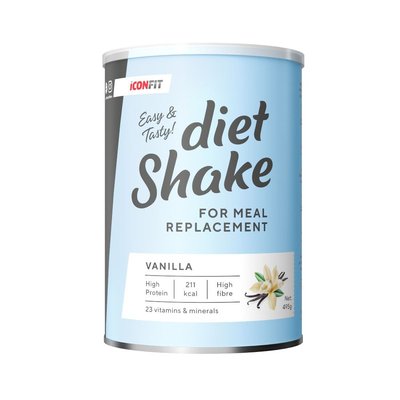 ICONFIT Diet Shake 495g Vanill€13.90 In stock provide quality options across different dietary preferences.
 -
Exit strategy matters: Planning a transition from shake-heavy eating to food-based patterns — rather than using shakes indefinitely — is associated with better long-term outcomes.
-
Context-specific use: Shakes are most useful when whole food is genuinely unavailable or impractical (travel, time constraints), not as a default replacement for cooking skills.
Bottom Line
Dietary shake research supports their role as a practical tool for caloric management and convenient nutrition, with the strongest evidence for short-to-medium-term weight loss and improved metabolic markers in at-risk populations. They are not superior to well-constructed whole food diets for most health outcomes, but they offer a practical behavioural shortcut that many people find sustainable. Protein content, formulation quality, and a clear exit strategy are the variables most predictive of a good outcome.
FAQ
Are dietary shakes effective for long-term weight loss?
RCT evidence shows dietary shakes are effective for short-to-medium-term weight loss, especially when they replace one to two meals per day. Long-term success depends on whether the behavioural change translates into sustainable dietary habits after the structured programme ends.
How much protein should a good dietary shake have?
Most sports nutrition bodies recommend at least 20 g per serving to meaningfully support satiety and muscle protein synthesis. For active individuals aiming to maintain muscle during weight loss, choosing shakes at the higher end of this range is advisable.
Can dietary shakes replace all meals?
Full meal replacement with shakes for extended periods has not been shown to outperform partial replacement for most people, and it raises questions about long-term gut health and behavioural sustainability. It is used in medically supervised very-low-calorie diet protocols, but these require clinical oversight.
References
Heymsfield, S. B., van Mierlo, C. A., van der Knaap, H. C., Heo, M., & Frier, H. I. (2003). Weight management using a meal replacement strategy: meta and pooling analysis from six studies. International Journal of Obesity, 27(5), 537-549. https://pubmed.ncbi.nlm.nih.gov/12704397/
Lean, M. E., Leslie, W. S., Barnes, A. C., Brosnahan, N., Thom, G., McCombie, L., Peters, C., Zhyzhneuskaya, S., Al-Mrabeh, A., Hollingsworth, K. G., Rodrigues, A. M., Rehackova, L., Adamson, A. J., Sniehotta, F. F., Mathers, J. C., Ross, H. M., McIlvenna, Y., Stefanetti, R., Trenell, M., ... Taylor, R. (2019). Durability of a primary care-led weight-management intervention for remission of type 2 diabetes: 2-year results of the DiRECT open-label, cluster-randomised trial. Lancet Diabetes & Endocrinology, 7(5), 344-355. https://pubmed.ncbi.nlm.nih.gov/30852132/
Aliabadi, M., Kimiagar, M., Ghayour-Mobarhan, M., Shakeri, M. T., Nematy, M., Ilaty, A. A., Zarban, A., Ferns, G., & Margetts, B. (2012). Prevalence of malnutrition in free living elderly people in Iran: a cross-sectional study. Asia Pacific Journal of Clinical Nutrition, 17(2), 285-289.



