
Is Long-Term Dietary Shake Use Safe?
Dietary shakes have become a popular tool for controlling calorie intake, replacing meals, and simplifying nutrient consumption. But more people are now asking: what happens when you use a dietary shake not for weeks, but for months or even years? Is it safe?
What Long-Term Studies Show
Most dietary shake research lasts 8 to 26 weeks. Longer-term studies are considerably fewer. Available data point to several aspects:
Weight management: Astbury et al. (2019) conducted a meta-analysis showing that meal-replacement strategies are effective for weight loss and maintenance in the short term — but long-term adherence typically declines over time (Astbury et al., 2019).
Nutritional adequacy: Quality dietary shakes are formulated to complement whole foods. If a shake replaces too large a share of daily food intake, there is a risk of under-consuming certain nutrients — particularly the bioactive compounds in whole foods that enhance absorption of other nutrients.
Gut health: Prolonged high-protein shake use without adequate fibre is theoretically associated with changes in gut microbiota, though this is an actively researched area.
Upper Safe Limits Over Time
The non-protein components in shakes — vitamins and minerals — are regulated, and most products follow EU recommended daily intake guidelines. Risk arises primarily from excessive micronutrient intake that has not been carefully calculated.
On protein intake: EFSA has assessed that high protein consumption in healthy adults is safe up to certain levels, but those with kidney conditions or older adults should consult a physician. Specific reference values are available directly from EFSA's opinion documents.
Do You Need to Cycle?
There is no evidence-based biological requirement to cycle — meaning to take breaks from dietary shake use. The concept of cycling comes more from behavioural psychology: variety helps maintain flexibility in eating habits and avoids one-dimensional nutrition. From a nutrient-saturation standpoint, breaks are not required, assuming the shake is nutritionally complete.
Monitoring
With long-term use, it is sensible to periodically review:
- Overall wellbeing and energy levels
- Weight and body composition — are goals being met?
- Periodic nutrition review to avoid nutrient gaps
- Blood biomarkers (iron, B12, vitamin D) at least once a year, especially in older adults
SELF Whey Shake 1kg Vanill, SELF Whey Shake 1kg Sokolaad, OstroVit Delicious Shake + Vitamin 400g Maapahkel, ICONFIT Diet Shake 495g Maasikas and 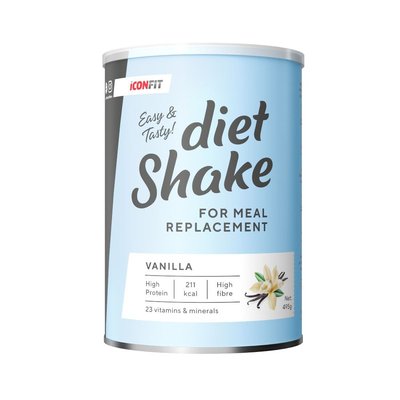 ICONFIT Diet Shake 495g Vanill€13.90 In stock are available at maxfit.ee and feature clear nutritional labelling to help you plan intake.
Honest Verdict
Dietary shakes are safe for months of use when the product is nutritionally balanced. The main risks arise when:
- The shake replaces too large a share of solid food (creating over-reliance on one source)
- A poorly formulated product with inadequate nutrient content is chosen
- The user has special circumstances (pregnancy, kidney impairment, history of eating disorders)
As a complement — not a replacement — for a healthy, varied diet, a dietary shake is a suitable long-term tool.
FAQ
Do dietary shakes cause muscle loss?
Muscle loss depends primarily on energy balance and protein intake. A shake with adequate protein, combined with resistance exercise, does not cause muscle loss.
Are dietary shakes suitable for people with diabetes?
Some shakes are formulated with lower sugar content. People with diabetes are advised to consult a healthcare provider before beginning long-term use to account for individual metabolism.
How many meals per day is it safe to replace?
Nutrition specialists typically recommend replacing a maximum of one meal per day, leaving remaining meals as healthy whole food. This reflects both nutritional diversity and eating-habit flexibility considerations.
References
Astbury, N. M., Piernas, C., Hartmann-Boyce, J., Lapworth, S., Aveyard, P., & Jebb, S. A. (2019). A systematic review and meta-analysis of the effectiveness of meal replacements for weight loss. Obesity Reviews, 20(4), 569-587. https://pubmed.ncbi.nlm.nih.gov/30675990/
Heymsfield, S. B., van Mierlo, C. A., van der Knaap, H. C., Heo, M., & Frier, H. I. (2003). Weight management using a meal replacement strategy: meta and pooling analysis from six studies. International Journal of Obesity, 27(5), 537-549. https://pubmed.ncbi.nlm.nih.gov/12704397/
Dansinger, M. L., Gleason, J. A., Griffith, J. L., Selker, H. P., & Schaefer, E. J. (2005). Comparison of the Atkins, Ornish, Weight Watchers, and Zone diets for weight loss and heart disease risk reduction: a randomized trial. JAMA, 293(1), 43-53. https://pubmed.ncbi.nlm.nih.gov/15632335/



