
What Is a Dietary Shake and Why Does Form Matter?
A dietary shake is a nutritionally controlled meal-replacement or supplement designed to support calorie management, portion control, or protein intake alongside a calorie-conscious diet. The term covers a wide range of products: from low-calorie liquid meal replacements to high-protein powders intended for muscle retention during weight loss. Choosing the right form of dietary shake is the first practical step, because form determines convenience, cost, calorie density, and how readily you can customise the nutrient profile.
Dietary Shake Forms Compared
| Form | Calorie flexibility | Convenience | Cost per serving | Customisation |
|---|---|---|---|---|
| Powder (mix with water or milk) | High — control liquid choice and volume | Moderate — requires shaker or blender | Lowest | High — add fruit, fibre, extra protein |
| Ready-to-drink (RTD) | Fixed | Highest — open and drink | Higher | None |
| Bar (solid meal-replacement) | Fixed | High — no mixing | Moderate | None |
| Sachet (pre-portioned powder) | Moderate | High — single-use pack | Moderate-high | Low |
SELF Whey Shake 1kg Vanill, SELF Whey Shake 1kg Sokolaad, OstroVit Delicious Shake + Vitamin 400g Maapahkel, ICONFIT Diet Shake 495g Maasikas, and 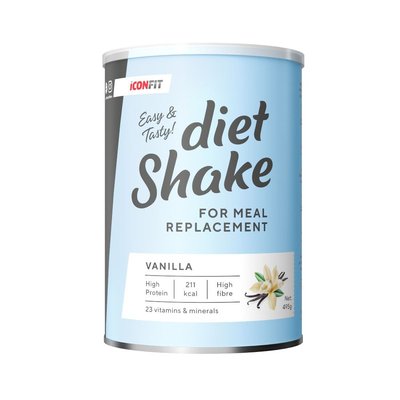 ICONFIT Diet Shake 495g Vanill€13.90 In stock are all powder-format dietary shakes available at maxfit.ee, offering flexibility to control calories and macros per serving.
Bioavailability and Protein Quality Differences
For dietary shakes, "bioavailability" in the nutritional sense refers mainly to protein quality and digestibility. Most shakes use whey protein (fast-digesting, high DIAAS), plant-based proteins (variable quality depending on blend), or casein (slower-digesting). Protein source affects satiety duration:
- Whey-based shakes produce a rapid but shorter satiety signal
- Casein and soy protein blends sustain fullness longer
- Plant protein blends with complementary amino acid profiles (pea + rice) can match whey DIAAS when properly formulated
Vitamin and mineral fortification (common in meal-replacement shakes) is generally well-absorbed when provided in standard forms. Fat-soluble vitamins (A, D, E, K) require some dietary fat for optimal absorption — adding a teaspoon of nut butter or using milk instead of water can help.
Cost Per Effective Dose
Powder formats offer the lowest cost per serving when purchased in larger tubs. A 1 kg powder container typically provides 20–40 servings depending on serving size, making the per-meal cost competitive compared with RTD bottles, which carry a significant convenience premium. For regular daily use, powder is the most economical choice; RTD is justified for travel or post-workout convenience.
Which Form for Which Goal
- Calorie-controlled weight management: A powder shake with defined macros gives the most control over total intake. Look for products with protein content high enough to support satiety and muscle retention.
- Post-workout recovery while on a calorie deficit: A high-protein powder shake (25–30 g protein per serving) serves double duty as a recovery aid and appetite manager.
- On-the-go meal replacement: RTD bottles or sachets remove the need for mixing and are practical when away from home.
- Mindful eating habit building: Preparation of a shake from powder adds a small ritual that can reinforce mindful eating patterns.
What to Look for on the Label
Key checks before purchasing a dietary shake:
- Calorie count per serving — must align with your daily target (most meal replacement shakes target roughly 200–400 kcal per serving)
- Protein content — at least 15–20 g per serving to support satiety and lean mass
- Sugar and sweetener content — some products load up on added sugars to improve flavour; check total carbohydrate and sugar separately
- Fibre content — 3–5 g per serving supports digestion and fullness
- Micronutrient fortification — genuine meal replacements include a range of vitamins and minerals; protein-only powders typically do not
- No proprietary blends hiding protein quality — third-party tested products provide assurance of label accuracy
Browse the full dieetikokteil range at maxfit.ee to compare options by macro profile.
FAQ
Can I use a dietary shake as a full meal replacement?
True meal-replacement products (usually formulated to provide at least 200 kcal with a full micronutrient profile) can substitute for a meal in the context of a calorie-controlled plan. Protein-only shakes are not designed as meal replacements and should complement food, not replace it.
Is powder or RTD better for weight loss?
For most people, powder is more effective for weight management because you control the exact calories and volume. RTD products have a fixed calorie content that may or may not match your precise target. The practical advantage of RTD is compliance — if it means you use the shake instead of skipping it or choosing higher-calorie food, it has value.
How much protein should a dietary shake have?
For muscle retention during a calorie deficit, research supports protein intakes above general population recommendations. Most dietary shake recommendations in the sports nutrition context target around 25–30 g protein per serving, though the optimal amount depends on individual body weight and training status.
References
Mettler, S., Mitchell, N., & Tipton, K. D. (2010). Increased protein intake reduces lean body mass loss during weight loss in athletes. Medicine and Science in Sports and Exercise, 42(2), 326-337. https://pubmed.ncbi.nlm.nih.gov/19927027/
Weigle, D. S., Breen, P. A., Matthys, C. C., Callahan, H. S., Meeuws, K. E., Burden, V. R., & Purnell, J. Q. (2005). A high-protein diet induces sustained reductions in appetite, ad libitum caloric intake, and body weight despite compensatory changes in diurnal plasma leptin and ghrelin concentrations. American Journal of Clinical Nutrition, 82(1), 41-48. https://pubmed.ncbi.nlm.nih.gov/16002798/
Toledo, E., Hu, F. B., Estruch, R., Buil-Cosiales, P., Corella, D., Salas-Salvado, J., & Martinez-Gonzalez, M. A. (2013). Effect of the Mediterranean diet on blood pressure in the PREDIMED trial: results from a randomized controlled trial. BMC Medicine, 11(1), 207. https://pubmed.ncbi.nlm.nih.gov/24050803/



