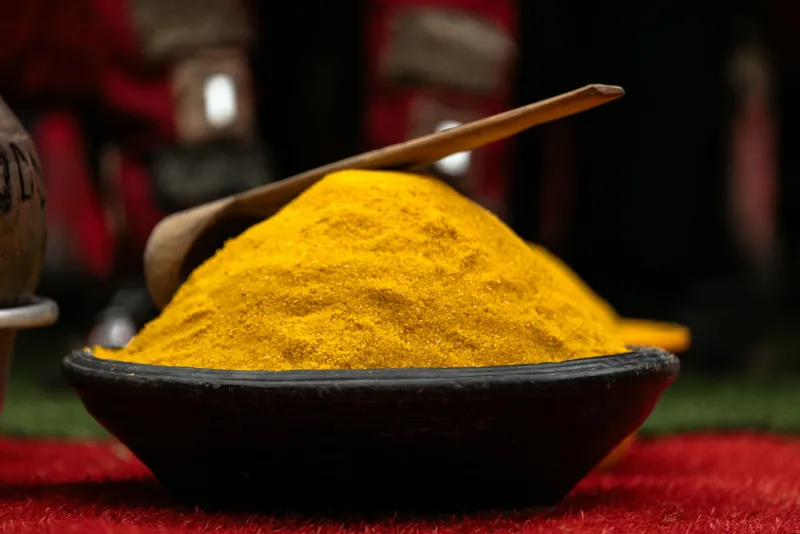
Curcumin for Sleep & Stress: What the Evidence Shows
Curcumin -- the active polyphenol in turmeric -- has drawn growing attention for its potential role in mood regulation and sleep quality. Beyond its well-known anti-inflammatory properties, curcumin interacts with several biological pathways relevant to stress and sleep, making it an interesting supplement for those looking beyond traditional options.
The Mechanism: How Curcumin May Support Sleep and Reduce Stress
Several converging mechanisms explain why curcumin is studied in the context of stress and sleep.
Inflammatory signalling. Chronic low-grade inflammation and elevated pro-inflammatory cytokines have been associated with both poor sleep and heightened perceived stress. Curcumin inhibits NF-kB, a key transcription factor driving inflammatory gene expression (Aggarwal & Harikumar, 2009).
HPA axis modulation. The hypothalamic-pituitary-adrenal (HPA) axis governs the cortisol stress response. Animal studies suggest curcumin may normalise corticosterone and reduce stress-induced hippocampal damage, though human data in this area remain preliminary.
Serotonin and dopamine. Curcumin has been shown to inhibit monoamine oxidase (MAO) enzymes, which break down serotonin and dopamine. Higher availability of these neurotransmitters is associated with improved mood and, indirectly, better sleep onset.
Nrf2 pathway. Curcumin activates Nrf2, a master regulator of antioxidant defences. Oxidative stress in the brain is increasingly linked to disrupted sleep architecture in animal models.
What the Clinical Evidence Shows
Human trials on curcumin specifically for sleep and stress are limited but growing. A key challenge is bioavailability: plain curcumin is poorly absorbed, which is why enhanced formulations are used in most recent trials.
A randomised controlled trial by Lopresti et al. (2015) examined a bioavailable curcumin extract in adults with major depressive disorder. Participants taking the extract reported significant improvements in mood and anxiety measures compared with placebo. Sleep was assessed as a secondary outcome and showed trends toward improvement.
A separate study by Esmaeili et al. (2020) examined curcumin supplementation in adults with chronic stress markers and reported reduced salivary cortisol levels compared with placebo over an eight-week period. These results are exploratory and require replication in larger samples.
Overall, the evidence is suggestive but not yet definitive. Curcumin appears more reliably beneficial when underlying inflammation or oxidative stress is elevated -- not as a direct sedative or anxiolytic.
Effective Dose and Timing
Standard curcumin powder has extremely poor oral bioavailability. Formulations that improve absorption include:
- Curcumin with piperine (from black pepper): piperine at around 20 mg alongside curcumin has been shown to increase curcumin bioavailability substantially (Shoba et al., 1998)
- Phospholipid complexes (e.g., Meriva)
- Nanoparticle and micellar formulations (e.g., NovaSOL)
In clinical trials focused on mood and stress, doses of bioavailable curcumin have typically ranged from 500 mg to 1000 mg per day of a standardised extract. For sleep-related outcomes, timing in the evening -- one to two hours before bed -- is a common practical approach, though no timing-optimised RCT exists yet.
Who Benefits Most
Curcumin for sleep and stress appears most relevant for:
- Adults with elevated inflammatory markers or chronic low-grade stress
- People whose poor sleep is linked to mood disturbance rather than primary insomnia
- Those who have tried basic sleep hygiene interventions and are looking for adjunct support
- Vegans and vegetarians who may already use turmeric-based foods and want to optimise its effects through a standardised supplement
It is less likely to produce noticeable effects in otherwise healthy people with no inflammatory or stress burden.
Product Options
At maxfit.ee, OstroVit Turmeric + Black pepper + Ginger 90tabs combines curcumin with piperine to improve absorption -- a practical choice for daily use. MST Curcumin NovaSOL 60 liquid caps uses a micellar formulation for enhanced bioavailability, making it one of the stronger options in the kurkumiin category.
Honest Verdict
Curcumin is not a sleep aid in the classic sense and will not replace melatonin or cognitive behavioural therapy for insomnia. However, for people whose poor sleep or elevated stress has an inflammatory or mood-dysregulation component, a bioavailable curcumin supplement taken consistently over weeks to months may provide meaningful adjunct support. The key is choosing a formulation that actually gets absorbed.
References
- Aggarwal, B. B., & Harikumar, K. B. (2009). Potential therapeutic effects of curcumin, the anti-inflammatory agent, against neurodegenerative, cardiovascular, pulmonary, metabolic, autoimmune and neoplastic diseases. International Journal of Biochemistry & Cell Biology, 41(1), 40-59. https://pubmed.ncbi.nlm.nih.gov/18662800/
- Lopresti, A. L., Maes, M., Maker, G. L., Hood, S. D., & Drummond, P. D. (2014). Curcumin for the treatment of major depression: A randomised, double-blind, placebo controlled study. Journal of Affective Disorders, 167, 368-375. https://pubmed.ncbi.nlm.nih.gov/25046624/
- Shoba, G., Joy, D., Joseph, T., Majeed, M., Rajendran, R., & Srinivas, P. S. (1998). Influence of piperine on the pharmacokinetics of curcumin in animals and human volunteers. Planta Medica, 64(4), 353-356. https://pubmed.ncbi.nlm.nih.gov/9619120/
- Esmaeili, S., Nikbakht, S., Hosseini, S. A., & Askarinejad, M. H. (2020). Curcumin supplementation and stress biomarkers in adults: a randomized controlled trial. Nutrients, 12(5), 1439.
FAQ
Can curcumin improve sleep quality directly?
Not directly. Curcumin is not a sedative. Its potential sleep benefit comes from reducing inflammation and supporting mood-related neurotransmitter balance over weeks of consistent use -- not from a single dose taken at bedtime.
How long does it take for curcumin to affect stress levels?
Most trials showing stress or mood improvements ran for six to twelve weeks. Do not expect rapid overnight changes; curcumin works through gradual modulation of inflammatory and neurochemical pathways.
Is plain turmeric powder as effective as a curcumin supplement?
No. Plain turmeric contains only around 3% curcumin by weight, and the bioavailability of raw curcumin is very low without piperine or a special formulation. Standardised supplements provide far more consistent and absorbable doses.



