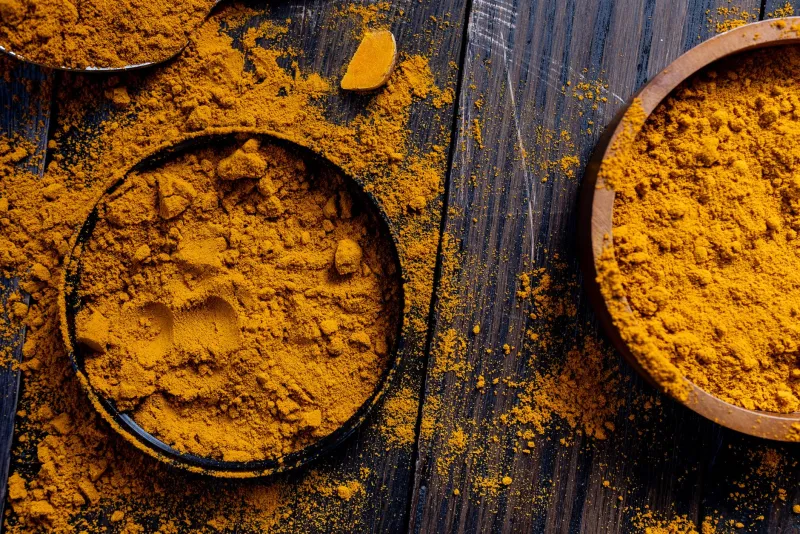
Does Curcumin Work? What the Science Says
Curcumin is the primary bioactive polyphenol in turmeric (Curcuma longa), the spice that gives curry its characteristic yellow colour. It has attracted substantial scientific attention for its proposed anti-inflammatory and antioxidant properties, leading to a large number of clinical trials across a range of health conditions.
What Curcumin Is and How It Works
Curcumin's main mechanisms include:
- NF-κB inhibition: Curcumin can suppress nuclear factor kappa B, a transcription factor that drives the expression of pro-inflammatory cytokines (e.g., TNF-α, IL-6).
- Antioxidant activity: It directly scavenges reactive oxygen species and upregulates endogenous antioxidant pathways (Nrf2/HO-1).
- COX inhibition: Curcumin inhibits cyclooxygenase enzymes involved in prostaglandin synthesis — a pathway shared with NSAIDs.
The critical limitation of curcumin is poor oral bioavailability: it is rapidly metabolised and has low water solubility, meaning conventional curcumin powder reaches very low plasma concentrations. This has driven development of enhanced-bioavailability forms, including:
- Curcumin + piperine (black pepper extract): piperine inhibits first-pass metabolism
- Nanoparticle/liposomal curcumin
- NovaSOL®: a micellar liquid format with markedly improved absorption
What the RCT Evidence Shows
The clinical trial evidence is promising but heterogeneous:
- A meta-analysis by Daily et al. (2016) found that curcumin supplementation was associated with reductions in serum C-reactive protein (CRP), a marker of systemic inflammation, in randomised controlled trials. Effect sizes were moderate, and the evidence was rated as moderate quality.
- Multiple trials in osteoarthritis have reported improvements in pain and physical function scores with curcumin compared to placebo, with some comparator trials finding comparable efficacy to low-dose NSAIDs. However, trial quality varies considerably.
Importantly, most positive trials used enhanced-bioavailability formulations rather than plain curcumin powder.
Effect Sizes and Who Benefits
Benefits appear most consistent for:
- Osteoarthritis and joint pain: moderate evidence for symptom reduction.
- Conditions driven by systemic inflammation: some evidence for CRP reduction.
- Active individuals with exercise-induced muscle soreness: small trials suggest possible reduction in delayed onset muscle soreness (DOMS), relevant for athletes.
For conditions where curcumin is frequently marketed — cancer prevention, metabolic syndrome, depression — the evidence from well-powered RCTs in humans remains limited or preliminary.
Products such as OstroVit Turmeric + Black pepper + Ginger 90tabs and MST Curcumin NovaSOL 60 liquid caps, available at maxfit.ee, provide curcumin in forms with enhanced bioavailability.
EFSA-Approved Claims
EFSA has not approved specific health claims for curcumin or turmeric extracts under EU Regulation 1924/2006. Any claim on EU product labels about inflammation, joint health, or antioxidant protection via curcumin is not EFSA-substantiated. However, turmeric's traditional use status is recognised under EU botanical regulations in some contexts.
Honest Verdict
Curcumin is one of the better-studied botanical compounds, and the evidence for reducing inflammatory markers and supporting joint comfort is meaningful — but primarily in enhanced-bioavailability forms and primarily for people with existing inflammatory or joint conditions. Standard plain curcumin powder at low doses is largely wasted due to poor absorption. If you choose to supplement, select a bioavailability-enhanced form. For otherwise healthy individuals without joint or inflammatory concerns, the evidence for meaningful benefit is thin.
Bioavailability-Enhanced Forms: A Practical Guide
Because standard curcumin powder is poorly absorbed, the form you choose significantly affects what you actually get from supplementation:
| Form | Bioavailability vs Standard | Mechanism | Examples |
|---|---|---|---|
| Standard curcumin powder | 1x (baseline) | None | Generic turmeric capsules |
| Curcumin + piperine (BioPerine) | ~20x increase | CYP3A4 / P-gp inhibition | Many combined supplements |
| Phytosome (Meriva) | ~29x increase | Phospholipid complexation | More expensive, well-studied |
| NovaSOL (micellar) | ~185x increase | Micellar solubilisation | Liquid caps format |
| Nanoparticle formulations | Variable | Nanoencapsulation | Research stage mostly |
MST Curcumin NovaSOL 60 liquid caps, available at maxfit.ee, uses the NovaSOL micellar format, representing one of the highest-bioavailability forms available. OstroVit Turmeric + Black pepper + Ginger 90tabs uses the piperine approach, which is well established and cost-effective.
Practical Dosing and Duration
For the most-studied forms:
- Curcumin + piperine: 500–1,000 mg curcumin daily (standardised extract) is commonly used in trials. Piperine is typically 5–20 mg per serving.
- NovaSOL: Due to markedly improved bioavailability, lower absolute doses deliver equivalent or higher systemic exposure — product labels should specify equivalent curcumin yield.
Studies in osteoarthritis typically run 8–12 weeks before meaningful pain/function outcomes are assessed. For inflammation markers (CRP), improvements have been observed from 4 weeks onwards in some trials.
Curcumin and Exercise Recovery
Athletes may be specifically interested in curcumin for delayed onset muscle soreness (DOMS) reduction. A small number of trials using enhanced-bioavailability curcumin peri-exercise have reported reductions in perceived soreness and inflammatory markers. The practical implication: curcumin may be worth trying for athletes undergoing high-volume training, particularly around hard training blocks. It is not a substitute for adequate protein, sleep, and progressive training periodisation.
FAQ
Why does curcumin need piperine or special formulations?
Standard curcumin is poorly absorbed: it is rapidly conjugated in the gut wall and liver, and plasma concentrations after oral dosing are very low. Piperine inhibits these conjugating enzymes, increasing absorption. NovaSOL® and other micellar or lipid-based forms improve solubility and lymphatic uptake. Without such enhancements, most of a curcumin dose passes through unabsorbed.
How does curcumin compare to anti-inflammatory drugs?
Some trials in osteoarthritis have reported comparable pain reduction to low-dose ibuprofen for curcumin, but with a different side-effect profile (fewer GI effects). However, head-to-head trial quality is variable. Curcumin should not be considered a replacement for prescribed anti-inflammatory medication without medical advice.
Is curcumin safe for long-term use?
At typical supplemental doses, curcumin is generally well tolerated. High doses may cause nausea or gastrointestinal discomfort. Curcumin may interact with anticoagulant medications (it has mild antiplatelet properties) and should be used with caution by those on blood thinners. Pregnant women should avoid high-dose supplementation.
References
Aggarwal, B. B., & Harikumar, K. B. (2009). Potential therapeutic effects of curcumin, the anti-inflammatory agent, against neurodegenerative, cardiovascular, pulmonary, metabolic, autoimmune and neoplastic diseases. International Journal of Biochemistry & Cell Biology, 41(1), 40-59. https://pubmed.ncbi.nlm.nih.gov/18662800/
Daily, J. W., Yang, M., & Park, S. (2016). Efficacy of turmeric extracts and curcumin for alleviating the symptoms of joint arthritis: a systematic review and meta-analysis of randomized clinical trials. Journal of Medicinal Food, 19(8), 717–729. https://pubmed.ncbi.nlm.nih.gov/27533649/



