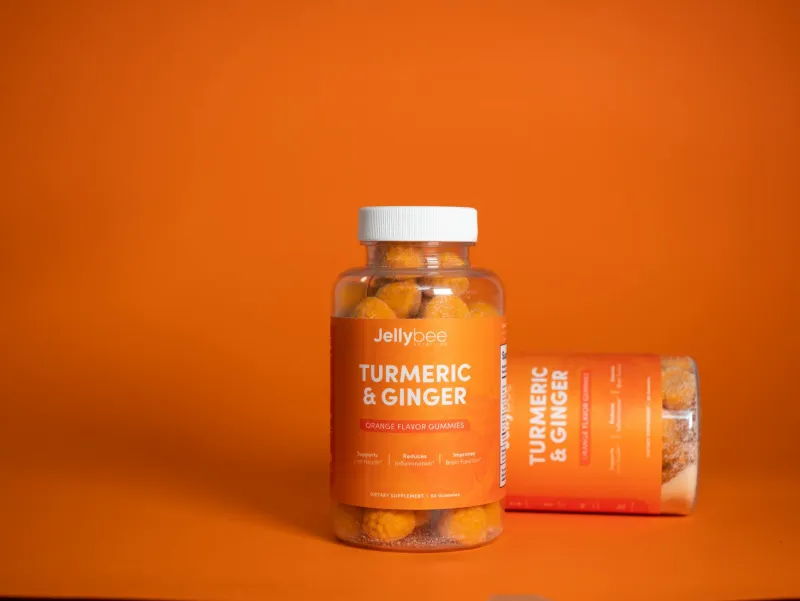
What Is Curcumin and Why Does It Matter
Curcumin is the active polyphenol extracted from turmeric root (Curcuma longa) responsible for its deep golden color. Unlike classical vitamins, curcumin is not an essential nutrient, so no official "deficiency" diagnosis exists. However, low dietary intake is associated with chronic low-grade inflammation, oxidative stress, and increased joint discomfort — particularly in northern populations where turmeric consumption through food is near zero.
Curcumin Deficiency Symptoms
Because curcumin is not a classic vitamin, its absence does not produce textbook deficiency diseases. That said, the following signs may indicate suboptimal intake:
- Chronic low-grade inflammation — fatigue, joint stiffness, and muscle soreness without a clear injury
- Slow recovery from training — muscle damage repair may be impaired, especially during high-volume training blocks
- Digestive discomfort — bloating, indigestion, mild nausea
- Mood fluctuations — curcumin influences monoamine signaling; some individuals report low mood with poor intake
- Reduced oxidative protection — more frequent respiratory infections, especially in winter
These symptoms are non-specific and can have many causes. Curcumin status cannot be confirmed with a blood test the way vitamin D can.
At-Risk Groups
Certain people are most likely to benefit from curcumin supplementation:
- Northern Europeans and Estonians — traditional Estonian and Scandinavian cuisine contains no turmeric. Without regular curry-based dishes, curcumin intake from food is essentially zero.
- Athletes training intensively — high training load increases oxidative stress and inflammatory markers. Research shows curcumin may reduce markers of exercise-induced muscle damage (Drobnic et al., 2014).
- Older adults — joint inflammation (osteoarthritis) is among the most common chronic conditions. A pilot trial found curcumin may reduce joint pain without major side effects (Belcaro et al., 2010).
- People with elevated glucose or cholesterol — several studies have found associations between curcumin intake and improved metabolic markers (Chuengsamarn et al., 2012).
- People with chronic inflammatory conditions — including arthritis and digestive inflammation.
How Is Curcumin Status Tested
There is no standardized serum test for curcumin as exists for vitamin D. Indirectly, clinicians may assess:
- CRP (C-reactive protein) — a low-grade inflammation marker; elevated levels suggest that anti-inflammatory compounds such as curcumin could be beneficial
- IL-6 and TNF-alpha — inflammatory cytokines; elevated levels may respond to curcumin
- Oxidative stress markers (MDA, 8-OHdG) — used in research settings, less common in routine clinical practice
CRP testing is available through private labs and general practitioners in Estonia.
Nordic Context: Why Winter Matters
Estonia has long, sun-deprived winters. Traditional local cuisine rarely includes turmeric, so dietary curcumin intake is near zero for most people. Meanwhile, winter brings increased inflammatory load — more infections, less movement, higher stress. This makes October to March a particularly sensible time to consider curcumin supplementation.
Food vs Supplement: When to Supplement
Curcumin comes primarily from turmeric root. Dietary amounts are typically too small for measurable effect:
| Source | Curcumin content | Bioavailability |
|---|---|---|
| Turmeric powder (1 tsp) | ~200 mg | ~1% |
| Turmeric powder + black pepper | ~200 mg | Up to 20x higher |
| Micellar/lipidated supplement | 80-400 mg | Up to 185x higher |
Standard turmeric powder has poor bioavailability — below 1% without piperine support (Shoba et al., 1998). Modern formulations such as NovaSOL micellar curcumin have addressed this significantly.
OstroVit Turmeric + Black pepper + Ginger 90tabs and MST Curcumin NovaSOL 60 liquid caps are available at maxfit.ee. The MST NovaSOL format uses water-soluble micellar curcumin with substantially higher bioavailability than standard extract.
Consider supplementing if you:
- Rarely consume turmeric through food (fewer than 3 times per week)
- Experience symptoms of chronic low-grade inflammation
- Are an intensively training athlete with recovery issues
- Live in Northern Europe during winter months
FAQ
Is curcumin deficiency a real medical diagnosis?
No, curcumin is not a classical vitamin and there is no standardized biomedical definition of "curcumin deficiency." However, low intake means the body goes without an important anti-inflammatory compound, which may manifest indirectly through non-specific symptoms.
How much curcumin is needed per day?
Research studies have used doses ranging from 500 to 2000 mg of curcumin per day, but the optimal amount depends on the formulation and its bioavailability. Micellar or lipidated forms are effective at lower doses.
Does curcumin stack well with other supplements?
Yes, curcumin is compatible with most supplements. It pairs well with omega-3 fatty acids, which also reduce inflammation. Avoid combining with blood thinners such as warfarin without medical advice.
References
Drobnic, F., Riera, J., Appendino, G., Togni, S., Franceschi, F., Valle, X., Pons, A., & Tur, J. (2014). Reduction of delayed onset muscle soreness by a novel curcumin delivery system (Meriva): a randomised, placebo-controlled trial. Journal of the International Society of Sports Nutrition, 11(1), 31. https://pubmed.ncbi.nlm.nih.gov/24982601/
Belcaro, G., Cesarone, M. R., Dugall, M., Pellegrini, L., Ledda, A., Grossi, M. G., Togni, S., & Appendino, G. (2010). Efficacy and safety of Meriva, a curcumin-phosphatidylcholine complex, during extended administration in osteoarthritis patients. Alternative Medicine Review, 15(4), 337-344. https://pubmed.ncbi.nlm.nih.gov/21194249/
Chuengsamarn, S., Rattanamongkolgul, S., Luechapudiporn, R., Phisalaphong, C., & Jirawatnotai, S. (2012). Curcumin extract for prevention of type 2 diabetes. Diabetes Care, 35(11), 2121-2127. https://pubmed.ncbi.nlm.nih.gov/22773702/
Shoba, G., Joy, D., Joseph, T., Majeed, M., Rajendran, R., & Srinivas, P. S. (1998). Influence of piperine on the pharmacokinetics of curcumin in animals and human volunteers. Planta Medica, 64(4), 353-356. https://pubmed.ncbi.nlm.nih.gov/9619120/



