Why Curcumin Is Such a Promising Compound
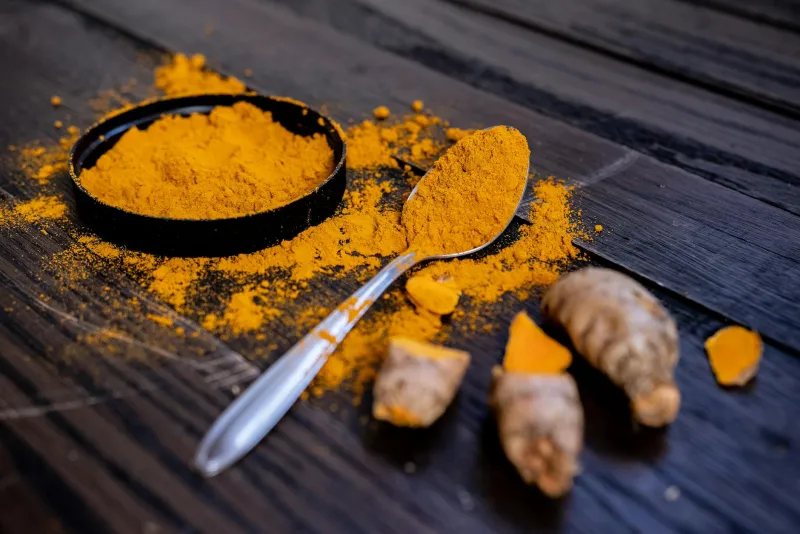
Turmeric (Curcuma longa) has been used for centuries in Ayurvedic medicine and everyday cooking across Asia. Its vivid golden-orange colour comes from a group of pigments called curcuminoids, the most studied of which is curcumin. Research confirms that curcumin possesses potent antioxidant and anti-inflammatory properties (Aggarwal et al., 2007). The challenge, however, is that the body absorbs plain curcumin remarkably poorly.
The Bioavailability Problem
Curcumin is hydrophobic — it doesn't dissolve in water — and is rapidly metabolised in the gut and liver. Human pharmacokinetic studies show that only trace amounts of intact curcumin reach the bloodstream after oral ingestion (Anand et al., 2007). In practical terms, this means that even a generous serving of turmeric-spiced food delivers a physiologically insignificant dose.
Main Strategies to Improve Absorption
| Strategy | Absorption Increase | Mechanism |
|---|---|---|
| Piperine (black pepper) | Up to 2000% | Inhibits CYP3A4 and P-glycoprotein |
| NovaSOL (water-soluble) | Up to 185× | Micellarisation |
| Liposomal curcumin | 3–5× | Phospholipid encapsulation |
| Phospholipid complex | Up to 29× | Lipid-phase binding |
The most widely studied and affordable solution is piperine, the active alkaloid in black pepper. As little as 20 mg of piperine taken alongside 2 g of curcumin can boost bioavailability by up to 2000% compared to curcumin alone (Shoba et al., 1998).
NovaSOL Technology: A Modern Breakthrough
NovaSOL is a patented formulation that converts curcumin into a water-soluble, micellar form using food-grade carriers. Clinical data shows that NovaSOL curcumin achieves substantially higher plasma concentrations than standard extracts (Schiborr et al., 2014). MST Curcumin NovaSOL 60 liquid caps, available at maxfit.ee, uses precisely this technology — delivering maximal bioavailability in a compact capsule format.
The Classic Piperine Combination
For those who prefer a well-established herbal combination, OstroVit Turmeric + Black Pepper + Ginger 90 tablets offers the synergistic trio of turmeric, black pepper and ginger. The ginger contributes its own gingerol-based anti-inflammatory activity, making this a broad-spectrum botanical formula.
Anti-Inflammatory Evidence: What the Research Says
Curcumin has been studied in relation to musculoskeletal health, gastrointestinal well-being, and oxidative stress. A 2016 systematic review and meta-analysis found that curcumin supplementation significantly reduced circulating C-reactive protein (CRP) — a primary biomarker of systemic inflammation (Sahebkar et al., 2016). It is important to note that curcumin is not a cure for any disease; rather, it supports the body's own regulatory mechanisms.
Curcumin and Vitamin D Synergy
Emergent research suggests that curcumin and vitamin D may cooperate to modulate immune function. Given that vitamin D deficiency is widespread in Estonia and other Nordic countries during winter months, pairing both supplements may be a sensible approach for year-round immune support.
Dosage and Safety
Most clinical studies have used 500–2000 mg of standardised curcumin extract per day, typically divided into two or three doses. Taking curcumin with a fat-containing meal further enhances absorption, since curcumin is a fat-soluble compound.
Curcumin is generally well tolerated, but very high doses may cause gastrointestinal discomfort. People taking anticoagulant medications should consult a physician before use, as curcumin has mild blood-thinning properties.
How to Choose the Right Product
- Check the formulation — a plain extract without a bioavailability enhancer will be far less effective.
- Look for piperine or phospholipids — these are the most evidence-backed approaches.
- Verify curcuminoid percentage — a quality product always states the curcuminoid content (typically 95%).
- Store correctly — curcumin is light-sensitive; keep in a cool, dark place.
Maxfit.ee stocks a range of curcumin products, from traditional piperine blends to cutting-edge NovaSOL formulations.
References
- Aggarwal, B. B., & Harikumar, K. B. (2009). Potential therapeutic effects of curcumin, the anti-inflammatory agent, against neurodegenerative, cardiovascular, pulmonary, metabolic, autoimmune and neoplastic diseases. The International Journal of Biochemistry & Cell Biology, 41(1), 40–59.
- Anand, P., Kunnumakkara, A. B., Newman, R. A., & Aggarwal, B. B. (2007). Bioavailability of curcumin: problems and promises. Molecular Pharmaceutics, 4(6), 807–818.
- Shoba, G., Joy, D., Joseph, T., Majeed, M., Rajendran, R., & Srinivas, P. S. (1998). Influence of piperine on the pharmacokinetics of curcumin in animals and human volunteers. Planta Medica, 64(4), 353–356.
- Schiborr, C., Kocher, A., Behnam, D., Jandasek, J., Toelstede, S., & Frank, J. (2014). The oral bioavailability of curcumin from micronized powder and liquid micelles is significantly increased in healthy humans and differs between sexes. Molecular Nutrition & Food Research, 58(3), 516–527.
- Sahebkar, A., Cicero, A. F., Simental-Mendía, L. E., Aggarwal, B. B., & Gupta, S. C. (2016). Curcumin downregulates human tumor necrosis factor-α levels: A systematic review and meta-analysis of randomized controlled trials. Pharmacological Research, 107, 234–242.
FAQ
Can I take curcumin without piperine?
Yes, but absorption will be significantly lower. Without piperine, NovaSOL, or another bioavailability enhancer, only a fraction of the curcumin reaches your bloodstream. If a product lacks such an addition, expect much of each dose to pass through unabsorbed.
When is the best time to take curcumin?
Curcumin absorbs better alongside a fat-containing meal because it is fat-soluble. Taking it during or immediately after eating is therefore optimal. Products with piperine benefit from this timing as well.
Is curcumin safe for long-term use?
Clinical trials have demonstrated safety at typical supplement doses even over extended periods. However, it should not be combined with anticoagulant medications without medical guidance, due to its mild blood-thinning properties.



