What Is Curcumin and What Does It Do?
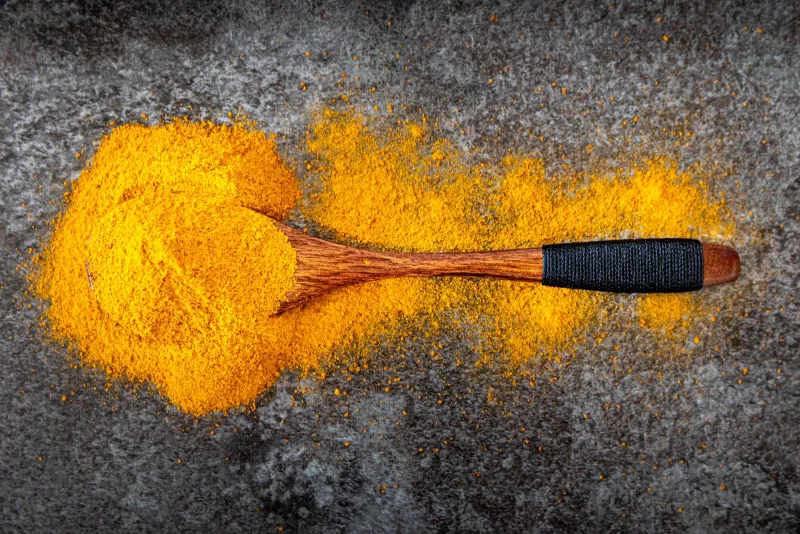
Curcumin is the primary bioactive compound found in turmeric (Curcuma longa), the bright yellow spice used in South Asian cooking for centuries. While turmeric powder contains only around three to five percent curcumin by weight, curcumin supplements are standardised extracts that deliver a concentrated, consistent dose.
For beginners, curcumin's main appeal is its well-researched anti-inflammatory and antioxidant properties. A meta-analysis of randomised controlled trials found that curcumin supplementation produced a statistically significant reduction in several markers of inflammation, including C-reactive protein and interleukin-6, in adults with metabolic conditions (Tabrizi et al., 2019). This has made it popular among people seeking support for joint comfort, exercise recovery, and general inflammatory balance.
Products available at maxfit.ee include OstroVit Turmeric + Black pepper + Ginger 90tabs and MST Curcumin NovaSOL 60 liquid caps. These represent two different formulation approaches, which brings us to the most important concept for curcumin beginners.
The Bioavailability Problem — and How to Solve It
Plain curcumin has notoriously poor bioavailability. Taken alone, very little of it is absorbed by the gut. This is not a flaw in the science — it is a solved problem with the right product choice.
Piperine (black pepper extract) increases curcumin absorption significantly. A landmark study showed that piperine co-administration increased the bioavailability of curcumin in human subjects (Shoba et al., 1998). This is why products like OstroVit Turmeric + Black pepper + Ginger 90tabs combine the two ingredients.
NovaSol and other micellar or phospholipid-based curcumin technologies (as found in MST Curcumin NovaSOL 60 liquid caps) achieve high bioavailability without piperine by encapsulating curcumin in water-soluble micelles. These formulations generally deliver more curcumin per dose than standard turmeric extract plus piperine.
Choose based on your situation:
- If you want a budget-friendly, widely studied approach: turmeric extract with piperine.
- If you want maximum absorption efficiency or cannot take black pepper: a micellar or phospholipid form.
How to Start Taking Curcumin
Follow the label instructions on the specific product you choose. With piperine-based products, take with a fatty meal — curcumin is fat-soluble and dietary fat further enhances absorption alongside piperine.
Practical tips for beginners:
- Be consistent — curcumin's effects are cumulative and require weeks of daily use.
- Take with food for best absorption and to avoid any stomach sensitivity.
- Do not exceed label doses — more is not better with curcumin.
- If you take blood thinners, consult a healthcare provider before starting, as curcumin may have mild anticoagulant properties at high doses.
Browse the full curcumin supplement range at maxfit.ee.
What to Expect and When
Curcumin is not a fast-acting analgesic. It works through modulation of inflammatory signalling over time, not as an immediate pain reliever.
Studies on joint-related outcomes typically show effects after several weeks to months of consistent supplementation. A randomised trial in patients with knee osteoarthritis found improvements in pain and function scores after eight weeks compared to placebo (Belcaro et al., 2010).
For exercise recovery, some people notice reduced post-workout soreness after two to four weeks of consistent use. Set realistic expectations: curcumin is a complement to active recovery, good sleep, and adequate protein — not a replacement for any of these.
Common Mistakes Beginners Make
Buying plain turmeric powder as a supplement. Kitchen turmeric contains very little curcumin, and absorption without piperine or a modern delivery system is poor. A standardised, enhanced-bioavailability supplement is a more rational choice.
Expecting immediate pain relief. Curcumin is not a painkiller. Its anti-inflammatory effects build over weeks.
Ignoring the fat co-factor. Even with piperine, taking curcumin on an empty stomach or with a fat-free meal reduces absorption.
Using it as a replacement for medical care. Curcumin can complement a healthy lifestyle but it is not a treatment for arthritis, inflammatory disease, or any other medical condition.
Choosing a Curcumin Product
At maxfit.ee you will find both classic turmeric-plus-piperine and advanced micellar formulations. The choice depends on your priorities:
| Feature | Turmeric + Black Pepper | Micellar/NovaSol |
|---|---|---|
| Bioavailability | Good (with piperine) | Very high |
| Format | Tablets | Liquid capsules |
| Piperine-free | No | Yes |
| Cost per dose | Lower | Higher |
Both OstroVit Turmeric + Black pepper + Ginger 90tabs and MST Curcumin NovaSOL 60 liquid caps are legitimate choices depending on your preference.
FAQ
How long does it take for curcumin to work?
For joint support and inflammatory modulation, most studies show meaningful effects after six to twelve weeks of consistent daily use. Day-to-day variation is normal. If you have seen no change after eight weeks at label dose with an enhanced bioavailability product, consult a healthcare provider.
Can I take curcumin with other supplements?
Curcumin is generally well tolerated alongside common supplements. Some caution is warranted if you take anticoagulants (blood thinners) or are about to have surgery, as curcumin may have mild platelet-inhibiting properties at higher doses.
Is turmeric the same as curcumin?
Turmeric is the spice; curcumin is its main active ingredient. Turmeric contains only a small percentage of curcumin, which is why standardised curcumin extracts deliver a much more reliable and concentrated dose than adding turmeric spice to food.
References
Tabrizi, R., Vakili, S., Akbari, M., Mirhosseini, N., Lankarani, K. B., Rahimi, M., Shabani-Zanjani, M., Shiadeh, M. N., Ostadian, A., Ashar, F., & Taghizadeh, M. (2019). The effects of curcumin-containing supplements on biomarkers of inflammation and oxidative stress: A systematic review and meta-analysis of randomized controlled trials. Phytotherapy Research, 33(2), 253-262. https://pubmed.ncbi.nlm.nih.gov/30402990/
Shoba, G., Joy, D., Joseph, T., Majeed, M., Rajendran, R., & Srinivas, P. S. (1998). Influence of piperine on the pharmacokinetics of curcumin in animals and human volunteers. Planta Medica, 64(4), 353-356. https://pubmed.ncbi.nlm.nih.gov/9619120/
Belcaro, G., Cesarone, M. R., Dugall, M., Pellegrini, L., Ledda, A., Grossi, M. G., Togni, S., & Appendino, G. (2010). Efficacy and safety of Meriva, a curcumin-phosphatidylcholine complex, during extended administration in osteoarthritis patients. Alternative Medicine Review, 15(4), 337-344. https://pubmed.ncbi.nlm.nih.gov/21194249/



