
Before Your First Training Session: What to Expect
A gym can feel intimidating to a beginner. Large, confident-looking people walk around. Machines look complicated. Everyone seems to know what they're doing.
The reality: every gym regular started somewhere. Most people are focused on their own training and won't notice you at all. And most equipment is simpler than it looks.
First Step: Define Your Goal
Before entering the gym, answer these questions:
- What do I want to achieve? (weight loss, muscle, general health, strength)
- How much time can I dedicate each week?
- Do I prefer machines, dumbbells, or bodyweight exercises?
These answers will help choose the right program and keep your motivation high.
The Non-Negotiable Warm-Up
Never skip the warm-up. 10 minutes of dynamic warm-up:
- Bike or elliptical — 5 minutes at easy pace
- Arm circles — 10 reps in each direction
- Hip circles — 10 reps in each direction
- Bodyweight deep squat — 10 reps
- Walking — 5 minutes
Best Exercises for Beginners
Focus on compound movements that activate large muscle groups. Don't waste early weeks on isolated muscle exercises (like bicep curls).
Lower Body
- Squat (machine or barbell) — quads and glutes
- Leg press (machine) — safe alternative for beginners
Upper Body — Pushing
- Bench press (dumbbells or barbell) — chest, shoulders, triceps
- Overhead press (dumbbells) — shoulders
Upper Body — Pulling
- Lat pulldown (machine) — back, biceps
- Seated cable row — upper back
Core
- Plank — 3 × 30 seconds
- Glute bridge — 3 × 12
Beginner Training Program
Start with three workouts per week using a full-body approach:
| Day | Training |
|---|---|
| Monday | Full body |
| Tuesday | Rest or light walk |
| Wednesday | Full body |
| Thursday | Rest |
| Friday | Full body |
| Sat/Sun | Rest |
Each workout: 5–6 exercises × 3 sets × 10–12 reps.
Supplements for Beginners
Beginners need very few supplements — good nutrition matters far more. A few products genuinely help:
Whey protein is the easiest way to meet daily protein needs. BIOTECHUSA 100% Pure Whey Banana 2270g is a great choice — tasty, mixes well, and has an appropriate macro profile.
Creatine improves strength and muscle growth outcomes. It's one of the most thoroughly researched sports supplements. Try 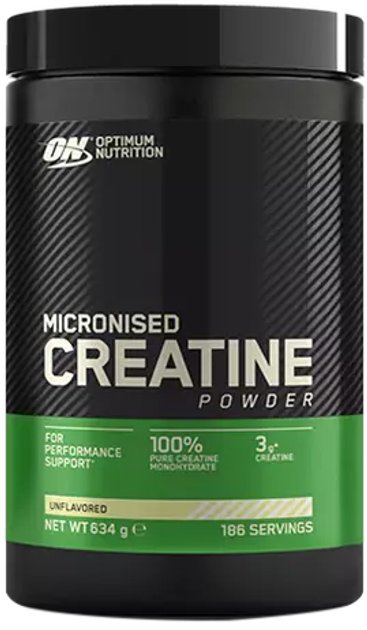 Optimum Nutrition Micronised Creatine€36.90 In stock 247.5g Orange — pure creatine monohydrate without unnecessary additives.
Browse supplements in the protein category at maxfit.ee.
Common Beginner Mistakes
1. Too Much, Too Soon
The greatest injury risk comes from premature excessive intensity. In the first month, consistency matters far more than intensity.
2. Sacrificing Technique for Weight
Always prioritize correct form. Training with heavy weight and poor technique leads to injuries.
3. Changing Programs Too Often
First 3 months: stick to your program. "Muscle confusion" is a myth for beginners — progressive overload is the only thing that counts.
4. Undervaluing Recovery
Muscles don't grow during training — they grow after. Sleep and nutrition are as important as training itself.
5. Too Much Cardio at the Expense of Weights
Cardio is useful for cardiovascular health, but for muscle growth, strength training is more effective. Combine both wisely.
Gym Etiquette
- Always re-rack weights after use
- Wipe down machines after use
- Don't monopolize equipment while resting
- Ask questions — most experienced gym-goers are happy to help
FAQ
How many times a week should a beginner go to the gym?
Three times per week is the optimal starting point. This provides sufficient stimulus for muscle growth with adequate recovery time. After 2–3 months you can progress to four sessions per week.
Do I need to pay for a personal trainer?
Not necessarily. But 2–3 initial personal training sessions are very useful — they teach correct technique and help avoid injuries in the long run.
What should I eat before and after training?
Before: carbohydrate-rich foods (oats, banana, rice) 1–2 hours beforehand. After: a protein-rich meal within 30–60 minutes (eggs, chicken breast, whey protein).
References
- ACSM. (2021). ACSM's Guidelines for Exercise Testing and Prescription (11th ed.). Wolters Kluwer.
- Schoenfeld, B. J. (2010). The mechanisms of muscle hypertrophy and their application to resistance training. Journal of Strength and Conditioning Research, 24(10), 2857–2872.
- Kraemer, W. J., & Ratamess, N. A. (2004). Fundamentals of resistance training: Progression and exercise prescription. Medicine & Science in Sports & Exercise, 36(4), 674–688.
- Helms, E. R., et al. (2014). A systematic review of dietary protein during caloric restriction in resistance trained lean athletes. Journal of the International Society of Sports Nutrition, 11(1), 1–10.
- Haff, G. G., & Triplett, N. T. (Eds.). (2015). Essentials of Strength Training and Conditioning (4th ed.). Human Kinetics.