
What Long-Term Studies Show
Children's vitamins are among the most widely purchased supplements globally, yet the evidence base for their long-term safety and benefit is more limited than for adults. Most clinical trials in children focus on specific deficiencies (vitamin D, iron, iodine) rather than broad multivitamin supplementation in well-nourished populations.
A systematic review of multivitamin supplementation in healthy well-nourished children found limited evidence for benefit on growth, cognitive function, or disease risk in children without documented deficiencies (Marra & Boyar, 2009). This does not mean vitamins are harmful in this context — rather, the evidence for benefit is modest, and safety data for long-term use at recommended doses is generally reassuring.
For children with documented dietary gaps (picky eaters, vegan diets, restricted-calorie diets, or malabsorption conditions), multivitamin supplementation has strong clinical justification.
Upper Safe Limits for Children Over Time
Children are more sensitive to vitamin toxicity than adults because their smaller body mass means any given dose delivers a higher per-kilogram exposure. Regulatory bodies have set age-adjusted tolerable upper intake levels (ULs) for key vitamins:
- Vitamin A (retinol): Children are particularly vulnerable to vitamin A toxicity. Chronic excess may cause liver toxicity, raised intracranial pressure, and impaired bone growth. Quality children's multivitamins typically use beta-carotene as the vitamin A source, which self-limits conversion and carries a safer profile than preformed retinol.
- Vitamin D: The UL for children aged 1–8 years is 2500–3000 IU per day. Long-term intakes at standard multivitamin doses (400–600 IU) are well below this threshold and associated with no harm in research.
- Vitamin C: The UL for children is lower than for adults (400–650 mg/day depending on age). Standard children's multivitamins stay within this range.
- Iron: Iron is the most important safety consideration in children's multivitamins. Overdose — even from children's supplements if accessed carelessly — is a paediatric medical emergency. Iron-containing children's supplements should be stored securely out of reach.
SELF Multivitamin 60caps and 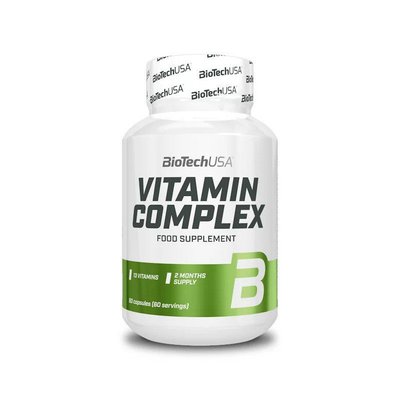 BIOTECHUSA Vitamin Complex€10.90 In stock 60caps — available at maxfit.ee — are multivitamin options worth discussing with a paediatrician for appropriate age and dosing guidance.
Do Children Need to Cycle Their Vitamins?
There is no clinical rationale for cycling water-soluble vitamins in children. B vitamins and vitamin C are excreted if consumed in excess, and gaps in supplementation simply mean periods of lower circulating levels.
For fat-soluble vitamins (A, D, E, K), continuous use at recommended paediatric doses does not require cycling in healthy children. The question of cycling arises only if:
- The supplement dose significantly exceeds the paediatric UL
- A blood test shows levels above the normal range
- The child develops unexplained symptoms that prompt medical review
Some parents take a "supplement holiday" during summer when sun exposure raises vitamin D naturally and dietary variety often increases — this is a sensible, low-risk practice without a strong clinical rationale either way.
Monitoring in Children
For healthy children taking standard-dose multivitamins long-term, routine blood monitoring is not necessary. Monitoring is warranted in:
- Vitamin D supplementation above 1000 IU daily — annual check of serum 25-hydroxyvitamin D is reasonable.
- Iron in children without confirmed deficiency — avoid routine iron supplementation; if prescribed, periodic ferritin checks are warranted.
- Children with fat malabsorption (cystic fibrosis, coeliac disease, liver disease) — fat-soluble vitamins should be monitored regularly as absorption varies.
- Children on very restricted diets — nutritional blood panels (ferritin, B12, vitamin D, zinc) every 12–18 months are worthwhile.
Honest Verdict
Long-term use of quality children's multivitamins at label doses is generally safe based on available evidence. The realistic risk profile is low for most ingredients at standard paediatric doses. The main genuine risks are:
- Vitamin A toxicity if products contain high preformed retinol rather than beta-carotene
- Iron accidental overdose — a storage and access risk, not a dosing risk
- Over-supplementation when both a multivitamin and multiple single-nutrient supplements are given simultaneously without coordinating total intake
The strongest argument for children's multivitamins is dietary gap-filling for picky eaters or dietary-restricted children, not as a general performance enhancer for children already eating well.
FAQ
At what age can children start taking multivitamins?
Paediatric guidelines recommend vitamin D supplementation from infancy in breastfed babies. Broad multivitamin formulas are typically appropriate from age two, when dietary variety usually broadens. Always choose age-appropriate formulations and confirm with a paediatrician.
Can gummy vitamins be taken daily?
Gummy vitamins have the same nutrient content considerations as tablets. The practical concerns are dental health (added sugars promote cavities) and the risk that children may treat them as sweets and self-administer extra doses. Store all vitamin gummies out of children's reach and supervise intake.
What signs suggest a child is getting too much of a vitamin?
Signs that may indicate excess fat-soluble vitamin intake include: nausea, vomiting, loss of appetite, unusual irritability, bone pain, or changes in vision (relevant to vitamin A excess). Any of these in a child taking supplements should prompt discontinuation and medical assessment.
References
Marra, M. V., & Boyar, A. P. (2009). Position of the American Dietetic Association: nutrient supplementation. Journal of the American Dietetic Association, 109(12), 2073-2085. https://pubmed.ncbi.nlm.nih.gov/19957415/
Ward, E. (2014). Addressing nutritional gaps with multivitamin and mineral supplements. Nutrition Journal, 13, 72. https://pubmed.ncbi.nlm.nih.gov/25027766/
Grotto, I., Mimouni, M., Gdalevich, M., & Mimouni, D. (2003). Vitamin A supplementation and childhood morbidity from diarrhea and respiratory infections: a meta-analysis. Journal of Pediatrics, 142(3), 297-304. https://pubmed.ncbi.nlm.nih.gov/12640379/



