The honest answer: yes — with a small but important asterisk
Can vegan protein powder build as much muscle as whey? The short answer is yes. When total daily protein is matched between groups and the dose is adequate, plant-based protein produces essentially the same muscle gains as whey. A landmark 12-week resistance training trial found that men supplementing with pea protein gained just as much biceps thickness as those on whey, with both groups outperforming placebo (Babault et al., 2015). A controlled study comparing high-protein plant-based and omnivorous diets — matched at 1.6 g/kg/day — found identical gains in leg lean mass over 12 weeks (Hevia-Larraín et al., 2021).
The asterisk is this: whey has a per-gram advantage. It is higher in leucine (the amino acid that most directly triggers muscle protein synthesis), and it digests and absorbs faster. This means that gram-for-gram, whey may be slightly more efficient at stimulating muscle protein synthesis per serving. But the practical gap is smaller than supplement marketing suggests — and it is closable.
Which plant protein will you add to your training stack?
Browse the rangeWhy leucine and digestibility matter
Muscle protein synthesis does not respond linearly to every amino acid. Leucine acts as the key metabolic trigger: research shows that a per-meal leucine dose of roughly 2.5–3 g is needed to maximally stimulate muscle protein synthesis after exercise (Norton & Layman, 2006). Whey protein isolate delivers around 2.5–3 g of leucine per 25 g serving. Many plant proteins — particularly wheat and rice — deliver less leucine per gram of total protein, meaning you need slightly more powder to hit the same leucine threshold.
Digestibility is the second factor. Scientists use a measure called DIAAS (Digestible Indispensable Amino Acid Score) to compare how efficiently the body can actually use the protein from different foods. Whey scores high (≥1.0); most isolated plant proteins score lower. That said, DIAAS gaps tend to matter most for populations eating near the minimum adequate protein intake — active people aiming for 1.6 g/kg/day have a comfortable buffer.
The bigger picture from Berrazaga et al. (2019): individual plant protein sources are each limiting in one or more essential amino acids, but blends (for example, pea plus rice) complement each other and close most of the gap with animal protein. Raising the overall dose by roughly 20–30% compared with whey is the other reliable lever — enough to overcome the leucine and digestibility difference in practice.
Pea vs whey: what the research actually shows
Pea protein is the most-studied single plant protein in the muscle-building context. It has a relatively high leucine content compared with most plant sources, and it digests reasonably well. The 2015 Babault et al. trial — 12 weeks, resistance-trained men, 25 g supplementation three times per day — found pea protein produced statistically identical bicep gains to whey. Both groups gained significantly more than placebo. This is probably the single most cited head-to-head trial, and it goes to pea.
Here is a practical comparison:
| Property | Whey protein | Pea / plant blend |
|---|---|---|
| Leucine per 25 g serving | ~2.5–3 g | ~1.8–2.3 g |
| DIAAS | ≥1.0 | 0.6–0.9 (varies by source) |
| Practical dose to match whey | 25–30 g | 30–40 g |
| Best studied for muscle | Yes | Pea (yes), blends (emerging) |
| Dairy-free | No | Yes |
A pea–rice blend in particular closes the amino acid profile gap, because rice is relatively high in the sulfur-containing amino acids that pea is a bit low in.
How to dose plant protein to match whey
The practical takeaway from the research is straightforward:
1. Aim for 1.6–2.0 g/kg/day of total protein. At this level, the plant-vs-animal source distinction largely disappears in terms of muscle outcomes. Hevia-Larraín et al. (2021) demonstrated this clearly at 1.6 g/kg/day.
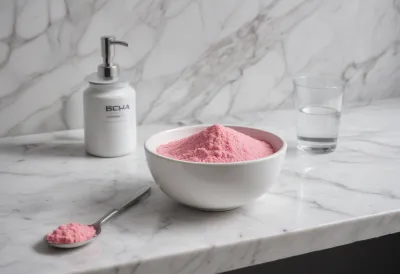
2. Choose a blend or a leucine-enriched plant protein. Pea–rice blends cover the amino acid spectrum more completely than either ingredient alone. BioTechUSA Vegan Protein 500g Forest Berries is a good example of a blended plant protein from the plant-based protein category at maxfit.ee.
3. Add about 5–10 g more per serving compared with whey. If you would normally take a 25 g scoop of whey, consider 30–35 g of a plant blend to more reliably hit the leucine threshold.
4. Spread protein across the day. Three or four protein-containing meals, each delivering 0.4 g/kg, is a sound strategy regardless of the protein source.
5. Consider pairing with creatine. Creatine monohydrate supports training output and lean mass regardless of protein source, and vegans tend to have lower baseline creatine stores (since creatine is found mainly in animal foods). Browse the creatine range if you are curious.
For those who also use whey and want a comparison starting point, OstroVit 100% Whey Protein 700g Biscuit Dream is a popular choice from the broader protein powders category.
The bottom line
Plant protein can absolutely build muscle. The evidence — from head-to-head pea-vs-whey trials to protein-matched vegan vs omnivore studies — consistently shows that the gap, when it exists, is driven by dose and amino acid completeness, not by something fundamental about plant proteins that makes them inferior. Dose adequately, blend wisely, and train hard: that is the playbook whether your protein is green or white.
References
Babault, N., Païzis, C., Deley, G., et al. (2015). Pea proteins oral supplementation promotes muscle thickness gains during resistance training: a double-blind, randomized, placebo-controlled clinical trial vs. whey protein. Journal of the International Society of Sports Nutrition, 12(1), 3. https://pubmed.ncbi.nlm.nih.gov/25628520/
Hevia-Larraín, V., Gualano, B., Longobardi, I., et al. (2021). High-Protein Plant-Based Diet Versus a Protein-Matched Omnivorous Diet to Support Resistance Training Adaptations. Sports Medicine, 51(6), 1317–1330. https://pubmed.ncbi.nlm.nih.gov/33599941/
Berrazaga, I., Micard, V., Gueugneau, M., & Walrand, S. (2019). The role of the anabolic properties of plant- versus animal-based protein sources in supporting muscle mass maintenance: a critical review. Nutrients, 11(8), 1825. https://pubmed.ncbi.nlm.nih.gov/31394788/
Norton, L. E., & Layman, D. K. (2006). Leucine regulates translation initiation of protein synthesis in skeletal muscle after exercise. Journal of Nutrition, 136(2), 533S–537S. https://pubmed.ncbi.nlm.nih.gov/16424142/
FAQ
Can vegan protein powder build muscle as effectively as whey?
Yes — when total protein intake is matched (around 1.6 g/kg/day), studies show plant protein produces equivalent muscle gains to whey. Whey has a small per-gram leucine advantage, but raising the plant protein dose by 20–30% closes that gap reliably.
Which plant protein is best for building muscle?
Pea protein has the strongest trial evidence for muscle building among single plant sources. Pea–rice blends are a step better because they cover the full amino acid profile more completely. Look for products where pea and rice protein are both listed.
How much plant protein do I need per serving to match whey?
If you normally use a 25–30 g scoop of whey, aim for 30–40 g of a plant blend per serving to hit a comparable leucine dose. Your total daily target (1.6–2.0 g/kg of bodyweight) matters more than any single serving.