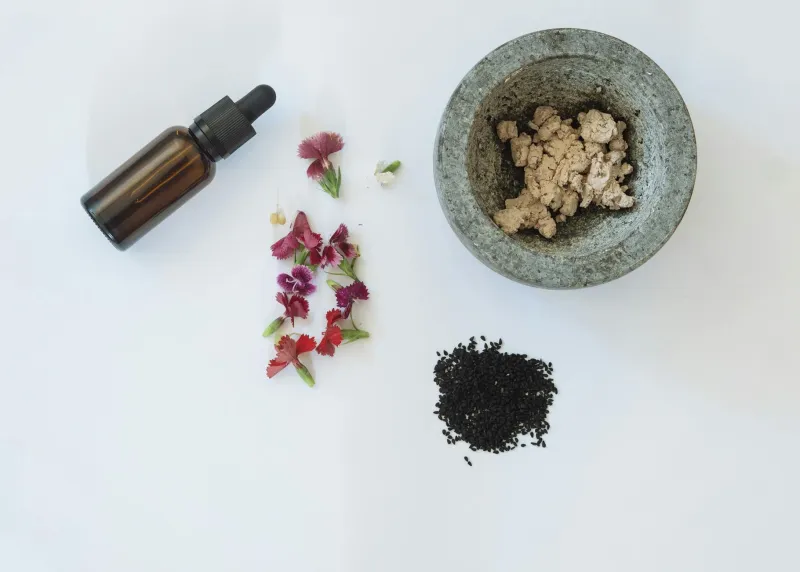
What is Black Seed Oil?
Black seed oil is obtained from the seeds of black cumin (Nigella sativa) — a small flowering plant native to South Asia and the Mediterranean region. This plant has been used in traditional medicine for over 2,000 years — from ancient Egypt to Middle Eastern and Indian traditions.
Historically, black seed has been called a "remedy for everything except death" — a phrase from Islamic tradition that reflects the plant's high status in traditional medicine.
The primary bioactive compound in black seed oil is thymoquinone (TQ), which typically makes up 1–5% of cold-pressed oil. It also contains thymohydroquinone, thymol, and various fatty acids.
How it works
Thymoquinone, black seed oil's primary bioactive compound, is described by researchers as having multifaceted effects. Laboratory studies suggest antioxidant, anti-inflammatory, and immunomodulatory properties (Ahmad et al., 2013; Majdalawieh & Fayyad, 2015).
Thymoquinone may influence multiple cellular signaling pathways and enzymes. However, it is important to note that many mechanisms of action have been identified primarily in laboratory studies and animal models, and their translation to humans requires further confirmation.
Evidence and benefits
Currently there are no EU-approved specific health claims for black seed oil. However, research suggests several interesting areas:
- Immune support: Some studies suggest that black seed oil may support the body's natural immune response (Salem, 2005). Clinical results are promising but vary.
- Metabolic support: Multiple studies suggest that black seed oil may support normal blood sugar and lipid levels (Bamosa et al., 2010; Kaatabi et al., 2015). These results have generated significant interest but need confirmation in larger trials.
- Antioxidant activity: Thymoquinone's antioxidant properties are well documented in laboratory studies (Darakhshan et al., 2015).
- Respiratory comfort: Traditional use and some research point to respiratory comfort support.
- Digestive support: Black seed has been traditionally used to support digestion.
This is an area of active research, with new results published regularly.
How to take
Common forms:
- Cold-pressed oil (traditional, most common)
- Softgel capsules (more convenient, standardized dose)
- Seeds (for adding to food)
Typical dosages:
- Cold-pressed oil: 1–3 teaspoons (2.5–7.5 ml) per day
- Softgel capsules: 500–1000 mg, 1–3 times per day
- Take with food (better tolerance)
Black seed oil has a strong, bitter taste. Many people therefore prefer capsules. The oil can also be mixed with honey or into smoothies to soften the flavor.
Who should consider it
- People looking to support their immune system naturally
- Those interested in metabolic and blood sugar support
- Individuals seeking an antioxidant supplement
- Those interested in traditional Middle Eastern herbal remedies
- People wanting to support respiratory comfort
Consult a healthcare professional before starting any new supplement. Black seed oil may interact with blood sugar-affecting medications and anticoagulants. Pregnant women should be cautious.
Frequently asked questions
Is black seed oil safe? In moderate doses, it is generally considered well tolerated. The most common side effects are digestive discomfort and nausea, especially when taken on an empty stomach. Tolerance is better when taken with food.
How to choose quality black seed oil? Look for cold-pressed, organic, unfiltered oil derived from Nigella sativa. Check the thymoquinone content — quality oil typically contains 1–3% TQ.
Does black seed oil affect blood sugar? Some research suggests it may. People taking diabetes medications should definitely consult their doctor.
Can black seed oil be used on skin? Black seed oil has traditionally been used topically for skincare as well. Always do a patch test before broader use.
What is the difference between black seed and regular cumin? Black cumin (Nigella sativa) and regular cumin (Carum carvi) are completely different plants with different properties. Do not confuse them.
How long until results are noticed? Most studies lasted 8–12 weeks (Bamosa et al., 2010). Some users notice effects on digestion and general wellbeing within 2–4 weeks.
References
- Ahmad A, Husain A, Mujeeb M, Khan SA, Najmi AK, Siddique NA, Damanhouri ZA, Anwar F. (2013). A review on therapeutic potential of Nigella sativa: A miracle herb. Asian Pacific Journal of Tropical Biomedicine, 3(5), 337–352.
- Majdalawieh AF, Fayyad MW. (2015). Immunomodulatory and anti-inflammatory action of Nigella sativa and thymoquinone: A comprehensive review. International Immunopharmacology, 28(1), 295–304.
- Salem ML. (2005). Immunomodulatory and therapeutic properties of the Nigella sativa L. seed. International Immunopharmacology, 5(13–14), 1749–1770.
- Bamosa AO, Kaatabi H, Lebdaa FM, Elq AM, Al-Sultanb A. (2010). Effect of Nigella sativa seeds on the glycemic control of patients with type 2 diabetes mellitus. Indian Journal of Physiology and Pharmacology, 54(4), 344–354.
- Kaatabi H, Bamosa AO, Badar A, Al-Elq A, Abou-Hozaifa B, Lebda F, Al-Khadra A, Al-Almaie S. (2015). Nigella sativa improves glycemic control and ameliorates oxidative stress in patients with type 2 diabetes mellitus. PLoS ONE, 10(2), e0113486.
- Darakhshan S, Bidmeshki Pour A, Hosseinzadeh Colagar A, Sisakhtnezhad S. (2015). Thymoquinone and its therapeutic potentials. Pharmacological Research, 95–96, 138–158.
See also:
Browse plant-based supplements at MaxFit →
Disclaimer
A food supplement is not a substitute for a varied and balanced diet and a healthy lifestyle.



