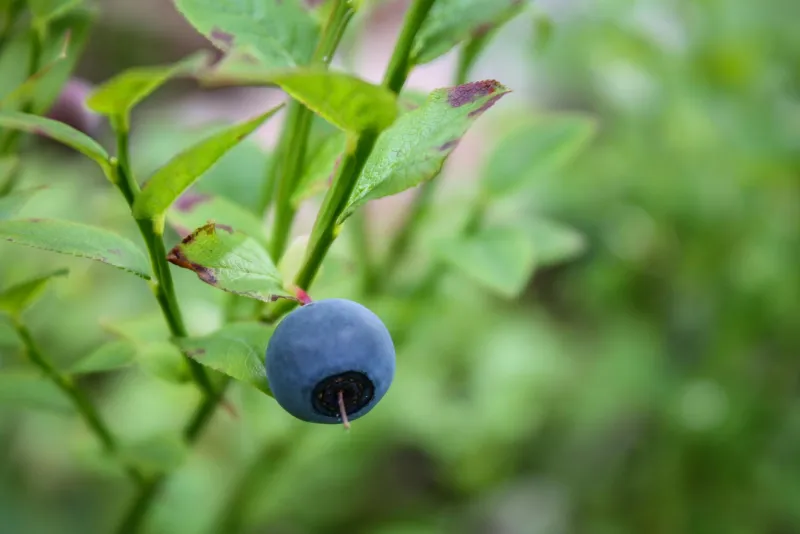
Bilberry for Vegans & Vegetarians
Bilberry (Vaccinium myrtillus) is a close wild relative of the blueberry, native to Northern and Central Europe and well represented in Estonian forests. As a whole fruit or as an extract, bilberry is completely plant-derived and inherently suited to vegan and vegetarian diets. Its main bioactive compounds are anthocyanins -- the water-soluble flavonoid pigments responsible for the deep blue-purple colour.
Why Plant-Based Diets May Find Bilberry Relevant
Vegetarians and vegans who eat a wide variety of colourful fruits and vegetables already consume meaningful amounts of anthocyanins from multiple sources. However, bilberry stands out because Vaccinium myrtillus contains a particularly complex and diverse mix of anthocyanin molecules compared with cultivated blueberries, and the wild European bilberry has been the subject of more targeted human research.
For those on heavily processed plant-based diets that are low in whole fruits, or for athletes seeking concentrated anthocyanin support, a bilberry extract can complement dietary intake. The most-researched application is ocular health: anthocyanins may support microvascular integrity in the retina, relevant to those who spend long hours at screens or in low-light conditions.
Vegan-Friendly Sources
Bilberry supplements are produced from the dried berries or concentrated fruit extract, making them inherently plant-based. The vegan checklist for supplement selection mirrors that for any capsule: confirm the capsule shell is HPMC or similar plant-derived material rather than gelatin, and verify excipients.
Whole dried bilberries are also available as a food ingredient and are completely unambiguous from a vegan standpoint. However, supplement extracts standardised to a specified anthocyanin percentage (typically around 25-36% by dry weight) offer more predictable dosing than dried fruit.
Dose Targets
Human studies on bilberry extract have used a range of doses. A well-cited RCT by Nakaishi et al. (2000) examined bilberry anthocyanin extract at doses supporting visual function in individuals with mild visual difficulty and found improvements in dark adaptation and visual acuity. The doses used in this research were in the range of 160 mg of standardised extract per day.
For general antioxidant support, research protocols vary, but doses between 120 mg and 480 mg of standardised bilberry extract per day appear in peer-reviewed literature. The extract standardisation percentage matters: a product standardised to 25% anthocyanins at 160 mg delivers a different anthocyanin payload than an unstandardised product.
What to Combine With Bilberry
Bilberry anthocyanins work well alongside other polyphenol-rich extracts and vitamin C. Vitamin C may help regenerate oxidised anthocyanins and preserve their antioxidant capacity. Lutein and zeaxanthin are frequently co-formulated with bilberry in eye-health products because they address complementary aspects of visual support.
At maxfit.ee, products like OstroVit Lutein + Zeaxanthin 60caps and MST Lutein 40mg + zeaxanthin 60 softgels from the nagemise vitamiinide kategooria can complement a bilberry supplement for those focusing on visual health. Vitamin C products in the c-vitamiini kategooria offer a useful pairing.
Choosing a Vegan Bilberry Product
| Criteria | What to look for |
|---|---|
| Source | Vaccinium myrtillus (European bilberry, not blueberry) |
| Standardisation | Anthocyanin content stated as percentage (e.g. 25% or 36%) |
| Capsule shell | HPMC or pullulan (not gelatin) |
| Dose transparency | mg of extract per serving clearly stated |
| Additives | Minimal excipients; no hidden animal-derived ingredients |
Products clearly labelled "bilberry extract" standardised to a specific anthocyanin percentage, in plant-based capsules, are the most reliable option.
References
Nakaishi, H., Matsumoto, H., Tominaga, S., & Hirayama, M. (2000). Effects of black current anthocyanoside intake on dark adaptation and VDT work-induced transient refractive alteration in healthy humans. Alternative Medicine Review, 5(6), 553-562. https://pubmed.ncbi.nlm.nih.gov/11134978/
Kazimierczak, R., Hallmann, E., Lipowski, J., Drela, N., Kowalik, A., Püssa, T., Matt, D., Luik, A., Gozdowski, D., & Rembiałkowska, E. (2014). Beetroot (Beta vulgaris L.) and naturally fermented beetroot juices from organic and conventional production: metabolomics, antioxidant levels and anticancer activity. Journal of the Science of Food and Agriculture, 94(13), 2618-2629. https://pubmed.ncbi.nlm.nih.gov/24798659/
Colacino, J. A., Arthur, A. E., Ferguson, K. K., & Rozek, L. S. (2012). Dietary antioxidant and anti-inflammatory intake modifies the effect of cadmium exposure on markers of systemic inflammation and oxidative stress. Nutrition Research, 32(12), 965-974.
FAQ
Is bilberry the same as blueberry?
No -- though they are related. Bilberry (Vaccinium myrtillus) is the wild European species with a dark interior flesh, while common blueberry (Vaccinium corymbosum) is a cultivated North American species with lighter flesh. Bilberry typically has a more complex anthocyanin profile and has been used in European traditional medicine.
Can vegans take bilberry supplements without concern?
Yes, provided the product uses plant-based capsules (HPMC or pullulan) rather than gelatin. The bilberry extract itself is entirely plant-derived.
How long does it take to notice benefits from bilberry?
Human studies suggest visual function improvements may appear within a few weeks of consistent use. Antioxidant status changes may be measurable earlier, but subjective differences in energy or well-being are variable. Consistent daily use over at least four to eight weeks is a reasonable trial period.



