BCAA vs. EAA: What Is the Difference?
BCAAs (branched-chain amino acids) are three essential amino acids: leucine, isoleucine, and valine. Of these, leucine is the most potent trigger of muscle protein synthesis.
EAAs (essential amino acids) include all 9 amino acids the body cannot synthesise itself: in addition to BCAAs, also histidine, lysine, methionine, phenylalanine, threonine, and tryptophan.
Because of this fundamental difference, EAAs are more effective at supporting complete muscle protein synthesis rather than simply delivering a leucine stimulus.
Do BCAAs Actually Need to Be Taken Separately?
This depends entirely on your overall protein intake.
If you eat adequate protein (1.6–2.2 g/kg per day):
- Standalone BCAAs add very little extra benefit (Wolfe, 2017)
- Your diet already contains more than enough BCAAs
- Money is better spent on whole protein or creatine
When BCAAs or EAAs genuinely add value:
- Fasted training — reduces muscle catabolism during exercise without adding significant calories
- Low protein intake — vegan diets, very low-calorie diets
- Very long training sessions (over 2 hours) — an extra leucine dose supports sustained MPS
- Between-meal recovery — helps maintain circulating amino acid levels
Best Timing
During training (intra-workout)
This is BCAAs' and EAAs' most traditional use and where they make the most difference:
- Keeps muscle breakdown minimal during the session
- Ensures amino acids are immediately available for intra-workout muscle protein synthesis
- Particularly important for fasted or semi-fasted training
Before training
If your last protein-containing meal was more than 3 hours ago, taking BCAAs or EAAs 30 minutes before training top up circulating amino acid levels before you start.
After training
This works, but whey protein (which contains all EAAs) is more effective and more economical.
Product Recommendations from maxfit.ee
MST BCAA EAA 40serv Black Currant is an excellent intra-workout drink with a comprehensive amino acid profile combining both BCAAs and EAAs. OstroVit EAA 400g Naturaalne is a clean, unflavoured complete EAA profile — great as an ingredient in post-workout shakes. 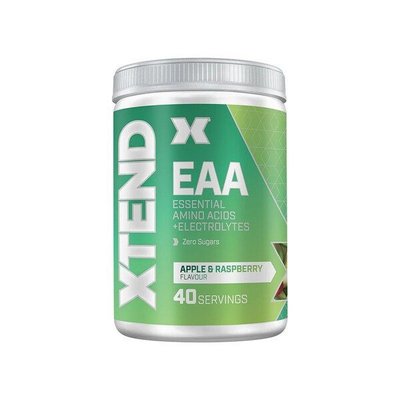 XTEND EAA 40 Servings Apple Raspberry€28.90 In stock provides the full EAA spectrum enriched with electrolytes — especially useful for summer training when sweat losses are high.
All are available in the EAA category and BCAA category at maxfit.ee.
Optimal Dosing
| Goal | Recommended Dose | Timing |
|---|---|---|
| Fasted training protection | 5–10 g EAA | Before training |
| Intra-workout support | 5–10 g BCAA or EAA | During training |
| Recovery (low protein intake) | 10–15 g EAA | After training |
For EAAs, ensure sufficient leucine content — at least 2–3 g per serving.
BCAA Ratio: 2:1:1 vs. 8:1:1
The traditional 2:1:1 ratio (leucine:isoleucine:valine) is the science-backed standard. Higher leucine-ratio formulas (4:1:1, 8:1:1) deliver a larger leucine dose — theoretically better for MPS triggering — but practically, the difference is modest compared to simply using complete EAAs.
Why EAAs Beat BCAAs Alone
Complete muscle protein synthesis requires all 9 essential amino acids. BCAAs (especially leucine) do activate the mTOR pathway, but if other EAAs are absent, synthesis may stall before completing a full round (Wolfe, 2017). EAAs deliver the complete package.
Leucine as the Key Threshold Marker
A simple practical rule for most athletes: every protein-containing meal should deliver at least 2.5–3 g of leucine to maximally trigger muscle protein synthesis. This corresponds to:
- ~25–30 g of whey protein
- ~40–50 g of pea protein
- ~3–4 whole eggs
When using BCAA supplements, verify the leucine content — aim for a minimum of 2.5 g of leucine per serving to ensure the anabolic threshold is reliably crossed.
Understanding the Amino Acid Terminology
- Essential amino acids: cannot be synthesised by the body — must come from diet
- Conditionally essential: normally non-essential, but become essential during stress states (illness, intense training) — glutamine is the primary example
- Non-essential: synthesised by the body as needed
BCAAs are all essential amino acids (a subset of EAAs). Complete EAA supplements cover all 9 essential amino acids, providing a full substrate pool for protein synthesis.
The Case for EAAs Over BCAAs in Most Contexts
The scientific consensus is gradually shifting toward complete EAA supplements rather than BCAA-only products, except for specific applications (fasted training, intra-workout sipping). The cost-per-gram of complete EAAs has dropped significantly in recent years, making them accessible for daily use. Athletes managing their supplement budget at maxfit.ee will find EAA formulations from brands like OstroVit and XTEND offer strong value relative to standalone BCAA supplements.
FAQ
Are BCAAs and EAAs suitable for women?
Yes — muscle protein synthesis, anabolism, and anti-catabolism work identically across sexes. Dosing recommendations are the same.
As a vegan, do I need more BCAAs?
Possibly. Plant proteins contain less leucine per gram than animal sources. If you primarily use pea or rice protein, supplemental EAAs or BCAAs can compensate for the lower leucine density.
Can I take BCAAs on rest days?
Yes, but it is largely unnecessary if total protein intake is sufficient. On rest days, focus instead on meeting your daily protein target through balanced meals throughout the day.
References
- Wolfe, R. R. (2017). Branched-chain amino acids and muscle protein synthesis in humans: Myth or reality? Journal of the International Society of Sports Nutrition, 14(1), 30.
- Jackman, S. R., Witard, O. C., Philp, A., Wallis, G. A., Baar, K., & Tipton, K. D. (2017). Branched-chain amino acid ingestion stimulates muscle myofibrillar protein synthesis following resistance exercise in humans. Frontiers in Physiology, 8, 390.
- Trommelen, J., Betz, M. W., & van Loon, L. J. C. (2019). The muscle protein synthetic response to meal ingestion following resistance-type exercise. Sports Medicine, 49(2), 185–197.
- Stokes, T., Hector, A. J., Morton, R. W., McGlory, C., & Phillips, S. M. (2018). Recent perspectives regarding the role of dietary protein for the promotion of muscle hypertrophy with resistance exercise training. Nutrients, 10(2), 180.