
Ashwagandha Myths vs Facts
Ashwagandha (Withania somnifera) is one of the most commercially successful herbal adaptogens on the market, with global sales growing rapidly. With that commercial success comes an inevitable layer of overstated claims, misquoted studies, and genuine confusion about what this herb actually does and does not do. This article works through the most common ashwagandha myths and maps them against what the peer-reviewed evidence actually shows.
Common Myths
Myth 1: "Ashwagandha is a testosterone booster"
This is the claim you will see most prominently on marketing materials. The reality is more nuanced. Several RCTs have found modest increases in serum testosterone levels in men following ashwagandha supplementation — but the effect is most pronounced in men with lower baseline testosterone or those under high stress (where cortisol suppresses testosterone naturally).
A 2015 RCT in male subjects found that ashwagandha supplementation was associated with increased testosterone levels and improved reproductive outcomes (Ambiye et al., 2013). However, extrapolating this to healthy young men with normal testosterone is questionable — the trial populations are generally stressed or sub-fertile adults.
In practical terms: ashwagandha may help restore testosterone that has been suppressed by chronic stress. It is not a direct androgen or a substitute for clinical hypogonadism treatment.
Myth 2: "It works immediately"
Marketing often implies fast-acting effects. The RCT evidence consistently shows ashwagandha's benefits accumulate over weeks. Most well-designed trials use supplementation periods of six to twelve weeks. Expecting noticeable stress reduction or sleep improvement within days is not supported by the literature.
Myth 3: "More is better — mega doses are safer and more effective"
Some products promote 1,000 mg or higher single doses. The most-studied and most effective dose range in clinical trials is 300–600 mg of root extract standardised to withanolides, typically taken once or twice daily. Studies using 300 mg KSM-66 extract twice daily have shown significant stress reduction effects (Chandrasekhar et al., 2012). Doses beyond 600 mg do not have proportionally better evidence and may increase the risk of adverse gastrointestinal effects.
Myth 4: "Ashwagandha cures anxiety and depression"
Ashwagandha has genuine anxiolytic (anxiety-reducing) activity, supported by multiple RCTs. However, "cures" is a disease-treatment claim and is not appropriate for a supplement. The trials show reductions in perceived stress and anxiety on validated scales — this is meaningful but distinct from treating clinical anxiety disorders. People with diagnosed anxiety or depression should not substitute ashwagandha for medical treatment.
What the Evidence Actually Shows
When you strip away the marketing, ashwagandha has a legitimate and reasonably well-evidenced set of effects:
- Stress and cortisol reduction: the most replicated finding. A 2012 RCT in chronically stressed adults found that ashwagandha supplementation produced statistically significant reductions in serum cortisol and perceived stress compared with placebo (Chandrasekhar et al., 2012).
- Sleep quality improvement: several trials report improved sleep onset and sleep quality, particularly in stressed or sleep-challenged populations.
- Modest endurance and recovery support: some evidence suggests ashwagandha may improve VO2 max and reduce exercise-related muscle damage markers, though the effect size is small.
- Male fertility markers: reasonable evidence for improvement in sperm parameters in sub-fertile men (Ambiye et al., 2013).
Marketing Claims vs Reality
| Claim | Reality |
|---|---|
| "Mega testosterone booster" | Modest effect in stressed/sub-fertile men; not relevant for healthy young men with normal levels |
| "Works in days" | Benefits accumulate over 6–12 weeks |
| "Cure for anxiety" | Reduces perceived stress; not a medical treatment for anxiety disorders |
| "KSM-66 is magic" | KSM-66 is a well-standardised extract with good research backing — the standardisation matters, but it's still a root extract |
| "No side effects" | Generally well tolerated; rare hepatotoxicity cases reported at high doses; check for drug interactions |
Grey Areas
Several claims lack enough high-quality evidence to evaluate confidently:
- Cognitive performance: some pilot studies suggest benefit in memory and cognitive speed, but the evidence is preliminary.
- Thyroid effects: some sources claim ashwagandha raises thyroid hormones; the evidence is inconsistent and people on thyroid medication should consult a clinician before use.
- Use in women: most trials were conducted in men; the data for women is thinner and should not be assumed equivalent.
- Long-term safety beyond 12 weeks: the trials are mostly short; very long-term safety has not been systematically studied.
Products and Where to Find Them
If you decide to try ashwagandha, look for products using standardised extracts (KSM-66 or Sensoril are the best-documented). At maxfit.ee, options include OstroVit KSM-66 Ashwagandha VEGE 120caps (KSM-66 standardised root extract), MST Ashwagandha KSM66 60caps, 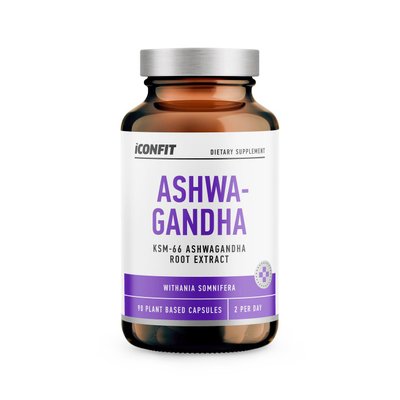 ICONFIT Capsules Ashwagandha N90€13.90 In stock, BIOTECHUSA Ashwagandha 60 caps, and
 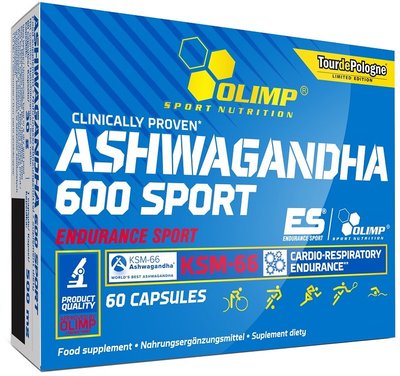 Olimp Ashwagandha 600 Sport€12.90 In stock 60caps. These are available in the asvagandha and ravimtaimed-ja-adaptageenid categories.
Bottom Line
Ashwagandha is not magic, but it is not a scam either. It has genuine evidence for stress reduction, modest cortisol lowering, and sleep support. The testosterone and athletic performance claims are real but overstated for most healthy adults. The critical variables are: choosing a standardised extract at the studied dose range (300–600 mg), being patient for effects (six or more weeks), and not expecting it to replace medical care for clinical conditions. At effective doses and with realistic expectations, ashwagandha is one of the better-supported herbal adaptogens available.
FAQ
Is KSM-66 ashwagandha better than other forms?
KSM-66 is a specific root extract standardised to a minimum withanolide content. It has a larger number of RCTs behind it than other proprietary forms, which makes it the most reliably evidenced option. This does not mean non-branded root extract is ineffective — but the standardisation ensures a consistent dose of active compounds.
Can women take ashwagandha?
Most trial data comes from male subjects, so the evidence base for women is thinner. The herb is generally well tolerated in women, and some trials include female participants. Pregnant women should avoid ashwagandha as it has uterine stimulant properties in animal studies.
How long should I take ashwagandha?
Trials typically run 8–12 weeks. Taking breaks (cycles of 8–12 weeks on, followed by a few weeks off) is a common practical approach, though long-term continuous use has not been well studied. If stress and sleep quality are the primary targets, evaluate effects at the end of an 8-week period.
References
Chandrasekhar, K., Kapoor, J., & Anishetty, S. (2012). A prospective, randomized double-blind, placebo-controlled study of safety and efficacy of a high-concentration full-spectrum extract of ashwagandha root in reducing stress and anxiety in adults. Indian Journal of Psychological Medicine, 34(3), 255-262. https://pubmed.ncbi.nlm.nih.gov/23439798/
Ambiye, V. R., Langade, D., Dongre, S., Aptikar, P., Kulkarni, M., & Dongre, A. (2013). Clinical evaluation of the spermatogenic activity of the root extract of Ashwagandha (Withania somnifera) in oligospermic males. Evidence-Based Complementary and Alternative Medicine, 2013, 571420. https://pubmed.ncbi.nlm.nih.gov/24371462/
Langade, D., Kanchi, S., Salve, J., Debnath, K., & Ambegaokar, D. (2019). Efficacy and safety of ashwagandha (Withania somnifera) root extract in insomnia and anxiety: A double-blind, randomized, placebo-controlled study. Cureus, 11(9), e5797. https://pubmed.ncbi.nlm.nih.gov/31728244/



