
Ashwagandha Interactions: Drugs, Nutrients & Foods
Ashwagandha (Withania somnifera) is one of the most popular adaptogens in sports nutrition. Its active withanolide compounds influence the HPA axis, thyroid function, and the immune system — properties that make it effective but also warrant awareness of potential interactions.
Drug Interactions
Immunosuppressants
Ashwagandha displays immune-stimulating activity — it can theoretically reduce the effectiveness of transplant medications (e.g. ciclosporin, tacrolimus). People taking immunosuppressants should avoid ashwagandha without medical consultation.
Thyroid Hormones (levothyroxine etc.)
Several studies have shown ashwagandha raises thyroid hormone levels. One RCT (Sharma et al., 2018) found that ashwagandha extract elevated T3 and T4 in euthyroid participants (Sharma et al., 2018). This means that people on hypothyroid medication may need dose adjustments when adding ashwagandha.
Sedatives and Anxiolytics
Ashwagandha modulates the GABA system, which can potentiate benzodiazepines, barbiturates, and other sedative agents. Use caution when combining; avoid with alcohol.
Antidiabetic Medications
Ashwagandha can lower blood glucose levels — documented in clinical research (Raut et al., 2012). People taking insulin or metformin may need medication adjustments after adding ashwagandha.
Antihypertensive Medications
Ashwagandha has a modest blood pressure-lowering effect. For people already on antihypertensives, this may create a cumulative pressure-lowering effect.
Nutrient Interactions and Synergies
Ashwagandha + Magnesium
Both support stress response reduction and sleep quality through different mechanisms. Magnesium acts via NMDA receptors; ashwagandha withanolides work through cortisol-related pathways. The combination is synergistic, well-tolerated, and safely used.
Ashwagandha + Vitamin C
Vitamin C supports adrenal cortisol production and ashwagandha modulates the HPA axis — there is a theoretical synergy, but clinical trials specifically on this combination are limited.
Ashwagandha + Iron
Ashwagandha root contains iron compounds and has in some studies improved haemoglobin and serum iron levels. The combination is generally safe, but supplementation beyond dietary need is unnecessary.
Food Effects
Fatty Meals
If taking a lipophilic ashwagandha extract (especially KSM-66), taking it with a fat-containing meal is recommended, as this improves withanolide absorption.
Nightshade Foods
Ashwagandha belongs to the nightshade family (Solanaceae). At supplement doses, any additive alkaloid effect from combining with other nightshades (tomato, pepper, aubergine) is not clinically meaningful.
Who Must Be Cautious?
- Pregnant and breastfeeding women — use not recommended (insufficient safety data)
- Patients with autoimmune conditions (systemic lupus, rheumatoid arthritis) — immune-stimulating activity may aggravate the condition
- People with hyperthyroidism (Graves' disease)
- People taking sedative medications
At maxfit.ee you can find ICONFIT Capsules Ashwagandha N90, OstroVit KSM-66 Ashwagandha VEGE 120caps, 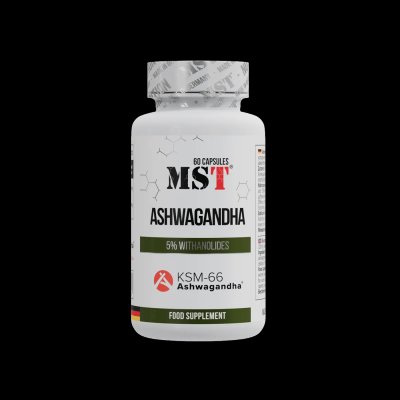 MST Ashwagandha KSM66€16.90 In stock 60caps, and BIOTECHUSA Ashwagandha 60 caps — all standardised for withanolide content. Browse the full ashwagandha range in the ashwagandha category.
Practical Rules
- Start with a lower dose to assess individual tolerance.
- Take with a fatty meal if using a lipophilic extract.
- Inform your doctor if you use thyroid medication, immunosuppressants, diabetes drugs, or sedatives.
- Avoid combining with alcohol and strong sedative substances.
Honest Verdict
Ashwagandha is well-tolerated with evidence-based adaptogenic properties. For most healthy adults the interaction risk is low. However, thyroid and immune-drug interactions are sufficiently documented to require medical supervision in those groups.
References
- Sharma, A. K., Basu, I., & Singh, S. (2018). Efficacy and safety of ashwagandha root extract in subclinical hypothyroid patients: a double-blind, randomized placebo-controlled trial. Journal of Alternative and Complementary Medicine, 24(3), 243-248. https://pubmed.ncbi.nlm.nih.gov/28829155/
- Raut, A. A., Rege, N. N., Tadvi, F. M., Solanki, P. V., Kene, K. R., Shirolkar, S. G., ... & Vaidya, A. B. (2012). Exploratory study to evaluate tolerability, safety, and activity of ashwagandha (Withania somnifera) in healthy volunteers. Journal of Ayurveda and Integrative Medicine, 3(3), 111-114. https://pubmed.ncbi.nlm.nih.gov/23125505/
- Chandrasekhar, K., Kapoor, J., & Anishetty, S. (2012). A prospective, randomized double-blind, placebo-controlled study of safety and efficacy of a high-concentration full-spectrum extract of ashwagandha root in reducing stress and anxiety in adults. Indian Journal of Psychological Medicine, 34(3), 255-262. https://pubmed.ncbi.nlm.nih.gov/23439798/
FAQ
Can ashwagandha affect thyroid treatment?
Yes. Studies have shown thyroid hormone level increases with ashwagandha use. People taking levothyroxine should monitor thyroid function and consult their doctor.
Is ashwagandha safe to combine with iron supplements?
Generally yes — interactions are weak and the combination is well-tolerated. Do not supplement iron without demonstrated need, as excess is harmful.
Can ashwagandha improve athletic performance?
Yes, in a positive sense: studies show ashwagandha improves VO2 max, strength, and post-exercise recovery (Chandrasekhar et al., 2012). No negative interactions with most sports supplements have been documented.



