
Ashwagandha and Immune Support: Evidence Review
Ashwagandha (Withania somnifera) is primarily known as an adaptogen — an herb studied for its effects on stress and resilience. In recent years, interest in ashwagandha immunity effects has grown considerably, with researchers examining whether the herb's bioactive compounds, particularly withanolides, have measurable impacts on the immune system. Here is an honest look at where the evidence stands.
Immune Mechanism
Ashwagandha contains withanolides, alkaloids, and glycowithanolides that appear to modulate immune function through several pathways. Preclinical studies suggest these compounds may influence natural killer (NK) cell activity, macrophage function, and cytokine production. The hypothesised immunomodulatory action is not simply stimulation — ashwagandha is considered a modulator that may help normalise immune activity rather than simply boosting it in one direction.
Stress suppresses immune function through cortisol-mediated pathways, and ashwagandha's documented adaptogenic effects — its ability to reduce perceived stress and modulate cortisol — likely account for at least part of any immune benefit observed in stressed populations. Reducing chronic stress burden is itself a meaningful form of immune support.
Infection and Illness Evidence
A 2021 randomised, double-blind, placebo-controlled trial by Tharakan et al. specifically investigated whether ashwagandha root extract (KSM-66) affected immune cell populations in healthy adults. The study found statistically significant increases in immunoglobulin levels and in the number of white blood cells, including NK cells, compared to placebo after 60 days of supplementation (Tharakan et al., 2021).
A separate 2021 trial by Verma et al. examined ashwagandha in the context of respiratory wellness and found improvements in perceived health and vitality in healthy adults — though clinical endpoints like actual infection rates are difficult to measure in short-duration trials (Verma et al., 2021).
The overall picture is that ashwagandha appears to positively influence certain immune markers in healthy adults, but evidence that it reduces infection rates or illness duration in otherwise healthy people is limited. The strongest findings are in immunological biomarkers, not infection events.
Who Benefits
The clearest beneficiaries appear to be individuals under significant chronic stress — a state that suppresses immunity and for which ashwagandha has a reasonably strong evidence base. Athletes engaged in intensive training periods (which temporarily suppress immune function) represent another group where adaptogenic support during heavy training blocks may be rational.
For people with normal stress levels and otherwise healthy immune function, the marginal benefit is less clear. Ashwagandha is not a substitute for adequate sleep, nutrition, and physical activity — the foundations of immune resilience.
Dose and Safety
The most studied and commercially reputable form is KSM-66, a standardised root extract used in most clinical trials. Studies have commonly used daily doses in the range used in these trials, typically taken once or twice daily with meals.
OstroVit KSM-66 Ashwagandha VEGE 120caps, MST Ashwagandha KSM66 60caps, 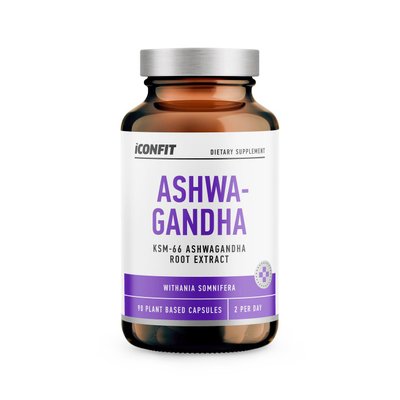 ICONFIT Capsules Ashwagandha N90€13.90 In stock, and BIOTECHUSA Ashwagandha 60 caps are available at maxfit.ee, all using well-studied ashwagandha extracts.
Ashwagandha is generally well-tolerated. Rare reports of liver concerns have emerged in the literature — mostly associated with very high doses or prolonged use of poorly characterised products. Individuals with autoimmune conditions should consult a doctor before use, as immune modulation may interact unpredictably with autoimmune disease management.
Browse the ashwagandha range in the ashwagandha category.
Honest Verdict
Ashwagandha has genuine, plausible immune-relevant mechanisms and controlled trial data showing improvements in immunological markers. The stress-reduction pathway alone — reducing cortisol-driven immune suppression — gives it a rational basis for use in stressed or heavily training individuals. However, it should not be marketed or used as a direct cold and flu preventive. The evidence for reducing actual infection events is not established. For immune support as part of a broader stress and wellness management approach, it is one of the better-supported adaptogens.
FAQ
Is ashwagandha the same as an immune booster?
Not exactly. Ashwagandha is better described as an immunomodulator — it may help restore immune balance disrupted by chronic stress rather than simply stimulating immune function across the board. This distinction matters because indiscriminate immune stimulation is not always beneficial.
Can I take ashwagandha daily year-round?
Most studies have used supplementation periods of 8 to 12 weeks. Long-term continuous use is less studied. Some practitioners recommend cycling — for example, taking it for 8 to 12 weeks and then taking a break — though the evidence base for this practice is more convention than controlled data.
Does ashwagandha interact with medications?
Ashwagandha may potentiate the effects of sedatives and thyroid medications. People on immunosuppressants, thyroid drugs, or sedative medications should consult their doctor before use.
References
Tharakan, A., Shukla, H., Benny, I. R., Tharakan, M., George, L., & Manjula, S. (2021). Immunomodulatory effect of Withania somnifera (Ashwagandha) extract — a randomized, double-blind, placebo controlled trial with an open label extension on healthy participants. Journal of Clinical Medicine, 10(16), 3644. https://pubmed.ncbi.nlm.nih.gov/34441940/
Verma, N., Gupta, S. K., Tiwari, S., & Mishra, A. K. (2021). Safety of Ashwagandha root extract: a randomized, placebo-controlled, study in healthy volunteers. Complementary Therapies in Medicine, 57, 102642. https://pubmed.ncbi.nlm.nih.gov/33338583/
Chengappa, K. N. R., Brar, J. S., Gannon, J. M., & Schlicht, P. J. (2018). Adjunctive use of a standardized extract of Withania somnifera (ashwagandha) to treat symptom exacerbation in schizophrenia. Journal of Clinical Psychiatry, 79(5), 17m11826. https://pubmed.ncbi.nlm.nih.gov/29995356/



