
Understanding Ashwagandha: Not a Classic Deficiency
Ashwagandha (Withania somnifera) is an adaptogenic herb from Ayurvedic medicine. Unlike iron or vitamin D, it is not an essential nutrient your body cannot produce — so there is no clinically defined "ashwagandha deficiency" in the way a blood test can confirm low ferritin. What you can assess, however, is whether the states ashwagandha addresses — chronic stress, disrupted sleep, fatigue, reduced resilience — are present in your life.
This distinction matters. The question for beginners is not "am I deficient?" but rather "do I have the functional imbalances this herb is known to support?"
Signs That Ashwagandha May Benefit You
The research on ashwagandha focuses on its effects on the hypothalamic-pituitary-adrenal (HPA) axis — the system governing your cortisol stress response. Symptoms of a chronically overactivated stress system often overlap with the situations where ashwagandha has shown benefit in clinical trials:
- Persistent tiredness that sleep does not resolve — not explainable by anaemia or thyroid dysfunction
- Elevated perceived stress — particularly in demanding professional or academic contexts
- Difficulty falling asleep or staying asleep associated with an overactive mind
- Reduced performance or recovery in athletes or active individuals
- Subclinical anxiety not warranting pharmaceutical intervention
A randomized controlled trial by Chandrasekhar et al. (2012) found that adults with a history of chronic stress who took an ashwagandha root extract reported significantly lower scores on stress and anxiety scales, and lower morning cortisol levels, compared with placebo (Chandrasekhar et al., 2012). The population in that study was adults experiencing self-reported high life stress — not a clinical diagnosis.
Who Is at Risk of Not Benefiting
Ashwagandha is not universally appropriate. Groups for whom supplementation may be unsuitable or require medical guidance include:
- People with autoimmune conditions (ashwagandha may stimulate immune function)
- Those taking thyroid medications (some evidence of interaction with thyroid hormone levels)
- Pregnant women (traditional use restricts it during pregnancy)
- People with nightshade allergies (ashwagandha belongs to the Solanaceae family)
If you take any prescription medication, discuss with a doctor before supplementing.
The Nordic and Estonian Context
In northern latitudes such as Estonia, seasonal factors compound the situations where ashwagandha may help. Long winter months bring reduced daylight, which already affects melatonin and serotonin rhythms. Combined with demanding work schedules and the cultural norm of stoicism around stress complaints, many people in Estonia experience sustained low-grade HPA activation for months at a time without identifying it as stress-related.
Ashwagandha is not a replacement for addressing root causes — therapy, lifestyle change, and sleep hygiene remain primary. It may, however, support the adaptation window while those changes take effect.
How Ashwagandha Is Evaluated: No Blood Test Exists
Because there is no serum ashwagandha marker, assessment is behavioural and subjective: validated questionnaires measuring perceived stress (such as the Perceived Stress Scale), sleep quality indices, or athlete monitoring tools like training load and recovery scores. In research settings, morning salivary or serum cortisol is sometimes used as a proxy.
This means supplementation decisions are largely self-directed, and responsiveness varies. Some people notice meaningful changes within two to four weeks; others experience minimal effects.
When to Supplement vs. When to Adjust Diet and Lifestyle
Ashwagandha should be a complement to, not a substitute for, foundational habits:
- Supplement first: When sleep hygiene, stress management, and nutrition are already reasonably addressed but resilience remains low
- Fix lifestyle first: When sleep is under six hours chronically, calorie intake is far below needs, or there is an untreated medical condition
In active individuals specifically, a meta-analysis by Pratte et al. (2014) found evidence that ashwagandha supplementation was associated with improvements in physical performance and recovery markers, though the authors noted that study populations and doses varied considerably (Pratte et al., 2014).
For those considering supplementation, ICONFIT Capsules Ashwagandha N90 and OstroVit KSM-66 Ashwagandha VEGE 120caps — both available at maxfit.ee — use standardized root extracts. KSM-66 is a well-studied extract form backed by several of the clinical trials cited in this area. 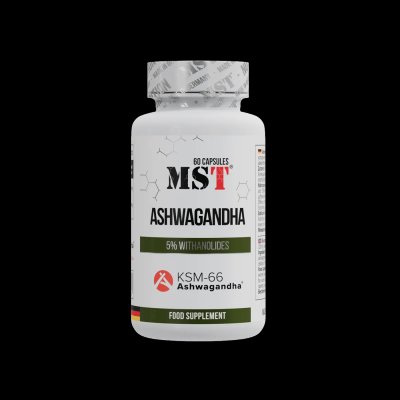 MST Ashwagandha KSM66€16.90 In stock 60caps is another option using the same standardized extract.
Browse the full ashwagandha range at maxfit.ee to compare options.
FAQ
Is there a test I can take to know if I need ashwagandha?
There is no blood test for ashwagandha status. However, validated self-assessment questionnaires for perceived stress and sleep quality are available and can help you gauge whether the situations this herb targets are present.
How long does it take to feel effects from ashwagandha?
Most clinical trials showing effects run for eight weeks or longer. Some individuals report subjective improvements in sleep within two to three weeks, but meaningful changes in cortisol or stress resilience typically require consistent use over at least four to eight weeks.
Can ashwagandha worsen anxiety in some people?
While most evidence points to anxiolytic effects, a minority of users report increased alertness or mild initial agitation. If this occurs, reducing the dose or taking it in the evening rather than morning may help. Discontinue and consult a doctor if symptoms are significant.
References
Chandrasekhar, K., Kapoor, J., & Anishetty, S. (2012). A prospective, randomized double-blind, placebo-controlled study of safety and efficacy of a high-concentration full-spectrum extract of Ashwagandha root in reducing stress and anxiety in adults. Indian Journal of Psychological Medicine, 34(3), 255–262. https://pubmed.ncbi.nlm.nih.gov/23439798/
Pratte, M. A., Nanavati, K. B., Young, V., & Morley, C. P. (2014). An alternative treatment for anxiety: a systematic review of human trial results reported for the Ayurvedic herb ashwagandha (Withania somnifera). Journal of Alternative and Complementary Medicine, 20(12), 901–908. https://pubmed.ncbi.nlm.nih.gov/25405876/



