


Why algae oil is the original omega-3 source
The most common misunderstanding about omega-3 is that EPA and DHA are "fish-derived" fatty acids. Fish do not make them. Microalgae synthesise them, a fish eats the algae or eats a smaller fish that ate the algae, and the fatty acids accumulate up the food chain. Salmon is the middleman in this story, not the factory.
Algae oil supplements simply shorten that chain. Microalgae are grown in closed fermentation tanks, the oil is pressed or extracted from the biomass and encapsulated. What ends up in the capsule is molecularly the same EPA and DHA you find in fish oil.
Three species do almost all the work. Schizochytrium yields DHA and, to a lesser degree, EPA, and is by now the most common raw material. Crypthecodinium cohnii yields almost pure DHA and is used heavily in infant formula. Nannochloropsis is EPA-rich and is beginning to reach supplements, though it has barely made it to our shelf yet.
There is one extra detail worth knowing in an Estonian context. Baltic Sea fish, including our own herring and sprat, are a perfectly good omega-3 source, but for Baltic salmon and larger herring the Health Board and the European Union have historically issued consumption-frequency advice because of dioxins. That is one reason some people look for a source independent of fish, even when they are not vegan.
How this oil is actually made
Producing algae oil looks nothing like the fishing industry, and that explains most of the price gap. Microalgae are grown in closed fermentation tanks, much the way yeast or citric acid is produced. The feedstock is sugar, temperature and oxygen are controlled, and the whole process takes days rather than seasons. Once the biomass is ready it is dried and the oil is extracted either with solvent or mechanically, then purified and encapsulated with an antioxidant.
Reviews of vegetarian long-chain omega-3 sources make exactly this point: microalgae are the only plant raw material that delivers EPA and DHA directly, without relying on the body's own conversion pathway (Lane et al., 2014). Every other plant source, whether flaxseed, chia, hemp or walnut, delivers ALA and leaves the conversion to your liver.
The practical takeaway for a buyer is simple. The price of algae oil is not because someone is selling you an exotic. It is because you are paying for a sterile biotechnological process where with fish oil you pay for refining a by-product of the fishing industry. That in itself does not imply a quality difference.
Why flaxseed does not solve the problem
The most common objection to algae oil goes like this: I have flaxseed oil, chia seeds and walnuts, my omega-3 is covered. That is a half truth, and the missing half is the part that matters.
Plant omega-3 is alpha-linolenic acid (ALA). The body can in theory make EPA and DHA from ALA, but the pathway is slow and competes for the same enzymes with omega-6 fatty acids, which a Western diet supplies in abundance. A review of isotope-tracer studies puts ALA conversion to EPA in the low single-digit percentages and to DHA below one percent, often effectively near zero (Brenna, 2002). Conversion is somewhat better in women, probably an oestrogen effect, but even then it is not a number to build a plan on.
In practice, a tablespoon of flaxseed oil gives you about 7-8 grams of ALA, of which a fraction reaches DHA. If your goal is DHA in your blood, flaxseed oil is not the tool for that job. It is a good fat source and a perfectly sensible food, but it does not do this particular job.
Does algae oil work as well as fish oil?
That is the only question that really matters, and the evidence answers it clearly.
In a direct comparison where people received DHA either from algae oil capsules or from cooked salmon, the plasma DHA responses were essentially equivalent between the two sources (Arterburn et al., 2008). A large review of the dose-response literature reaches the same conclusion: the measurable blood response is driven by how much EPA and DHA you swallow, not by which organism it came from (Arterburn et al., 2006).
On clinical markers, algae-derived DHA has been studied on its own. A meta-analysis of algal-oil DHA in people without diagnosed heart disease found reduced triglycerides and increased HDL cholesterol, with a moderate rise in LDL as well (Bernstein et al., 2012). That is precisely the pattern described for fish-oil DHA, which is what you would expect, since the molecule is the same.
The most direct proof comes from vegans themselves. In a study where vegans were given algae oil for four months, their omega-3 index rose clearly, from a low baseline before the intervention (Sarter et al., 2015). So the worry that a plant source "does not get there" does not hold. It gets there.
One methodological note is worth stating, because it helps in reading studies. Omega-3 research usually measures either the plasma fatty acid profile or the omega-3 index, which is the share of EPA and DHA in red blood cell membranes. Plasma responds quickly and fluctuates day to day with what you ate yesterday. The omega-3 index moves slowly and reflects a months-long average. If you read a study that found "a response within two weeks", it probably measured plasma. If your own goal is a durable change, the index is what counts, and that means patience.
An honest caveat: most older algae oils were DHA-rich and EPA-poor. Capsule for capsule, fish oil usually carries more EPA. Newer Schizochytrium-based products narrow that gap, but it is still the first thing to check on the label.
How much DHA and EPA you actually need
The number practice revolves around is roughly 250 mg of EPA and DHA combined per day for general health. Pregnancy and breastfeeding add about 200 mg of DHA per day on top. Higher amounts, on the order of 2-3 grams a day, are where effects on triglycerides have been described, and that is a dose to discuss with a doctor rather than pick yourself.
On an algae oil product that means the following. If a capsule holds 250 mg of DHA, one capsule a day covers the basic need. If it holds 100 mg, you need three, and the price per serving triples. This is exactly why comparing algae oil to fish oil on capsule price gives you the wrong answer.
The other thing to check on the label is the chemical form of the fatty acid. In fish oil, EPA and DHA appear as triglyceride, re-esterified triglyceride or ethyl ester; in algae oil usually as triglyceride or phospholipid. Ethyl ester is cheaper to produce and absorbs somewhat less well when taken without fat. The practical fix is the same either way: take the capsule with food. If the label does not mention the form at all, it is usually ethyl ester, because the triglyceride form is almost always mentioned as a selling point.
Fatty acids absorb better with fat, so take the capsule with a meal rather than on an empty stomach. Because of oxidation, keep the jar cool and dark, and prefer a pack size you will finish in reasonable time.
Algae oil versus fish oil: a comparison
| Criterion | Algae oil | Fish oil |
|---|---|---|
| EPA and DHA molecule | Identical | Identical |
| Typical EPA content | Lower, depends on species | Higher |
| Vegan | Yes | No |
| Fishy taste and burps | Usually absent | A more frequent complaint |
| Heavy metal risk | Very low, grown in a closed system | Low in concentrated, purified oils |
| Price per 250 mg EPA+DHA | Higher | Lower |
| Availability in Estonia | Limited, a handful of products | Wide choice in every pharmacy and online shop |
| With a fish allergy | Suitable | Not suitable |
The summary of that table is simple. Algae oil wins on ethics, allergy and smell. Fish oil wins on price and availability. On effectiveness they are equal when the dose is equal.
What algae oil costs in Estonia and where to find it
Straight talk: algae oil is not a mass-market item in Estonia. You find it in a few health stores, some pharmacies and mainly online. The price is typically two to four times higher than the same amount of EPA+DHA in fish oil, and the reason is production: fermentation under controlled conditions is simply more expensive than refining a by-product of fish processing.
Availability is a genuinely important factor that web articles usually ignore. If a product is only available from one foreign shop with a two-week delivery, in reality the jar runs out at some point and the supplement lapses. With omega-3, consistency is the entire point, because the fatty acid profile of your membranes shifts over months. Intermittent use means you pay without reaching the result. Before choosing algae oil, think through where you will reorder it in January.
MaxFit does not currently stock algae oil. I am saying that outright, because an article that ends in a purchase link for a product that does not exist is a waste of your time. If an algae source is a non-negotiable requirement for you, buy it wherever you can and check three things: DHA per capsule, EPA per capsule, and whether the manufacturer names the algae species.
Fish oil options when an algae source is not a requirement
A large share of the people looking for algae oil are not actually vegan. They are looking for a clean, reasonably priced omega-3 and have heard that algae oil is "purer". If that describes you, concentrated fish oil does the same job for less.
Our omega-3 category covers a wide price range. At entry level there is ICONFIT Omega-3 60softgels at 8.90 euros, which is two months of basic cover at one capsule a day. Further up the concentration scale sit 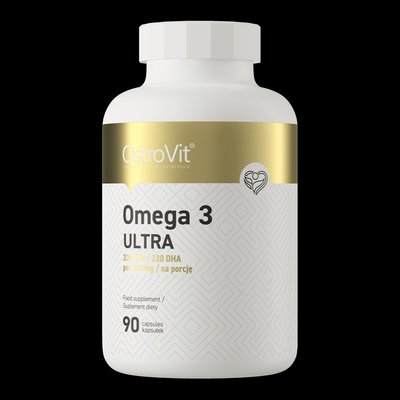 OstroVit Omega 3 Ultra€14.60 In stock 90caps at 13.90 euros and
 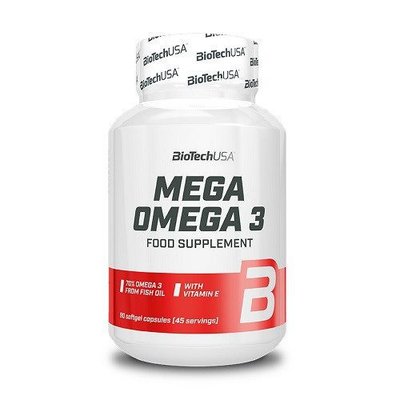 BIOTECHUSA Mega Omega 3€20.90 In stock 90softgels at 19.90 euros. If you want a bigger jar and a lower price per serving, there is NOW Omega 3 1000mg 200 Softgels at 20.90 euros. All prices are as at the time of writing.
We have written more specific product comparisons separately: the NOW Foods Ultra Omega-3 review looks at the price and composition of a concentrated fish oil, and the Zinzino BalanceOil review explains why a network-marketing omega-3 costs several times more for the same active ingredient.
Who algae oil is right for
Vegans and strict vegetarians. This is the only sensible long-chain omega-3 source without animal raw material, and without a supplement, DHA status is almost certainly low.
People with a fish or shellfish allergy. Algae oil is not fish and does not touch a fish processing line, which is the decisive argument for this group.
Pregnant and breastfeeding women who do not eat fish. DHA needs are higher in this period and the source has to come from somewhere.
People who cannot tolerate the taste or aftertaste of fish oil. This is not a trivial argument. A supplement you avoid taking does not work at any dose.
Those deciding on sustainability grounds. Fermentation in a closed tank does not depend on fish stocks. There is still an energy cost, so it is not a zero-impact choice, but there is no impact on the ocean.
Who should skip it
You are comparing on price alone and you eat fish. Without an allergy or a principled restriction, you are paying a premium for algae oil with no measurable additional benefit.
You mainly need EPA. If your goal is an EPA-rich profile, many algae oils deliver less of it per capsule than concentrated fish oil, and taking several capsules pushes the price up.
You take blood-thinning medication. High omega-3 doses and anticoagulants are an interaction to discuss with a doctor, not in a shop comment section. This applies equally to algae and fish oil.
You expect one supplement to replace a diet. Omega-3 is one piece of the picture. If the rest of your nutrition is patchy, look at the wider view instead, for example vitamin complexes and adequate protein in the protein category.
A practical protocol
Set the target. Basic health means around 250 mg of EPA+DHA a day. Pregnancy adds about 200 mg of DHA. Higher doses are a separate conversation with a doctor.
Read the DHA and EPA lines separately on the label, not "algae oil 500 mg". Divide the product's price by the number of daily servings, not by the number of capsules.
Take it with a meal containing fat, at any time of day. The clock does not matter here, consistency does.
Store cool and dark. If a capsule smells or tastes sharp, throw the jar out regardless of the expiry date.
If you also take vitamin D in winter, omega-3 and fat-soluble vitamins fit well into the same meal. We covered that combination in our article on taking D3, K2 and omega-3 together.
If you want to know whether it is working, measure the omega-3 index before and after four months. In studies, the red blood cell fatty acid profile stabilises in exactly that window (Sarter et al., 2015). Measuring after one month tells you nothing yet.
FAQ
Is algae oil really as effective as fish oil?
At the same dose, yes. In a direct comparison, algae oil capsules and cooked salmon produced a comparable plasma DHA response (Arterburn et al., 2008). A difference only arises when the capsules do not hold an equal amount of active ingredient, which is in fact the most common reason people notice differences.
Can I get enough omega-3 from flaxseed and chia?
Enough ALA, yes; EPA and DHA, essentially no. Conversion is a couple of percent to EPA and under one percent to DHA (Brenna, 2002). If you do not eat fish, a direct DHA source is the only reliable solution.
Does algae oil contain mercury?
The risk is very low, because algae are grown in closed fermentation systems rather than the ocean, so contaminants do not accumulate up a food chain. Concentrated, molecularly distilled fish oils also have low residue levels, so this argument is less decisive than marketing sometimes implies.
Is algae oil suitable for children?
DHA matters for the normal development of a child's brain and vision, and algae oil is used in infant formula. The specific dose for a child should be discussed with a family doctor or paediatrician, especially if the child already eats fish.
Why does algae oil cost so much?
The production method. Growing microalgae in a sterile fermentation tank and separating the oil from the biomass is a substantially more expensive process than refining fish oil from a by-product of the fishing industry. The price gap is in production, not in quality.
Can I take algae oil with a multivitamin?
Yes, there is no interaction. If the multivitamin contains vitamin E, that is if anything helpful, since vitamin E acts as an antioxidant alongside omega-3. The only thing to watch is total intake if the multivitamin already includes omega-3, which is rare but does occur in combination products.
How long before anything changes?
A change in blood levels is measurable within four months (Sarter et al., 2015). Do not expect subjective changes in a short window. Omega-3 is one of those supplements whose value is long and quiet rather than fast and noticeable.
References
Brenna JT. (2002). Efficiency of conversion of alpha-linolenic acid to long chain n-3 fatty acids in man. Current Opinion in Clinical Nutrition and Metabolic Care, 5(2), 127-132. https://pubmed.ncbi.nlm.nih.gov/11844977/
Arterburn LM, Hall EB, Oken H. (2006). Distribution, interconversion, and dose response of n-3 fatty acids in humans. American Journal of Clinical Nutrition, 83(6 Suppl), 1467S-1476S.
Arterburn LM, Oken HA, Bailey Hall E, Hamersley J, Kuratko CN, Hoffman JP. (2008). Algal-oil capsules and cooked salmon: nutritionally equivalent sources of docosahexaenoic acid. Journal of the American Dietetic Association, 108(7), 1204-1209. https://pubmed.ncbi.nlm.nih.gov/18589030/
Bernstein AM, Ding EL, Willett WC, Rimm EB. (2012). A meta-analysis shows that docosahexaenoic acid from algal oil reduces serum triglycerides and increases HDL-cholesterol and LDL-cholesterol in persons without coronary heart disease. Journal of Nutrition, 142(1), 99-104. https://pubmed.ncbi.nlm.nih.gov/22113870/
Sarter B, Kelsey KS, Schwartz TA, Harris WS. (2015). Blood docosahexaenoic acid and eicosapentaenoic acid in vegans: associations with age and gender and effects of an algal-derived omega-3 fatty acid supplement. Clinical Nutrition, 34(2), 212-218. https://pubmed.ncbi.nlm.nih.gov/24679552/
Lane K, Derbyshire E, Li W, Brennan C. (2014). Bioavailability and potential uses of vegetarian sources of omega-3 fatty acids: a review of the literature. Critical Reviews in Food Science and Nutrition, 54(5), 572-579. https://pubmed.ncbi.nlm.nih.gov/24261532/


