
What Recent Trials Show on Vitamins for Seniors
The evidence base for vitamins for seniors has shifted considerably in recent years, with several large randomised controlled trials overturning assumptions that had guided recommendations for decades. This update focuses on the nutrients where the evidence landscape has changed most meaningfully.
Vitamin D: The VITAL Trial Recalibration
For years, low vitamin D levels in older adults were treated as a problem requiring aggressive supplementation, with observational studies suggesting associations with falls, fractures, cardiovascular disease, and cognitive decline. The landmark VITAL trial (Manson et al., 2019), a large-scale RCT in over 25,000 US adults including a significant number of seniors, found that vitamin D supplementation did not significantly reduce the incidence of cancer or cardiovascular events compared to placebo.
This does not mean vitamin D supplementation is useless for older adults. Severe deficiency (common in northern latitudes, particularly in Estonia and other Nordic-adjacent countries) still warrants correction. The takeaway is that supplementing a population with already-adequate vitamin D levels does not appear to produce additional benefit – the threshold effect is real.
B12 and Cognitive Decline: Still Important, Nuance Required
Vitamin B12 absorption declines with age due to reduced intrinsic factor secretion and lower gastric acid production, making deficiency genuinely more prevalent in adults over 65. B12 deficiency can cause neurological damage that is reversible only if caught early, making screening important. However, large supplementation trials have not demonstrated that correcting moderately low B12 in cognitively normal seniors prevents cognitive decline (Clarke et al., 2014). The evidence supports testing and correcting deficiency, not universal high-dose supplementation for prevention.
Multivitamins: COSMOS-Mind
The COSMOS-Mind trial (Baker et al., 2023) found that daily multivitamin use was associated with slower cognitive decline in older adults over a three-year period, a finding that generated significant attention. This trial, involving over 2,200 participants, is one of the more robust pieces of evidence for a broad multivitamin effect in seniors, though the mechanistic pathway is not yet clear and replication is needed.
At maxfit.ee, products such as BIOTECHUSA Active Women 60tab, Optimum Nutrition Opti-Women 120tabs, and 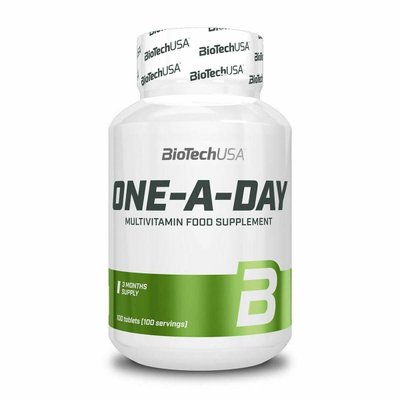 BIOTECHUSA One a Day€17.90 In stock 100tab offer multivitamin options across the vitamins category.
Shifts in Scientific Consensus
Several positions have shifted meaningfully in recent years:
- High-dose vitamin D supplementation is no longer routinely recommended for community-dwelling adults without confirmed deficiency – a significant departure from earlier enthusiasm
- Omega-3 supplementation has received more nuanced treatment: VITAL found no overall cardiovascular benefit, but subgroup analyses suggested possible benefit in those with lower baseline fish consumption and reduced triglycerides in higher-risk groups (Manson et al., 2019)
- Antioxidant megadosing (high-dose vitamin E, vitamin A) has fallen further out of favour, with evidence of harm at pharmacological doses in some populations
- Calcium supplementation without vitamin D co-supplementation has been questioned for bone benefit and potential cardiovascular signals in some analyses
Still-Open Questions
Several important questions remain unresolved:
- Whether the COSMOS-Mind multivitamin finding holds across different formulations, populations, and longer time periods
- The optimal vitamin D level (not just avoiding deficiency) for different health outcomes in seniors
- Whether selenium and iodine gaps in Northern European seniors represent a meaningful modifiable risk factor
- The interaction between polypharmacy (multiple medications) and vitamin supplementation in frail older adults
What It Means Practically
For most healthy adults over 60, the evidence now supports a more targeted rather than broad-spectrum approach:
- Test, don't guess: blood testing for vitamin D, B12, and folate is more informative than universal supplementation
- Vitamin D: supplement if blood 25(OH)D is low, particularly in northern European latitudes through autumn and winter
- B12: monitor, particularly if on proton pump inhibitors, metformin, or other drugs that affect absorption
- A quality multivitamin at standard doses has the most benign risk profile and may provide modest benefit across multiple micronutrient gaps
- Omega-3: still reasonable for those who eat little or no fish, for cardiovascular and anti-inflammatory reasons
Bottom Line
The science on vitamins for seniors continues to mature. The era of "more is better" has given way to a more nuanced view: targeted supplementation based on individual status, rather than universal high-dose protocols. For most seniors, a quality multivitamin at standard doses, vitamin D based on tested levels, and B12 monitoring represent the most evidence-aligned approach.
References
Manson, J. E., Cook, N. R., Lee, I. M., Christen, W., Bassuk, S. S., Mora, S., Gibson, H., Gordon, D., Copeland, T., D'Agostino, D., Friedenberg, G., Ridge, C., Bubes, V., Giovannucci, E. L., Willett, W. C., & Buring, J. E. (2019). Marine n-3 fatty acids and prevention of cardiovascular disease and cancer. New England Journal of Medicine, 380(1), 23–32. https://pubmed.ncbi.nlm.nih.gov/30415637/
Baker, L. D., Manson, J. E., Rapp, S. R., Sesso, H. D., Gaussoin, S. A., Cauley, J. A., Harmon, S. M., Hou, L., Lane, J. M., Langsetmo, L., LeBlanc, E. S., Lewis, C. E., Manini, T., Shikany, J. M., & Espeland, M. A. (2023). Effects of cocoa extract and a multivitamin on cognitive function in US older adults. Alzheimer's & Dementia, 19(4), 1365–1375.
Clarke, R., Bennett, D., Parish, S., Lewington, S., Skeaff, M., Eussen, S. J., Lewerin, C., Stott, D. J., Armitage, J., & Hankey, G. J. (2014). Effects of homocysteine lowering with B vitamins on cognitive aging. Neurology, 83(7), 594–603.
FAQ
Should seniors take a multivitamin every day?
For healthy adults over 60, a standard-dose multivitamin is a reasonable insurance policy against micronutrient gaps, and the COSMOS-Mind trial provides the first RCT evidence suggesting possible cognitive benefit. It is not a substitute for a healthy diet, but it is unlikely to cause harm at standard doses and may fill gaps that diet alone misses.
How much vitamin D should a senior take?
This should ideally be guided by a blood test measuring 25(OH)D. Without testing, many clinicians recommend a moderate daily maintenance dose through autumn and winter in northern latitudes. The evidence no longer supports high-dose supplementation in the absence of confirmed deficiency.
Does vitamin B12 help with memory in older adults?
Vitamin B12 corrects deficiency-related neurological symptoms, which can include memory and cognitive impairment. However, supplementing B12 in people who are not deficient has not been shown in RCTs to prevent cognitive decline in cognitively normal seniors. Testing B12 levels is more useful than supplementing blindly.



