Vitamin K for Women: Benefits & Considerations
Vitamin K for women deserves more attention than it typically receives. Often overshadowed by the calcium-vitamin D conversation around bone health, vitamin K is the third pillar that directs calcium into bone rather than into arterial walls. For women navigating hormonal changes across different life stages, understanding what vitamin K does – and what it does not do – is genuinely useful.
Why Women May Need It
Vitamin K comes in two main forms: K1 (phylloquinone, from leafy greens) and K2 (menaquinones, primarily MK-4 and MK-7, from fermented foods and some animal products).
Coagulation is the classically known function – K1 is the cofactor for several clotting factors. But the broader interest for women concerns two K-dependent proteins:
- Osteocalcin – produced by bone-forming cells, it requires vitamin K to undergo carboxylation and bind calcium in bone matrix.
- Matrix Gla Protein (MGP) – requires K2 to inhibit calcium deposition in arterial walls, a function relevant for long-term cardiovascular health.
A three-year randomised controlled trial found that MK-7 supplementation significantly improved arterial stiffness in post-menopausal women (Knapen et al., 2015). This study used MK-7 at a specific dose and provides one of the stronger pieces of clinical evidence for vitamin K2 in women's health.
Hormonal and Life-Stage Notes
In pre-menopausal women, oestrogen plays a protective role in bone maintenance. As oestrogen declines post-menopause, bone turnover accelerates and vitamin K's role in osteocalcin carboxylation becomes more clinically relevant.
Oral contraceptives containing oestrogen may mildly alter vitamin K metabolism, though the clinical significance of this interaction at typical supplement doses is considered low.
Athletes with high training volumes may have increased demands on osteocalcin-dependent bone remodelling. Ensuring adequate vitamin K intake during periods of high-intensity training is a sensible precaution.
Dose Considerations
The dietary reference value for adult women is 70 micrograms of K1 per day. However, most of the benefit for bone and vascular health seen in clinical studies used K2-MK7 at doses well above routine dietary exposure.
Products combining vitamins D3 and K2 – such as NOW Vitamin K-2 (MK7) 100mcg 60 veg. caps., OstroVit Vitamin D3 + K2 90 tabs, and 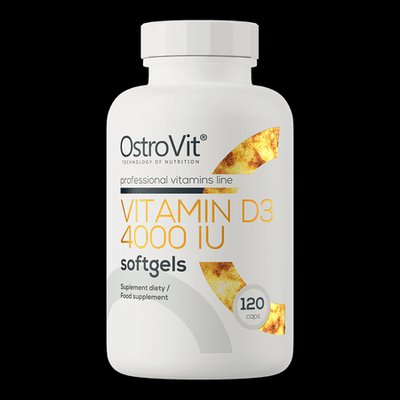 OstroVit Vitamin D3 4000 IU€8.90 In stock + K2 100tabs – make practical sense because D3 upregulates osteocalcin production, which then requires K2 for activation. Taking D3 without adequate K2 may increase calcium absorption without fully directing it to bone.
K2-MK7 has a longer plasma half-life than K1 or K2-MK4, making once-daily dosing effective.
Pregnancy and Safety Notes
Vitamin K1 is considered safe during pregnancy at dietary amounts. Newborns have low vitamin K stores and are routinely given a vitamin K injection at birth to prevent haemorrhagic disease; maternal supplementation during pregnancy does not substitute for this.
Vitamin K2 has no documented teratogenic risk and is not restricted during pregnancy at normal supplement doses, but as with any supplement during pregnancy, moderation and physician communication are prudent.
Importantly: women on anticoagulant therapy (warfarin/acenocoumarol) must maintain consistent vitamin K intake. Suddenly starting or stopping vitamin K supplements can destabilise anticoagulant control.
Bottom Line
Vitamin K, especially MK-7, is a meaningful addition to a bone-health strategy for women – most effectively when combined with vitamin D3 and adequate calcium intake. It is not a standalone bone treatment but part of a coherent mineral management approach.
Find K2-containing supplements at maxfit.ee/et/category/vitamiin-k-et.
FAQ
What is the difference between vitamin K1 and K2 for women?
K1 primarily supports blood coagulation. K2 (especially MK-7) more effectively activates the proteins involved in directing calcium to bone and away from arterial walls. Most people get enough K1 from leafy greens but fall short of the K2 levels associated with bone and vascular benefits.
Can vitamin K supplements help with osteoporosis prevention?
Vitamin K2 supplementation, particularly MK-7, has been shown to improve markers of bone quality in post-menopausal women in RCT evidence (Knapen et al., 2015). It is one element of a multi-nutrient approach alongside calcium, vitamin D3, and exercise; no single supplement prevents osteoporosis alone.
Is it safe to take vitamin K with blood thinners?
No – vitamin K directly interacts with warfarin-type anticoagulants. If you are on anticoagulation therapy, do not change your vitamin K intake without consulting your doctor or anticoagulation clinic.
References
Knapen, M. H., Drummen, N. E., Smit, E., Vermeer, C., & Theuwissen, E. (2015). Three-year low-dose menaquinone-7 supplementation helps decrease bone loss in healthy postmenopausal women. Osteoporosis International, 24(9), 2499–2507.
Bolduc, V., Thorin-Trescases, N., & Thorin, E. (2013). Endothelium-dependent control of cerebrovascular functions through age: exercise for healthy cerebrovascular aging. American Journal of Physiology-Heart and Circulatory Physiology, 305(5), H620–H633. https://pubmed.ncbi.nlm.nih.gov/23792680/
Vermeer, C. (2012). Vitamin K: the effect on health beyond coagulation – an overview. Food and Nutrition Research, 56(1), 5329. https://pubmed.ncbi.nlm.nih.gov/22489224/



