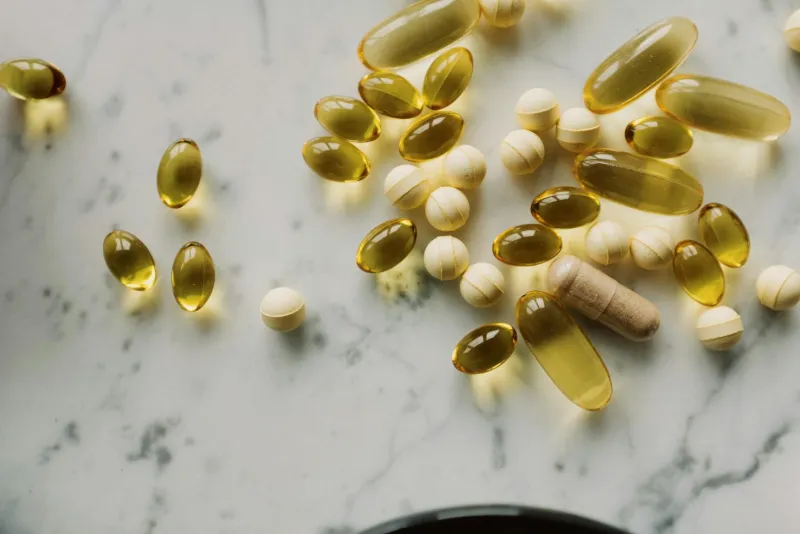
Vitamin E for Beginners: Where to Start
Vitamin E is a fat-soluble vitamin that acts as the body's primary fat-soluble antioxidant. It protects cell membranes against oxidative stress, supports immune function, and plays a role in skin health. For beginners, vitamin E may seem like a simple supplement, but there are important nuances to understand before starting.
What Vitamin E Does
Vitamin E is actually a family of eight naturally occurring compounds: four tocopherols (alpha, beta, gamma, delta) and four tocotrienols. Alpha-tocopherol is the most biologically active form and the one used in most supplements.
Key mechanisms of action:
- Antioxidant protection: Vitamin E neutralises free radicals, protecting cell membranes from lipid peroxidation (Traber & Atkinson, 2007).
- Immune support: Vitamin E supports immune cell function, particularly T-cell activity.
- Skin health: Antioxidant protection may help shield the skin from UV damage.
- Cardiovascular system: Some research suggests a role in reducing platelet aggregation, though clinical significance remains debated.
How to Start
Dose for beginners: The recommended daily amount for adults is 15 mg (22.4 IU) of alpha-tocopherol equivalents. Supplements are available in various doses - typically 100-400 IU. Beginners should start with lower doses.
Taking with fat is essential: Vitamin E is fat-soluble. Always take it with a meal that contains fat - without fat, absorption is minimal.
Natural vs synthetic: Natural vitamin E (d-alpha-tocopherol, labelled "d-alpha") is better absorbed than synthetic (dl-alpha-tocopherol, labelled "dl-alpha"). Research has shown the natural form has approximately twice the biological activity (Traber & Atkinson, 2007).
BIOTECHUSA Vitamin E 100softgels is available at maxfit.ee - an affordable and easily dosed option for beginners.
What to Expect and When
Vitamin E is fat-soluble and accumulates in the body gradually. Unlike water-soluble vitamins (B vitamins, vitamin C), you will not feel a supplement immediately. Possible changes:
- Skin health improvement: Some people report softer skin and greater moisture after 4-8 weeks, particularly alongside a varied diet.
- Immune support: Assessed mainly through fewer or shorter illness periods over a longer timeframe.
- General antioxidant status: Biochemical markers may improve within 4-12 weeks, but this is not subjectively noticeable.
Common Beginner Mistakes
Mistake 1: Taking on an empty stomach The most common error. Without fat, absorption is minimal. Solution: always take with a meal.
Mistake 2: Overdosing Vitamin E accumulates in the body. Chronic supplementation above 1000 mg (1500 IU) per day may increase bleeding risk, as vitamin E inhibits vitamin K-dependent clotting factors (Miller et al., 2005). Stay within the recommended dose.
Mistake 3: Choosing synthetic form Check the label carefully: prefer d-alpha-tocopherol over dl-alpha-tocopherol.
Mistake 4: Duplicating from nuts and seeds Almonds, sunflower seeds, and hazelnuts are rich in vitamin E. If you eat plenty of these, an additional supplement may not be necessary. Assess your diet before starting.
Mistake 5: Ignoring interactions with blood-thinning medications Vitamin E has a mild blood-thinning effect. Those taking warfarin or aspirin should consult their doctor before supplementing.
How to Choose a Product
Key criteria for beginners:
- Form: Prefer d-alpha-tocopherol (natural) over dl-alpha-tocopherol (synthetic)
- Dose: Start with 100-200 IU - there is no need to begin at 400 IU
- Base: Soy or sunflower oil-based soft capsules are typical
- Certifications: GMP certification from the manufacturer
- Additional tocopherols: Some product formulas include mixed tocopherols (alpha, beta, gamma, delta) - this is a more natural profile
FAQ
Is vitamin E suitable for everyone?
For most adults, yes. Exceptions: people with bleeding disorders, those taking anticoagulants (warfarin, clopidogrel), and those with planned surgery (stop 2 weeks before). During pregnancy, do not exceed the recommended dose without medical advice.
Does vitamin E help skin?
Vitamin E's antioxidant protection supports general skin cell health. When used topically (in creams) there is some evidence for wound healing and skin condition support, but the effectiveness of oral supplements for improving skin appearance is modest. Skin health depends on many factors.
Which is better: dietary vitamin E or a supplement?
Dietary vitamin E (nuts, seeds, vegetable oils) combined with a natural mix of tocopherols is optimal. A supplement is suitable for those whose diet is low in vitamin E, who have fat absorption disorders, or who need a specific dose for a targeted purpose.
References
Traber, M. G., & Atkinson, J. (2007). Vitamin E, antioxidant and nothing more. Free Radical Biology and Medicine, 43(1), 4-15. https://pubmed.ncbi.nlm.nih.gov/17561088/
Miller, E. R., Pastor-Barriuso, R., Dalal, D., Riemersma, R. A., Appel, L. J., & Guallar, E. (2005). Meta-analysis: high-dosage vitamin E supplementation may increase all-cause mortality. Annals of Internal Medicine, 142(1), 37-46. https://pubmed.ncbi.nlm.nih.gov/15537682/
Kappus, H., & Diplock, A. T. (1992). Tolerance and safety of vitamin E: a toxicological position report. Free Radical Biology and Medicine, 13(1), 55-74. https://pubmed.ncbi.nlm.nih.gov/1628854/



