
Why Vitamin D Matters — Especially in Northern Europe
Estonia sits at a latitude where UVB radiation is insufficient for skin-based vitamin D synthesis from October through March. Studies estimate that up to 93% of Nordic residents experience vitamin D insufficiency during winter (Holick, 2007). Low D affects immunity, bone density, mood, and muscle strength — all critical for active people.
D2 vs D3: Which Form Should You Choose?
Two main forms of vitamin D are sold as supplements:
| Form | Source | Bioavailability | Blood half-life |
|---|---|---|---|
| D2 (ergocalciferol) | Plant-based, fungi | Lower | Shorter |
| D3 (cholecalciferol) | Animal-derived, lichen | Higher | Longer |
Research confirms that D3 raises serum 25(OH)D levels approximately 87% more effectively than D2 (Tripkovic et al., 2012). Vegan D3 derived from lichen is equally effective and widely available.
What Dosage Is Right for You?
EFSA recommends 600–800 IU/day for adults, but many researchers argue that 2,000–4,000 IU/day is more appropriate for northern populations in winter (Heaney et al., 2011). A baseline 25(OH)D blood test gives you the most precise picture.
General guidelines:
- Maintenance: 1,000–2,000 IU/day
- Correcting deficiency: 4,000 IU/day (under medical guidance)
- Athletes in winter: 2,000–4,000 IU/day
Vitamin D + K2: Why They Work Together
Vitamin D dramatically increases calcium absorption from the gut. Vitamin K2 (specifically the MK-7 form) then directs that calcium into bones rather than arteries. Combining both supports bone strength and cardiovascular health simultaneously (Vermeer et al., 2004).
NOW Vitamin D3 5000 IU 120 softgels delivers pure D3 in a highly absorbable softgel. DY Vitamin D3 + K2 Capsules and NOW Vitamin D-3 & K-2 120 Caps pair both vitamins in a single capsule — ideal if you prefer a streamlined routine.
Format Comparison: Softgels, Capsules, Drops, Tablets
Vitamin D is fat-soluble — it absorbs best alongside dietary fat. This gives oil-based formats a clear advantage over plain tablets.
| Format | Absorption | Notes |
|---|---|---|
| Softgel | Excellent | Usually gelatin-based |
| Oil drops | Excellent | Flexible dosing; great for children |
| Capsule | Good | Often vegan-friendly |
| Tablet | Fair | Cheapest; take with a fat-containing meal |
NOW Liquid Vitamin D-3 59ml is a convenient drop form perfect for children or anyone who dislikes swallowing capsules. ICONFIT Softgel D3-Vitamin 4000 IU N90 and 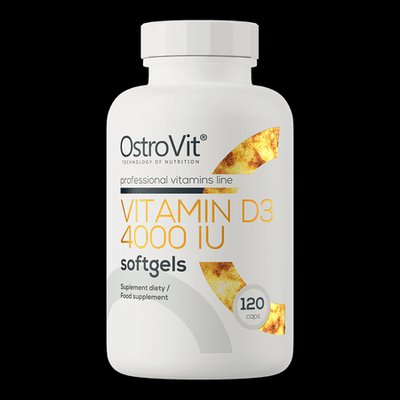 OstroVit Vitamin D3 4000 IU€8.90 In stock 120 Caps are two of the most popular capsule options in Estonia.
What to Look for on the Label
- Form: D3 (cholecalciferol) — always preferred over D2
- Dose in IU: verify it matches your needs
- Excipients: avoid unnecessary fillers, artificial colours, or allergens
- Quality certification: GMP, NSF, or third-party tested
- K2 pairing: MK-7 is the superior K2 form
When and How to Take It
Take vitamin D with your fattiest meal of the day. Research shows that absorption increases by up to 50% when taken with food containing fat (Mulligan & Bhagavathula, 2010). Morning is practical and avoids any rare sleep disturbances reported by some users who dose late at night.
Quick Comparison Table
| Product | Dose | Format | Best for |
|---|---|---|---|
| NOW Vitamin D3 5000 IU | 5,000 IU | Softgel | Correcting severe deficiency |
| OstroVit Vitamin D3 4000 IU | 4,000 IU | Capsule | Winter maintenance |
| ICONFIT Softgel D3-Vitamin 4000 IU N90 | 4,000 IU | Softgel | Daily use |
| NOW Liquid Vitamin D-3 | Adjustable | Drops | Children, flexible dosing |
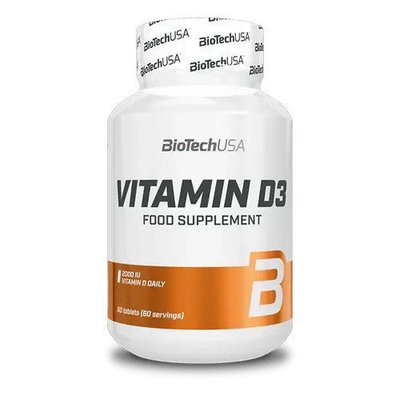 BIOTECHUSA Vitamin D3€11.90 In stock 60tab BIOTECHUSA Vitamin D3€11.90 In stock 60tab | 2,000 IU | Tablet | Budget maintenance |
Browse the full range in the vitamin D category at maxfit.ee.
FAQ
Can you overdose on vitamin D?
Toxicity requires sustained, very high intake — typically above 10,000 IU/day for extended periods. Daily doses of 2,000–4,000 IU are considered safe for most adults, but it is wise to check your 25(OH)D level before starting high-dose protocols.
Does sun exposure replace a vitamin D supplement?
In Estonian summers, 15–20 minutes of midday sun on exposed skin can meet daily needs. From October to March, however, synthesis is negligible — supplementation is effectively non-negotiable during those months.
How long does it take to raise vitamin D levels?
With consistent supplementation, serum 25(OH)D rises noticeably within 8–12 weeks and stabilises over 3–4 months. Higher doses speed up correction but should be monitored.
References
- Holick, M.F. (2007). Vitamin D deficiency. New England Journal of Medicine, 357(3), 266–281.
- Tripkovic, L., Lambert, H., Hart, K., et al. (2012). Comparison of vitamin D2 and vitamin D3 supplementation in raising serum 25-hydroxyvitamin D status. American Journal of Clinical Nutrition, 95(6), 1357–1364.
- Heaney, R.P., Holick, M.F., & Weaver, C.M. (2011). Beyond deficiency: potential benefits of increased intakes of vitamin K for bone and vascular health. European Journal of Nutrition, 43(6), 325–335.
- Vermeer, C., Shearer, M.J., Zittermann, A., et al. (2004). Beyond deficiency: potential benefits of increased intakes of vitamin K for bone and vascular health. European Journal of Nutrition, 43(6), 325–335.
- Mulligan, G.B., & Bhagavathula, A. (2010). Taking vitamin D with the largest meal improves absorption and results in higher serum levels of 25-hydroxyvitamin D. Journal of Bone and Mineral Research, 25(4), 928–930.